Home Blog Page 40

Elon Musk Fires Tesla VP Amid Sales Declines and Political Backlash

Omead Afshar dismissed as pressure mounts on Tesla’s operations and reputation

Tesla CEO Elon Musk has fired Omead Afshar, the company’s vice president of manufacturing and operations, following months of slumping sales in major markets and ongoing reputational challenges. The move, confirmed by CNBC, reflects deeper turbulence within Tesla’s leadership ranks amid intensifying competition and public scrutiny.

Afshar, who reported directly to Musk, oversaw a powerful team that included Tesla’s regional sales heads for North America, EMEA, and key figures in public policy. His dismissal was first reported by Forbes, while Bloomberg had noted Afshar’s quiet departure earlier this week.

Leadership shake-up amid operational and reputational setbacks

The termination follows growing pressure on Tesla’s executive team. Internal sources confirmed that Afshar had been involved in a 2022 internal investigation regarding unusual procurement of construction materials—allegedly for a top-secret Musk project involving specialty glass. Despite the probe, Afshar returned to Tesla from a stint at SpaceX and was eventually promoted to VP of operations.

This latest shake-up comes on the heels of the departure of Milan Kovac, who previously led Tesla’s Optimus humanoid robotics project. While Kovac cited personal reasons, the dual exits point to deeper instability within Tesla’s senior leadership.

Sales dip, stock slump, and a shifting EV landscape

Tesla’s stock is down 19% year-to-date, underperforming both the Nasdaq and its tech megacap peers. According to the European Automobile Manufacturers Association (ACEA), Tesla’s car sales in Europe dropped for the fifth consecutive month in May. Industry analysts cite a growing shift toward more affordable Chinese electric vehicles as a key factor eroding Tesla’s market share.

Meanwhile, Tesla’s much-hyped Robotaxi service quietly launched a pilot in Austin, Texas. Afshar had recently praised Musk for the milestone, still listing himself as a Tesla executive on X (formerly Twitter). However, the sentiment was not enough to secure his position.

Political backlash and brand erosion

Tesla’s commercial challenges are compounded by mounting political controversy surrounding its CEO. Musk has come under fire for his increasingly polarizing public stances, including a $300 million campaign backing President Trump’s reelection and public endorsements of Germany’s far-right AfD party. These moves have alienated a portion of Tesla’s customer base, particularly in liberal-leaning markets and among environmentally conscious buyers.

Nestlé to Eliminate Synthetic Food Colors by Mid-2026

U.S. food industry accelerates shift to cleaner labels amid new health regulations

Nestlé USA announced Wednesday that it will eliminate all synthetic food colors from its U.S. food and beverage portfolio by mid-2026, joining a wave of major food companies responding to mounting health concerns and regulatory pressure.

The company, known for brands like DiGiorno and Hot Pockets, said the transition will be completed within 12 months. Nestlé noted that over 90% of its product categories already exclude synthetic dyes, making the final phase of reformulation achievable within the announced timeline.

Push for reform follows health policy shift

The move comes in response to new guidelines spearheaded by U.S. Health Secretary Robert F. Kennedy Jr., who announced plans to phase synthetic dyes out of the national food supply. The policy targets rising rates of ADHD, obesity, and diabetes, citing links between artificial additives and adverse health effects.

“This is about aligning with evolving consumer expectations and improving the overall nutritional profile of our products,” a Nestlé USA spokesperson said.

Industry-wide pivot toward clean ingredients

Nestlé’s announcement aligns with similar commitments across the U.S. packaged food industry:

  • Conagra Brands will eliminate synthetic colors from all U.S. frozen products by year-end and phase them out of K-12 school offerings by the 2026-2027 school year.
  • General Mills plans to remove artificial dyes from its entire U.S. retail portfolio, including cereals and school meals, by summer 2026.
  • Kraft Heinz has pledged to stop launching new products containing artificial colors and to reformulate existing ones by the end of 2027.
  • W.K. Kellogg and Tyson Foods are also actively reformulating and launching synthetic-dye-free product lines.

The industry shift reflects growing consumer preference for simpler ingredient lists and aligns with broader clean-label trends.

Outlook for school nutrition and retail reformulation

The removal of synthetic dyes is especially significant for the K-12 sector, where public scrutiny has intensified. With multiple companies pledging school-specific changes, health advocates see the movement as a critical step toward improving childhood nutrition.

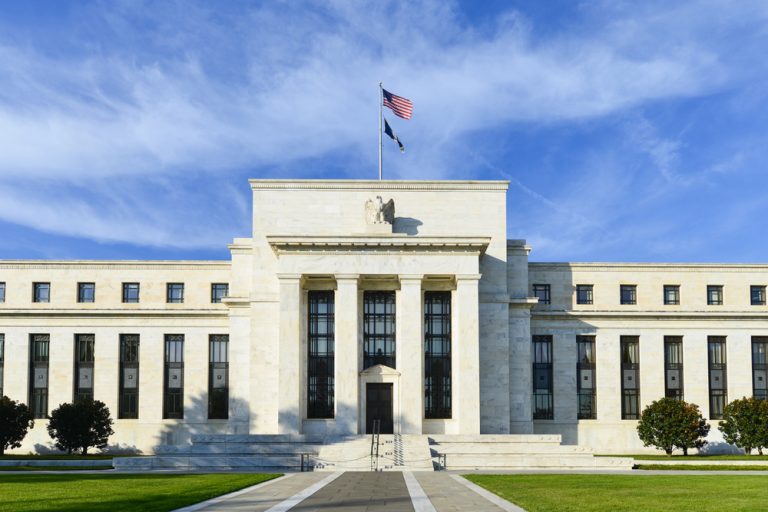
Fed Proposes Major Rollback of Bank Capital Rules

New eSLR change aims to boost Treasury market but raises stability concerns

U.S. regulators on Wednesday proposed one of the most significant easing measures to bank capital requirements since the 2008 financial crisis, a move that would benefit major banks and align with the Trump administration’s deregulatory agenda.

The proposal targets the enhanced supplementary leverage ratio (eSLR), a rule that requires large U.S. banks to hold minimum capital based solely on their size. The rule currently sets the eSLR at 5% for the largest financial institutions, including JPMorgan Chase, Bank of America, Goldman Sachs, and Morgan Stanley.

If adopted, the plan would lower that capital threshold by 1.4 percentage points for bank holding companies — about $13 billion — and cut the requirement for their bank subsidiaries by a full 10 percentage points. The goal is to allow banks to lend more freely and support liquidity in the $30 trillion U.S. Treasury market.

Supporters Call It a “Necessary Adjustment”

The Federal Reserve approved the proposal by a 5-2 vote, opening the measure to public comment. The FDIC and OCC also participated in developing the rule change. Fed Vice Chair for Supervision Michelle Bowman described the measure as a “critical first step” to strengthen Treasury market resilience while balancing systemic safety.

“This proposal takes a first step toward what I view as long overdue follow-up to review and reform what have become distorted capital requirements,” Bowman said in a separate speech Monday.

Advocates say the move could alleviate constraints that have hampered banks’ ability to act as market-makers for Treasurys, especially during periods of market stress like the onset of the COVID-19 pandemic.

Opposition Warns of Increased Risk

Not all regulators agreed. Fed Governors Michael Barr and Adriana Kugler opposed the proposal, warning that the lower capital requirements could increase systemic risk. Kugler said the move “will increase systemic risk in a manner that is not justified,” while Barr warned that banks would likely use the freed-up capital for shareholder payouts rather than boosting market liquidity.

Barr estimated the reduction would cut system-wide subsidiary capital by $210 billion. Sen. Elizabeth Warren echoed the concerns, calling the plan a return to the deregulatory mindset that helped fuel the 2008 crash. “Deregulating those banks is planting the seeds for another financial catastrophe,” she said.

More Changes Coming

The Fed hinted this may only be the beginning. Other adjustments under consideration include changes to the global systemically important bank surcharge and updates to capital thresholds based on asset size. A July 22 Fed conference will further discuss the capital framework for U.S. banks.

Bowman also confirmed the Fed will no longer consider “reputation risk” during bank examinations, another sign of loosening regulatory standards.

UK Job Market Cools as Pay Growth Trails Inflation

Graduate roles and hiring activity decline amid economic uncertainty

Britain’s labour market continues to show signs of cooling, with new data pointing to subdued pay increases and declining job vacancies, particularly for graduate-level positions. Surveys released Wednesday highlight cautious employer behaviour in the face of ongoing economic headwinds.

According to data firm Brightmine, the majority of private sector pay settlements held steady at 3% in the three months to May. This figure lags behind the latest inflation reading of 3.4%, meaning most workers saw a real-terms pay cut. Nearly 15% of firms offered even smaller raises of just 2.5%.

“Private sector employers are holding steady at 3%, taking a more cautious approach as they wait for firmer economic signals,” said Sheila Attwood, Brightmine’s data lead.

Job Vacancies Slide, Graduate Posts Hit Hardest

Recruitment platform Indeed reported a 5% drop in job vacancies between late March and mid-June. Openings are now 21% below their pre-pandemic levels, making the UK the only major economy tracked by the platform where vacancies remain lower than before COVID-19.

The sharpest declines were seen in graduate-level roles, with sectors like human resources, accountancy, and marketing particularly affected. These roles, often sensitive to economic cycles, may also be seeing disruption from the growing use of artificial intelligence in administrative and analytical tasks.

Sector Breakdown: Retail and Hospitality in Decline

Indeed’s data also showed falling demand across customer-facing industries. Retail job postings have slipped 2% since April, food service roles are down 10%, and hospitality and tourism jobs have declined 11% over the same period.

The softening labour market comes despite warnings from employers about the added strain from higher social security contributions introduced in April by Chancellor Rachel Reeves.

Bank of England Eyes Pay Growth in Rate Decisions

The Bank of England is monitoring wage trends closely as it weighs the timing of future interest rate cuts. On Tuesday, Governor Andrew Bailey cited slowing pay growth as a potential sign that inflationary pressures may be easing.

Although job market conditions are cooling, analysts note that the UK is not facing a severe downturn. Rather, the data reflect a steady loss of momentum as employers scale back hiring plans and salary increases amid broader economic uncertainty.

Amazon Expands Fast Delivery to 4,000 Rural U.S. Areas

$4B expansion targets underserved towns ahead of Prime Day

Amazon announced Tuesday that it will bring same- and next-day delivery services to more than 4,000 rural cities and towns across the United States by the end of 2024, as part of a $4 billion rural delivery network expansion.

The initiative, first unveiled in 2023, aims to triple the size of Amazon’s rural logistics footprint by 2026. This latest push marks the company’s most significant rural expansion to date, extending rapid delivery access to millions of Americans who have long been underserved by traditional e-commerce logistics.

“This expansion goes beyond speed,” Amazon said in its release. “It’s about transforming daily life for rural customers, who typically live farther from brick-and-mortar retailers, have fewer product and brand choices, and face limited delivery options when shopping online.”

Strategic timing ahead of Prime Day

The rural delivery announcement comes just ahead of Amazon’s longest Prime Day ever — a 96-hour sales event starting July 8 at 12:01 a.m. PT and running through July 11. The company is clearly positioning itself to capitalize on growing consumer demand in smaller markets.

Speedy shipping has become a pillar of Amazon’s business model as it faces increased pressure from Walmart, Temu, Shein, and TikTok Shop. These rivals are eroding Amazon’s dominance by offering steep discounts and alternative fulfillment strategies that appeal to younger and value-conscious shoppers.

Closing the rural gap

Amazon’s logistics investment highlights a key challenge in U.S. retail: the urban-rural delivery divide. While major metro areas have enjoyed rapid fulfillment for years, rural communities often experience slower delivery times, fewer product options, and higher fees. By expanding its network into these markets, Amazon is attempting to lock in new customer loyalty and widen its moat against competitors.

Amazon’s $4 billion investment will fund new delivery stations, local partnerships, and technology upgrades aimed at improving rural last-mile efficiency. The company did not specify which towns are included but said that all 4,000 new zones would gain access before year’s end.

Stocks Rally as Iran’s Response Calms Oil Market

Dow jumps nearly 375 points while oil tumbles 7%

U.S. stocks climbed Monday as investors welcomed Iran’s restrained response to American airstrikes over the weekend. Meanwhile, crude oil prices plunged more than 7%, easing fears of a supply shock in global energy markets.

The Dow Jones Industrial Average closed up 374.96 points, or 0.89%, at 42,581.78. The S&P 500 rose 0.96% to 6,025.17, while the Nasdaq Composite added 0.94%, ending the session at 19,630.97.

Oil slumps as supply fears fade

Iran said Monday it had launched a missile strike on a U.S. base in Qatar in retaliation for American attacks on its nuclear sites in Fordo, Isfahan, and Natanz. However, Qatar reportedly intercepted the strike, and no casualties were reported, triggering a sharp sell-off in oil.

West Texas Intermediate crude futures dropped over 7%, settling at $68.51 per barrel after briefly touching $78 overnight. The move came as traders bet that oil supply would remain largely unaffected by the conflict escalation.

President Donald Trump further pressured oil markets, stating on Truth Social that “everyone” should keep oil prices low to avoid “playing into the hands of the enemy.”

Market outlook stabilizes

“Markets only care about oil supply shocks,” said Jamie Cox of Harris Financial Group. “As long as they stay at bay, we’ll see markets sharply higher.” Cox added that the U.S. strikes may have significantly degraded Iran’s nuclear capabilities.

Despite the geopolitical risks, analysts expressed cautious optimism. Adam Crisafulli of Vital Knowledge noted that investors view Iran’s limited options and the abundance of global oil supply as reasons to stay calm. “Tehran’s relative isolation and degraded military capacity suggest limited escalation risk,” he said.

Still, uncertainty remains. U.S. Secretary of State Marco Rubio urged China—Iran’s top oil customer—to help prevent any potential closure of the Strait of Hormuz, a critical global oil chokepoint.

Oman to Introduce Gulf’s First Personal Income Tax

5% tax on high earners aims to boost fiscal diversification

Oman has issued a royal decree to become the first Gulf nation to implement a personal income tax, its tax authority announced on Sunday. The move is part of a broader fiscal reform aimed at reducing the country’s reliance on oil revenues and stabilizing its public finances.

Starting in 2028, individuals earning over 42,000 Omani rials annually (about $109,091) will be subject to a 5% income tax. According to the decree, the tax will affect only the top 1% of earners in the country.

Part of long-term fiscal strategy

Oman, one of the smaller oil producers in the Gulf, launched a medium-term fiscal balance program in 2020. The strategy focuses on reducing public debt, expanding revenue sources, and supporting long-term economic growth. Improved budget performance in recent years has laid the groundwork for more ambitious reforms like this tax.

The personal income tax will include a range of social exemptions and deductions. Eligible individuals can subtract costs related to:

  • Education
  • Healthcare
  • Primary housing
  • Zakat and donations
  • Inheritance

These measures are designed to cushion the social impact of the tax and align with Oman’s values and welfare priorities.

Regional significance

With this decree, Oman breaks new ground in the Gulf Cooperation Council (GCC), where oil wealth has traditionally allowed governments to avoid taxing personal incomes. The decision could serve as a bellwether for other resource-dependent Gulf states seeking alternative revenue streams amid volatile energy markets and increasing global fiscal scrutiny.

Markets Slip Amid Geopolitical Tensions and Fed Uncertainty

S&P 500 logs third straight loss as rate cut timeline and Middle East risks weigh on sentiment

The S&P 500 slipped 0.22% on Friday to close at 5,967.84, marking its third consecutive day in the red. Investors remain cautious as escalating tensions in the Middle East coincide with mixed messaging from the Federal Reserve on interest rate cuts. The Nasdaq Composite also retreated, falling 0.51% to 19,447.41, while the Dow Jones Industrial Average bucked the trend with a modest 35-point gain, finishing at 42,206.82.

Chipmakers led the decline following a Wall Street Journal report that the U.S. may revoke certain export waivers for semiconductor firms. Nvidia dropped over 1%, and Taiwan Semiconductor Manufacturing Co. fell nearly 2%, dragging the VanEck Semiconductor ETF (SMH) down by almost 1%.

Fed officials diverge on rate cut signals

Early gains in the session were short-lived after mixed signals from the Federal Reserve. Governor Christopher Waller suggested a rate cut could come as soon as July, stating, “We’re in the position that we could do this,” during an appearance on CNBC. Still, he acknowledged that consensus from the full committee is uncertain.

Waller’s comments follow Chair Jerome Powell’s Wednesday remarks, where he reiterated the Fed’s commitment to a data-dependent approach. Powell emphasized that the economic effects of Trump’s proposed tariffs remain unclear, making it difficult to justify immediate rate cuts.

Former President Donald Trump responded by renewing his criticism of Powell, calling him “stupid” and accusing him of costing the U.S. “hundreds of billions” by delaying action on rates.

Middle East volatility compounds investor caution

Beyond monetary policy, rising geopolitical tensions continue to weigh heavily on markets. Reports indicate Israeli Prime Minister Benjamin Netanyahu has instructed his military to prepare strikes on key Iranian government and strategic targets. Trump is reportedly considering direct U.S. involvement, with a decision expected within two weeks.

Iran’s Supreme Leader Ayatollah Ali Khamenei dismissed Trump’s threats as “ridiculous,” raising fears of further escalation in the region. Traders appear hesitant to hold risk positions over the weekend, awaiting clarity on potential military action.

Weekly market snapshot

Despite Friday’s losses, weekly performance was mixed across the major indexes. The S&P 500 closed the week down 0.2%, the Nasdaq added 0.2%, and the Dow edged up a negligible 0.02%.

Analysts remain divided on short-term direction. “With so much uncertainty going on in this world, who really wants to go long over the weekend?” asked Sam Stovall, chief investment strategist at CFRA Research. Still, he noted that the S&P 500 remains just 3% below its 52-week high — a level that could be tested again if geopolitical concerns ease.

Accenture Drops 7% Despite Revenue Beat and Raised Outlook

Investors focus on falling bookings and growth concerns

Shares of Accenture (NYSE: ACN) slid 6.8% to close at $285.49 on Thursday after the company reported mixed results for fiscal Q3 2025. While Accenture beat revenue expectations and raised both its full-year revenue and EPS guidance, investors were spooked by a sharp 7% drop in quarterly bookings — a key forward-looking indicator of future revenue.

The bookings miss, which came in weaker than last quarter’s more modest decline, raised concerns about slowing client demand and a potential weakening of Accenture’s sales pipeline. Although the company’s revenue beat was welcomed, the market reaction suggests investors are prioritizing signs of forward momentum, particularly in a competitive and shifting IT services landscape.

Mixed signals: strength in revenue, weakness in pipeline

Despite the headline revenue outperformance and a positive outlook for next quarter’s top line, Accenture’s EPS guidance came in merely in line with expectations. This, combined with a decline in bookings, overshadowed the company’s decision to raise its full-year forecast.

The market appeared to discount the improved revenue figures in favor of a more cautious interpretation of what the declining bookings might mean for future growth. The bookings contraction reinforces investor fears that enterprise clients may be pulling back or delaying IT and consulting spend, especially in a more cost-conscious environment.

Stock performance and valuation snapshot

Accenture shares have declined 18.2% year-to-date and now trade nearly 28% below their 52-week high of $398.25, reached in February 2025. At $285.49, the stock is testing technical support levels and may draw attention from value-oriented investors.

Over the past five years, a $1,000 investment in Accenture would now be worth approximately $1,409 — a solid return, though significantly lagging the broader tech sector during the same period.

Volatility context and investor sentiment

Accenture’s stock is typically stable, with only six daily moves exceeding 5% over the past 12 months. Thursday’s drop stands out in that context and suggests the market views the bookings decline as more than just a quarterly hiccup. Still, some analysts argue that the reaction may be overdone given the company’s solid fundamentals and history of consistent performance.

Long-term investors may view this pullback as a buying opportunity, especially if they believe Accenture can stabilize its pipeline and capitalize on long-term demand for digital transformation and AI consulting.

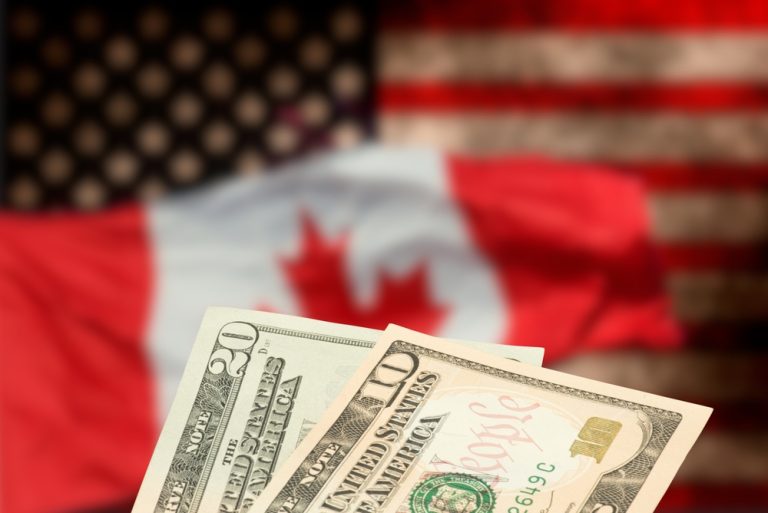
Canada Threatens Tariff Hike as US Trade Talks Stall

Steel and aluminum tariffs may rise if no deal is reached by July

Canada warned on Thursday it could raise tariffs on U.S. steel and aluminum as early as July 21 if trade negotiations with the Trump administration do not yield results. The move would see existing 25% counter-tariffs increased in response to America’s ongoing 50% metal import duties.

“We must safeguard Canadian workers and businesses from the unjust U.S. tariffs that exist at present,” said Prime Minister Mark Carney at a press conference. Talks between the two countries are ongoing, with a provisional deadline set for mid-July.

Canada introduces new rules to protect domestic industry

Alongside the potential tariff increase, Ottawa announced new procurement rules for federal projects, mandating the use of Canadian-produced steel and aluminum or that from countries with reciprocal trade agreements. The government will also establish tariff-rate quotas to restrict imports from non-trade-agreement countries.

These changes aim to counter the risk of dumping, as Canada fears global producers might reroute their shipments to avoid U.S. tariffs. “The quotas are a consequence of the U.S. actions,” Carney said.

Trade tensions lift Canadian steel stocks

Shares of Algoma Steel Group Inc. surged as much as 7.9% on the Toronto Stock Exchange following the announcement, reaching C$9.85 — the highest level since March. The rally underlines investor optimism that domestic producers will benefit from stricter import controls.

Carney emphasized Canada’s readiness to support businesses affected by market instability, referencing a C$10 billion federal loan facility to aid firms struggling to secure traditional financing.

Ongoing talks, but no guarantee of compromise

While Carney confirmed ongoing communication with President Donald Trump, he left the door open to walking away if a trade agreement fails to align with Canadian interests. “It’s a negotiation,” he said. “If it’s in Canada’s interest, we’ll sign it. If it’s not, we won’t.”

Cabinet ministers Dominic LeBlanc and Melanie Joly joined Carney during the announcement. LeBlanc noted he is in regular contact with U.S. officials, including Commerce Secretary Howard Lutnick and Trade Representative Jamieson Greer.