Home Blog Page 3

Waymo Robotaxi Testing Pauses in NYC

City permits expire as state debate continues

Autonomous vehicle testing by Waymo has come to a temporary halt on New York City streets after two permits allowing limited trials expired on March 31, according to the city’s Department of Transportation.

The permits, issued last year, authorized Waymo to test its self-driving technology in parts of Downtown Brooklyn and south of 112th Street in Manhattan. Although the company’s Jaguar I-PACE vehicles can still be manually driven for data collection, active autonomous testing under city authorization has stopped.

“Our top priority for AV testing is public safety,” said DOT spokesperson Vin Barone, noting that future policy decisions will focus on worker protections as well as safety.

Limited pilot showed no reported collisions

Waymo, a subsidiary of Alphabet, operated eight vehicles during the trial period, each with a trained safety specialist behind the wheel. According to NYC DOT, no collisions were reported involving the test fleet.

The vehicles had received clearance from both the New York State Department of Motor Vehicles and the city DOT for road testing. The pilot was originally approved last August under former Mayor Eric Adams.

State policy remains a key hurdle

The expiration comes amid shifting signals from Albany. In February, Gov. Kathy Hochul stepped back from a proposal that would have allowed certain autonomous vehicles to operate outside New York City.

Waymo said it hopes the state DMV testing permit will be renewed as part of ongoing budget negotiations. If renewed, the company would evaluate next steps for additional city trials.

Legislation introduced in 2021 sought to remove the requirement for a human safety driver, provided vehicles meet insurance and safety conditions. The bill has not advanced, despite more than $3 million in lobbying expenditures by the company.

Labor and safety concerns persist

The technology has drawn resistance from taxi and for-hire vehicle groups. The city’s Taxi & Limousine Commission licenses nearly 180,000 drivers, many of whom view fully autonomous vehicles as a potential threat to jobs.

“Neither the city nor the state are ready,” said Bhairavi Desai of the New York Taxi Workers Alliance, arguing that regulatory frameworks remain incomplete.

Waymo points to its national safety record, stating that across 170 million miles of fully autonomous driving, its vehicles have been involved in 92% fewer serious or fatal crashes compared with human drivers in markets where it operates. The company has already launched driverless services in 10 U.S. cities and plans expansion into 18 more, as well as London and Tokyo.

Unique challenges of New York streets

Transportation experts caution that New York presents complexities unlike most American cities. Dense pedestrian traffic, cyclists, e-bikes and varied mobility patterns could complicate large-scale deployment.

Sam Schwartz of Hunter College’s Roosevelt House Public Policy Institute called for independent safety studies before fully driverless vehicles are introduced. He noted that much of the data cited by AV companies is generated internally or funded by industry sources.

For now, New York’s robotaxi ambitions remain paused, pending legislative decisions and broader agreement on safety, labor protections and public transparency.


Asian Nations Strike Strait Deals with Iran

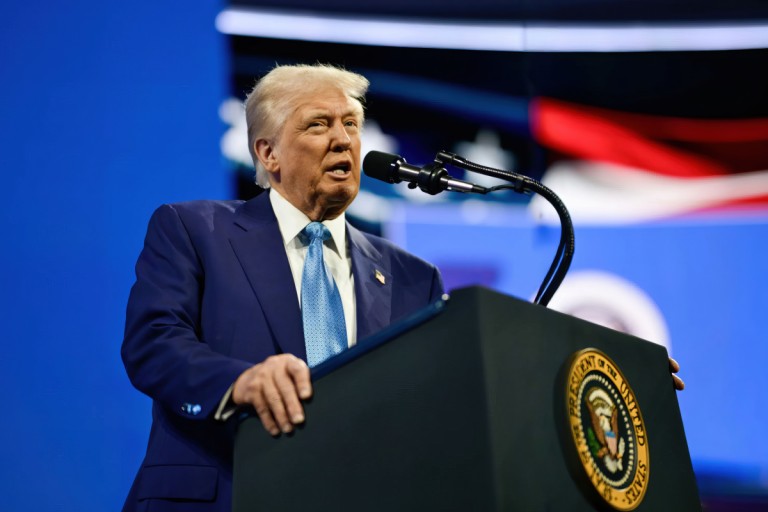
Trump ultimatum raises tensions

U.S. President Donald Trump warned Monday that Iran could be taken out “in one night” if it failed to agree by 20:00 Washington time Tuesday to reopen the Strait of Hormuz. The narrow waterway, through which roughly one-fifth of global energy shipments normally passes, has become a focal point of the escalating conflict.

Tehran threatened to target vessels in response to U.S. and Israeli airstrikes, disrupting traffic and pushing oil prices sharply higher. Despite Washington’s pressure campaign, several countries have opted for direct diplomacy with Iran to secure safe passage for their ships.

Philippines secures assurances

The Philippines became the latest nation to announce an agreement with Tehran. Foreign Affairs Secretary Theresa Lazaro said Iranian officials promised “safe, unhindered and expeditious passage” for Philippine-flagged vessels after what she described as a productive phone conversation.

The arrangement is critical for Manila. The Philippines imports 98% of its oil from the Middle East and declared a national energy emergency after fuel prices more than doubled following the outbreak of hostilities.

Regional diplomacy gains momentum

Pakistan confirmed on 28 March that Iran agreed to allow 20 of its ships through the strait. Foreign Minister Ishaq Dar called the move a constructive gesture and emphasized dialogue as the only viable path forward.

India has also reported smooth passage for its tankers. Iran’s embassy in New Delhi stated that Indian vessels are “in safe hands,” while India’s foreign minister attributed the access to sustained diplomatic engagement.

China, the largest buyer of Iranian oil, acknowledged that three of its vessels recently transited the strait after coordination with relevant parties. Vessel-tracking data indicate that shipments of sanctioned Iranian crude to China have continued despite the conflict.

Scope of guarantees remains unclear

Analysts caution that the details of these assurances are opaque. It is uncertain whether guarantees apply to all ships under a nation’s flag or only specific vessels. Questions also persist over whether any payments or conditions were attached to safe passage agreements.

Malaysia and Japan have reported successful crossings by some of their vessels, though officials have not clarified whether broader permissions exist. Many global tankers operate under flags of convenience such as Panama or the Marshall Islands, neither of which is known to have secured explicit guarantees.

Diplomatic progress, uncertain durability

Experts note that energy-dependent countries increasingly recognize the need to engage Tehran directly to safeguard supplies. However, the longevity of these arrangements remains uncertain. Military developments in the region and shifting political calculations could alter the status of the strait at any time.

While bilateral deals offer temporary relief for select nations, they do not resolve the wider instability surrounding one of the world’s most critical energy chokepoints.

Short Workouts May Spark Brain “Ripples”

Exercise gives memory an immediate lift

A brief burst of aerobic exercise may do more than raise your heart rate. It can trigger measurable changes in brain activity linked to memory formation and recall. Researchers say even a few minutes on an exercise bike or a brisk walk could help the brain better store and retrieve information.

Scientists have long known that physical activity supports cognitive performance and may slow age-related decline. Regular aerobic exercise has been shown to strengthen the hippocampus, a region deep in the brain essential for learning and memory. Moderate workouts several times per week can even increase its volume. Timing also appears to matter. Some studies suggest that exercising a few hours after learning new material improves retention more than working out immediately afterward. Stretching alone does not appear to produce the same effect.

Scientists observe electrical “ripples”

A recent study led by neuroscientist Michelle Voss at the University of Iowa sought to understand the biological mechanisms behind this memory boost. Researchers monitored the brains of 14 individuals with drug-resistant epilepsy who temporarily had electrodes implanted as part of clinical treatment. This unique setup allowed scientists to directly measure electrical activity in healthy regions of the brain.

After participants completed a short session on an exercise bike, researchers observed an increase in rapid bursts of synchronized electrical activity known as brain ripples. These ripples occurred in the hippocampus and in connected brain regions. Brain ripples are believed to play a key role in consolidating memories during sleep and quiet rest by coordinating neural communication.

Following exercise, the ripples became more frequent and more tightly synchronized with activity in other brain areas. Because these electrical events happen too quickly to be captured by conventional brain scans, the study offers rare direct evidence of how exercise alters human brain signaling in real time.

Why fitness amplifies the effect

Although participants did not perform memory tasks during the experiment, previous research links these ripples to improved memory consolidation. The findings may help explain why people often remember information more effectively after physical activity.

Other studies indicate that overall fitness level enhances the benefit. Greater cardiovascular fitness and muscle mass allow the body to produce higher levels of Brain-Derived Neurotrophic Factor (BDNF), a protein crucial for forming new neural connections. Researchers at University College London found that individuals who maintain consistent exercise routines experience stronger brain responses following each workout.

Implications for aging and public health

The results suggest that even short sessions of movement can generate meaningful changes in brain function. Beyond memory support, a single workout can sharpen focus for up to two hours and increase dopamine levels, contributing to improved mood.

Researchers hope the findings reshape how physical activity is viewed, particularly in relation to aging. Strengthening memory-related brain regions through regular exercise may help protect against cognitive decline. The evidence increasingly shows that brief, consistent bursts of aerobic activity can create lasting neurological benefits.

iPhone Captures Earth From Deep Space

Artemis II marks a first for smartphones

In the long-running rivalry between smartphone makers, victories are usually measured in megapixels, chip performance and computational photography. This time, however, the milestone comes from orbit.

Astronauts aboard NASA’s Artemis II mission have taken images of Earth using the iPhone 17 Pro Max, marking the first known instance of a smartphone capturing our planet from deep space during a crewed mission. The photographs show crew members looking back at Earth through the Orion spacecraft window.

According to image metadata published online, the photos were taken on April 2 using the device’s front-facing camera. The files were later processed in Adobe Photoshop Lightroom Classic for adjustments such as exposure and contrast.

Cleared for extended spaceflight use

Each Orion crew member is reportedly carrying an iPhone 17 Pro Max for personal use after the device was cleared earlier this year for extended operation in orbit. That approval allowed astronauts to use the smartphone beyond low Earth orbit during the mission.

While professional-grade cameras remain central to the mission’s documentation, including the Nikon D5, Nikon Z 9 and GoPro HERO4 Black, the inclusion of a consumer smartphone adds a new chapter to space imaging history.

How this differs from past launches

Android devices have traveled into space before, but not in the same context. In 2024, Samsung sent a Galaxy S24 to the edge of the atmosphere via a high-altitude balloon. That flight reached near-space conditions but did not involve a crewed deep-space mission.

By contrast, Artemis II is NASA’s first crewed lunar mission since 1972 and is designed to carry astronauts farther from Earth than any human mission in more than five decades. The spacecraft is expected to return on April 10, setting a new distance record for human travel before reentry.

A symbolic milestone

The achievement means the iPhone 17 Pro Max has become the first smartphone to journey that far from Earth while actively being used by astronauts in deep space. Although it does not replace the role of dedicated professional cameras, it demonstrates how modern consumer devices can operate in environments once limited to specialized equipment.

For Apple, the moment represents an unexpected win in the ongoing competition between smartphone platforms. For the broader tech industry, it highlights how rapidly consumer electronics continue to close the gap between everyday devices and mission-grade tools.

Health Ads Fund Misinformation Sites, Study Finds

Millions in ad spending tied to unreliable outlets

In 2021, during the height of the Covid-19 pandemic, U.S. Surgeon General Dr. Vivek Murthy warned that health misinformation posed a serious threat to public well-being. He called limiting its spread a “moral and civic imperative.”

Despite those warnings, new research from Yale University shows that health and government organizations have collectively spent tens of millions of dollars advertising on websites known to promote health misinformation. The study found that between 2021 and 2024, more than $35.7 million in advertising from health and government groups appeared across 11 such sites, accounting for over 10% of their advertising revenue.

How the websites were identified

Researchers partnered with NewsGuard, an organization that evaluates the credibility of news and information websites. NewsGuard’s assessments, conducted by trained journalists, frequently cite health misinformation as a leading reason for labeling sites unreliable.

Common misinformation themes include false vaccine claims, promotion of unproven remedies and content that undermines established scientific consensus. NewsGuard’s chief operating officer, Matt Skibinski, noted that some misinformation erodes trust in science, while other claims can be directly harmful.

Wellness ads dominate spending

The largest category of health advertising on these sites came from sellers of nonprescription wellness products. Supplements marketed for energy, digestion, weight management and cognitive support accounted for more than $19 million in spending during the study period, representing nearly 6% of total ad revenue for the 11 sites analyzed.

However, advertising also came from established nonprofit organizations and government agencies. The research, published in JAMA Network Open, found that even reputable institutions contributed to the overall funding stream supporting misinformation platforms.

Reputable organizations respond

The American Heart Association and the Alzheimer’s Association were among the nonprofits identified as having ads placed on such websites. Each reportedly spent less than $25,000 per year on average during the study period.

Both organizations emphasized that any such placements were unintentional and resulted from automated digital advertising systems. They noted that while filtering tools are used to avoid harmful content, the complexity of digital ad networks can limit full transparency over site placement. When problematic placements are identified, they said, corrective action is taken.

The U.S. Department of Health and Human Services stated that it is prioritizing evidence-based science and responsible use of taxpayer funds, though it did not provide details on specific changes to advertising practices.

Impact remains uncertain

Experts caution that the direct effect of these advertising placements is difficult to measure. Dr. Anne Cappola of the University of Pennsylvania said that pairing credible organizations with unreliable sites is problematic in principle, but the real-world influence on public perception is unclear.

She emphasized that trust in science and critical thinking are central to combating misinformation. While systemic changes to digital platforms may help, she suggested that conversations in clinical settings and trusted personal relationships often play a more effective role in shaping informed health decisions.

Treasury Moves to Downsize Financial Risk Office

Major staff and budget reductions underway

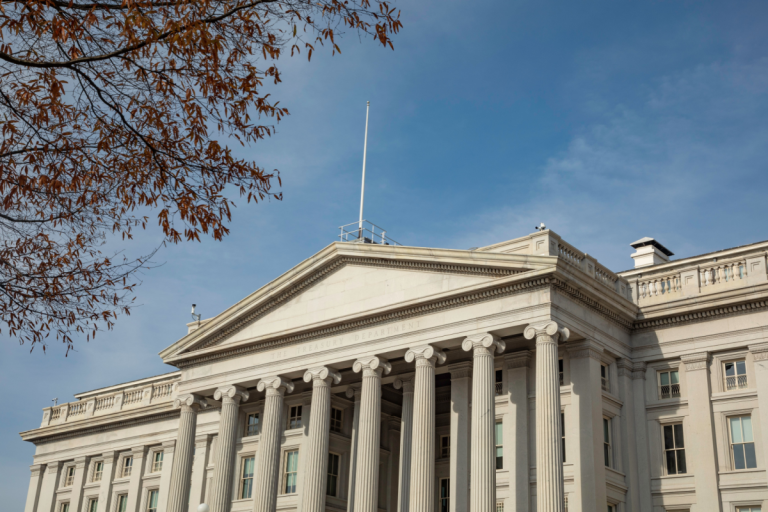
The Treasury Department is proceeding with plans to significantly scale back the Office of Financial Research (OFR), a unit created after the 2008 financial crisis to monitor systemic risk across the financial system.

According to internal restructuring documents, the department has begun implementing changes that could eliminate up to 63% of the office’s workforce. A March 10 memo notified employees of a reorganization that will cut a “significant number of positions” beginning May 15.

The proposed fiscal plan includes a 23% reduction in the OFR’s operating budget, equal to roughly $25 million compared with fiscal year 2025. The reductions are tied to staff downsizing and program cuts.

Headcount expected to shrink sharply

The OFR reported 196 full-time employees in 2025. Treasury’s budget blueprint indicated plans to reduce staffing by 124 positions. A draft organizational chart shows approximately 70 roles remaining after the restructuring.

Before implementing layoffs, Treasury offered voluntary buyouts and early retirement packages. The office is funded through assessments on large financial institutions rather than direct congressional appropriations.

Role in financial stability oversight

Established under the Dodd-Frank Act, the OFR gathers and analyzes data used by regulators to identify emerging financial risks. Its research supports the Financial Stability Oversight Council (FSOC), an interagency body chaired by the Treasury secretary.

The office also collects underlying data used to calculate the Secured Overnight Financing Rate (SOFR), a widely used benchmark interest rate for financial contracts. Previous legislative proposals from Senate Republicans sought to eliminate the OFR while transferring authority to continue SOFR data collection to Treasury.

A Treasury spokesperson said the department “maintains that the Office of Financial Research will be appropriately staffed to perform its duties to support the Financial Stability Oversight Council and its member agencies.”

Political divide over mission and scope

Republican lawmakers have frequently criticized the OFR, arguing it possesses overly broad data-gathering authority and produces research that overlaps with other regulatory bodies. Senate Banking Committee Chair Tim Scott previously proposed abolishing the office during negotiations over a party-line tax bill, though procedural rules prevented the measure from advancing.

Democrats, however, warn that weakening the office could reduce oversight during a period of market stress. Sen. Elizabeth Warren said the move comes as risks in credit markets intensify, calling it “gutting the office designed to evaluate financial risks.”

Private credit concerns in focus

The restructuring unfolds amid turbulence in private credit markets. Several large funds have recently limited investor withdrawals as outflows accelerated. In a recent report, the OFR estimated that lending exposure to private credit entities ranges between $410 billion and $540 billion.

Federal Reserve Chair Jerome Powell said the central bank is monitoring developments but does not currently view the situation as a systemic threat.

The future scale and influence of the OFR will likely depend on how financial markets evolve in the coming months and whether policymakers determine that reduced staffing can still support the council’s risk-monitoring mandate.

Trump Weighs 100% Tariffs on Drug Imports

Plan targets companies outside pricing deals

President Donald Trump is preparing to impose sweeping new tariffs on pharmaceutical imports, targeting companies that have not agreed to sell medications directly to consumers under his “Most Favored Nation” pricing initiative.

According to a draft executive order reviewed by media outlets, patented drugs and their active pharmaceutical ingredients could face a 100% tariff. The proposal is not yet finalized and may change, but the administration is reportedly considering announcing the measures as early as Thursday.

Incentives to negotiate or relocate production

The draft outlines potential pathways for drugmakers to reduce or avoid the steep levies. Companies that join the administration’s pricing initiative would be exempt from the 100% tariff.

Additionally, firms that commit to relocating drug manufacturing to the United States could see their tariff rate lowered to 20% for four years. However, under the proposal, that reduced rate would revert to 100% beginning in 2030.

It remains unclear whether certain categories of medicines would be excluded or whether additional adjustments will be made before the order is finalized.

Part of broader trade strategy reset

The proposed drug tariffs represent an early move in Trump’s effort to reshape his trade policy following a February Supreme Court ruling that invalidated portions of his earlier tariff program. The court determined that some of the prior levies exceeded executive authority.

Trump has criticized the ruling and signaled that his administration will pursue alternative regulatory mechanisms to reintroduce broad tariffs. The pharmaceutical sector now appears to be a central focus of that strategy.

Scope of existing pricing initiative

The administration has already secured agreements with more than a dozen pharmaceutical companies to sell select drugs directly to consumers under the “Most Favored Nation” framework. The initiative aims to align U.S. drug prices more closely with lower prices available abroad.

However, the program currently covers only a limited number of medications. Many of those drugs have generic equivalents available at lower prices through existing market channels.

Under the draft order, the threat of high import tariffs could pressure additional manufacturers to participate in the program or shift operations domestically.

Economic and political implications

The potential tariffs come amid concerns within parts of the Republican Party that aggressive trade measures could contribute to higher consumer prices. Pharmaceutical imports play a critical role in U.S. supply chains, particularly for active ingredients used in domestic drug manufacturing.

Whether the proposed tariffs will advance in their current form remains uncertain. The White House has not publicly commented on the draft, and further revisions could emerge before any formal announcement.

Magnitude 7.4 Quake Hits Indonesia, Triggers Tsunami Alert

Strong tremor strikes Molucca Sea region

A powerful magnitude 7.4 undersea earthquake struck northern Indonesia on Thursday, damaging buildings, prompting residents to flee into the streets and triggering a brief tsunami warning. Authorities confirmed that at least one person was killed and several others were injured.

The quake’s epicenter was located in the Molucca Sea, according to the U.S. Geological Survey. Strong shaking lasting between 10 and 20 seconds was reported in Bitung in North Sulawesi province and in Ternate in neighboring North Maluku.

Small tsunami waves recorded

Monitoring stations detected waves reaching up to 30 inches above normal tide levels roughly 30 minutes after the tremor. Indonesia’s meteorological agency initially issued a tsunami warning but lifted it hours later as the threat subsided.

The Pacific Tsunami Warning Center in Honolulu said minor sea level fluctuations were possible in Malaysia, the Philippines, Taiwan and Papua New Guinea. No threat was reported for Hawaii, Guam or other distant territories.

Casualties and structural damage

Indonesia’s Search and Rescue Agency reported that a 70-year-old woman died when a building collapsed in Manado, North Sulawesi. Another resident in the same area was injured. In Ternate, at least three people were hospitalized.

Preliminary assessments indicated light to severe structural damage in parts of Ternate, including a church and two homes. Officials in Bitung were still evaluating the extent of destruction.

Video footage released by authorities showed flattened houses and cracked walls, while television broadcasts captured residents gathering in open areas to avoid falling debris. Nearly 50 aftershocks were recorded in the hours following the initial quake.

Residents recount sudden shaking

Marten Mandagi, a resident of Bitung, described the moment the earthquake struck. “We had just woken up and suddenly the earthquake hit… we all ran out of the house,” he said. “The shaking was very strong.”

Mandagi added that his immediate neighborhood appeared largely intact. “We’re still checking whether there is damage or not. But here we are safe, there are no casualties or destruction,” he said.

Region prone to seismic disasters

Indonesia, home to more than 280 million people, lies along the Pacific “Ring of Fire,” an area characterized by intense seismic and volcanic activity. Earthquakes and eruptions are frequent due to the movement of major tectonic plates beneath the archipelago.

In 2022, a magnitude 5.6 earthquake in Cianjur, West Java, killed at least 602 people. Earlier, in 2018, a powerful quake and tsunami in Sulawesi claimed more than 4,300 lives. The 2004 Indian Ocean earthquake triggered a catastrophic tsunami that killed over 230,000 people across multiple countries, with Indonesia’s Aceh province suffering the highest toll.

Authorities continue to assess damage and monitor seismic activity in the affected areas.

Heart Association Updates Dietary Advice

Emphasis on plant-based patterns

The American Heart Association on Tuesday released updated nutrition guidance urging Americans to follow a dietary pattern centered on vegetables, fruits and whole grains, with a stronger emphasis on plant-based protein sources over meat.

The organization recommended limiting sugar, salt and ultra-processed foods while favoring legumes, nuts and seeds as primary protein sources. It also advised replacing full-fat dairy products with low-fat or non-fat alternatives.

Differences with federal messaging

The guidance arrives amid broader debate over national dietary priorities. Earlier this year, President Donald Trump announced new federal recommendations encouraging higher protein intake from both animal and plant sources and endorsing full-fat dairy consumption.

While the administration has supported the use of beef tallow and red meat, the AHA advised selecting lean cuts when consuming red meat, avoiding processed varieties and keeping portions small. It placed clear priority on plant-based proteins and unsaturated fats.

Health Secretary Robert F. Kennedy Jr. has also promoted initiatives under the “Make America Healthy Again” campaign, focusing on removing synthetic dyes, reducing ultra-processed foods and cutting back on added sugars and certain seed oils.

Focus on sodium, alcohol and added sugars

Beyond protein sources, the AHA encouraged minimizing added sugars in both beverages and foods and choosing unsaturated fats over saturated fats. The organization recommended preparing meals with little or no salt and limiting alcohol intake.

It also advised that heart-healthy eating patterns begin early in life, stating that children can and should adopt such dietary habits starting at age one.

Alignment with FDA guidance

A spokesperson for the U.S. Food and Drug Administration said the AHA’s recommendations are aligned with federal dietary guidelines on major issues and expressed interest in continued collaboration.

The American Heart Association, the nation’s oldest and largest voluntary organization focused on combating heart disease and stroke, updates its dietary guidance roughly every five years. The latest recommendations aim to reduce cardiovascular risk through long-term changes in eating patterns rather than focusing on individual foods alone.