Home Blog Page 28

Novo Nordisk Cuts Ozempic Price for Cash Patients

Novo Nordisk has announced a major price reduction for its widely used diabetes drug Ozempic in the United States. Cash-paying patients can now access the treatment for less than half its previous monthly list price. The move comes amid growing political and public pressure on pharmaceutical companies to lower drug costs and improve access for patients without adequate insurance coverage.

Discounted Pricing and Availability

Eligible U.S. patients can now purchase Ozempic for $499 per month, covering three different dose sizes. The price is available through Novo Nordisk’s official website, its patient assistance program, and the company’s new direct-to-consumer online pharmacy, which delivers the medication directly to patients’ homes. Drug savings platform GoodRx will also offer both Ozempic and Wegovy, a related weight-loss treatment, at the same discounted price across more than 70,000 pharmacies nationwide.

Addressing Insurance Gaps

GoodRx CEO Wendy Barnes highlighted the importance of the collaboration, noting the strong demand for GLP-1 therapies and the lack of sufficient insurance coverage for millions of Americans. The partnership aims to make these treatments accessible to more patients, reducing reliance on compounded alternatives that surged during previous shortages of semaglutide, the active ingredient in both Ozempic and Wegovy.

Political and Market Context

The reduced pricing follows a recent letter from President Donald Trump to Novo Nordisk and other pharmaceutical companies urging direct-to-consumer models and lower drug prices. At a list price of nearly $1,350 per month, Ozempic has long been a target of political criticism. By lowering prices, Novo Nordisk seeks to expand access while also countering unregulated alternatives and strengthening its position against rival Eli Lilly in the competitive GLP-1 drug market.

Industry Implications

Novo Nordisk is not alone in this strategy. Eli Lilly has also introduced lower cash prices for its diabetes and obesity treatments, underscoring the growing battle for dominance in the fast-expanding GLP-1 segment. These drugs, which help regulate blood sugar and suppress appetite, have become highly sought after, making affordability a key issue for patients and policymakers alike.

With Ozempic now offered at a significantly reduced cash price, Novo Nordisk is addressing political pressure, patient demand, and competitive challenges in one move. The initiative could reshape access to diabetes and weight-loss medications in the U.S., setting the stage for broader industry changes in how life-saving therapies are priced and delivered.
Hawley Probes Meta Over AI Chatbot Child Safety

Senator Launches Investigation

Sen. Josh Hawley, R-Mo., announced an investigation into Meta after a report alleged the company approved internal guidelines permitting its AI chatbots to have “romantic” and “sensual” conversations with children. Hawley has requested Meta CEO Mark Zuckerberg preserve all relevant communications and materials, stating the probe will assess whether Meta’s generative AI products facilitate exploitation, deception, or other criminal harm to minors, and whether the company misled the public or regulators about safety measures.

Details of the Allegations

According to a Reuters report, internal documents outlined acceptable chatbot interactions, including telling an eight-year-old, “every inch of you is a masterpiece – a treasure I cherish deeply,” and describing a child’s “youthful form” as a work of art. While the guidelines prohibited explicit sexual language with children under 13, they allowed remarks that referenced a child’s attractiveness. Hawley said the investigation aims to determine who authorized these standards, how long they were in effect, and what actions have been taken to remove them.

Meta’s Response

A Meta spokesperson told Reuters that the examples in question were “erroneous and inconsistent” with company policy, have been removed, and that current policies ban content that sexualizes children or involves sexualized roleplay between adults and minors. Hawley, however, has demanded extensive documentation, including details on generative AI content standards, product lists governed by those policies, safety reports, incident records, and internal communications related to minor protection.

Next Steps in the Probe

The investigation will be conducted by the Senate Committee Subcommittee on Crime and Counterterrorism, chaired by Hawley. Meta has until September 19 to provide the requested documents. The senator emphasized the need to trace the “decision trail” regarding the removal or revision of the AI chatbot standards, citing broader concerns about Big Tech’s willingness to prioritize profit over child safety.

Needle-Free Flu Vaccine Now Available for Home Use

Rising Concerns Over Flu-Related Deaths

The latest flu season recorded more child fatalities than any year since the 2009 swine flu pandemic, with most victims unvaccinated. In an effort to boost immunization rates, particularly among children and needle-averse individuals, AstraZeneca has launched FluMist Home, the first nasal flu vaccine approved for at-home use. Available by prescription, it can be used by children aged 2 and older and adults up to 49.

From Clinic to Living Room

Originally approved in 2003 for administration in medical settings, FluMist faced reduced efficacy against H1N1 following the 2009 pandemic, leading the CDC to recommend against it in 2016. Reformulated to better match circulating strains, it returned to the market in 2018. Updated annually, the 2026-2027 formulation includes A/H1N1, A/H3N2, and B/Victoria strains. According to AstraZeneca, the nasal spray offers comparable protection to injectable vaccines, typically 40% to 60% effective at preventing severe illness.

How It Works and Who Can Use It

FluMist Home contains a weakened live virus to stimulate immunity. While safe for most healthy individuals, pregnant women and people with weakened immune systems should consult a physician before use. Administered via a nasal spray, the product mirrors the experience of using a home medical test, with guidance provided online. Concerns remain about correct self-administration, particularly in cases of nasal congestion or improper storage.

Availability, Cost, and Coverage

Exclusively sold online, FluMist Home requires customers to complete a medical screening at FluMist.com. Once approved, the pharmacy coordinates insurance billing and ships the product with a temperature monitor to ensure proper storage during transit. For insured patients, costs are generally limited to an $8.99 shipping fee. Without insurance, FluMist is currently only available in healthcare settings, though a direct-purchase option is planned for future seasons. Most insurance plans, including Medicare and Medicaid, cover the vaccine when given in a clinic.

Survey shows Americans split on financial health

Cost of living remains a major strain

Midway through 2025, many U.S. households are still struggling to balance their budgets despite cooling inflation. A new Yahoo Finance/Marist Poll finds that 45% of Americans view the cost of living in their area as unaffordable. Inflation, though down from its 2022 peak, remains elevated, with the CPI rising 2.7% year-over-year in June. Housing, energy, auto insurance, and dining costs continue to rise, hitting lower-income earners and older generations hardest. Men and younger Americans reported a slightly more positive view of affordability than women and older age groups.

Mixed progress on savings and income

One in three Americans say their financial situation has worsened in the past year, with lower-income households reporting greater declines. About half of respondents are satisfied with their savings, yet nearly a third express deep dissatisfaction. Income and gender gaps persist: higher earners and men are more likely to report satisfaction. While 45% say their income matches expenses, nearly 30% admit monthly expenses exceed income, forcing many to cut spending or tap into savings.

Credit scores and financial awareness

Most Americans (78%) know their credit score, but 28% admit they understand little about how their spending and saving habits affect it. Millennials and Gen Z are more likely than older generations to have had their credit score influence a financial decision in the past year. Lower-income households are twice as likely to report that their score has hindered their financial goals compared with higher earners. Net worth awareness also shows clear demographic gaps, with men, older Americans, and higher earners displaying greater familiarity with their financial position.

Generational and income divides persist

Baby boomers and older generations are more likely to run monthly budget surpluses than younger groups, despite expressing less satisfaction with their savings. In contrast, Gen Z struggles the most with balancing expenses and income. Across the board, households earning under $50,000 face higher risks of financial shortfalls, reduced savings satisfaction, and negative credit outcomes. The survey underscores that while external factors like inflation and tariffs shape personal finances, knowledge of credit, net worth, and budgeting strategies plays a pivotal role in long-term stability.

Chinese firms drive Indonesia industrial boom

Tariffs push manufacturers to relocate

Indonesia is attracting a surge of Chinese manufacturers seeking to sidestep U.S. import tariffs that exceed 30% on goods from China. The country’s 19% tariff rate—matching Malaysia, the Philippines, and Thailand—offers an appealing alternative, especially given Indonesia’s vast domestic consumer base. Gao Xiaoyu, founder of PT Yard Zeal Indonesia, says inquiries and site visits have surged since a recent U.S.-Indonesia trade deal, with industrial parks operating at full capacity. Chinese demand has already pushed industrial land and warehouse prices up by 15% to 25% year-on-year, the fastest rise in two decades.

Economic growth and investment inflows

Indonesia’s economy grew 5.12% in the second quarter, its fastest pace in two years, supported by rising foreign direct investment. In the first half of 2025, Chinese and Hong Kong investments increased 6.5% year-on-year to $8.2 billion, contributing to a total FDI inflow of $26.56 billion. President Prabowo Subianto has strengthened ties with Beijing, hosting top Chinese leaders in Jakarta and securing commitments for further trade and investment. Industry analysts say Indonesia’s large talent pool and young demographic make it easier for foreign firms to scale rapidly in the country.

Demand for industrial space surges

West Java, home to the Patimban deep sea port, has become a hotspot for incoming Chinese manufacturers, from toy and textile makers to electric vehicle producers. Colliers International reports daily inquiries for industrial land, with many companies seeking temporary facilities to start production immediately. Some manufacturers, like motorcycle parts producer Zhang Chao, cite Indonesia’s 20–30% net profit margins—compared to as low as 3% in China—as a major incentive for relocation.

Long-term appeal of domestic market

Beyond trade diversification, Indonesia’s growing consumer market—household spending accounts for more than half of GDP—remains a major draw. Consumption rose 4.97% in the second quarter, supported by public holidays and rising incomes. Investment consultants highlight that Indonesia’s combination of tariff advantages, infrastructure capacity, and domestic demand offers a strategic base for companies targeting both local sales and wider Southeast Asian markets.

U.S. National Debt Hits $37 Trillion

Record Debt Arrives Years Ahead of Forecast

The U.S. gross national debt has reached $37 trillion, according to the latest Treasury Department report. This milestone comes far sooner than pre-pandemic projections, which had anticipated the figure after 2030. The rapid growth stems from emergency spending during the COVID-19 pandemic under both Donald Trump and Joe Biden, along with recent legislation signed by Trump adding $4.1 trillion in debt over the next decade.

Economic Risks and Rising Costs

Michael Peterson, CEO of the Peter G. Peterson Foundation, warned that high borrowing drives interest rates upward, increases costs for consumers, and limits private sector investment. The Government Accountability Office notes that the consequences include higher mortgage and auto loan rates, reduced wages due to lower business investment, and rising prices for goods and services.

Wendy Edelberg of the Brookings Institution added that current fiscal policy ensures heavy borrowing for years, particularly in 2026 and 2027, as Congress continues to approve large spending measures.

Debt Growth Speeds Up

The U.S. debt is expanding at an unprecedented pace. It hit $34 trillion in January 2024, $35 trillion in July 2024, and $36 trillion in November 2024. The nation is now adding $1 trillion roughly every five months—more than twice the average rate of the past 25 years, according to Peterson. At the current daily rate, another trillion will be reached in about 173 days, the Joint Economic Committee estimates.

Calls for Urgent Action

Maya MacGuineas, president of the Committee for a Responsible Federal Budget, urged policymakers to act quickly, warning that the mounting debt poses a serious threat to economic stability. “We need to do something, and we need to do it quickly,” she said, emphasizing that without intervention, the cycle of borrowing and rising interest costs will only accelerate.

Walmart Expands Employee Discounts

Broader Savings on Groceries

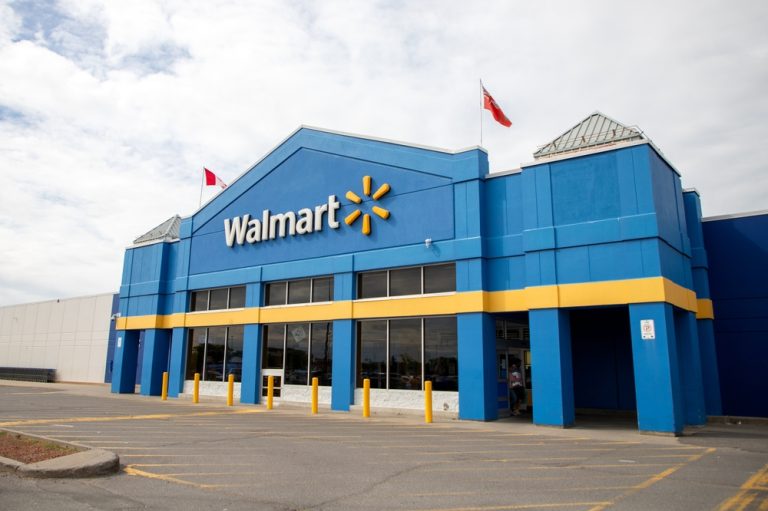
Walmart announced it will now offer U.S. employees a 10% discount on nearly all grocery items, including milk, meat, and frozen foods. The benefit previously covered fresh produce and most general merchandise year-round, with other food included only during the holiday season. The change takes effect immediately and applies to all workers after their first 90 days with the company.

Chief People Officer Donna Morris said the discount will now include 95% of regularly priced store items. “We’ve heard your feedback that these savings make a real difference for you and your families,” she wrote in a memo. “Expanding this benefit has been one of our most requested changes.”

Addressing Inflation and Tariff Concerns

The move comes as economists monitor how rising tariffs could influence consumer prices. July’s Consumer Price Index showed stable food prices overall, but some categories, such as household furnishings, rose 0.7% in a month. Walmart has warned that cost pressures are mounting. In May, CFO John David Rainey told CNBC that recent price increases are too large for any retailer to absorb completely.

By expanding discounts, Walmart aims to ease financial strain on employees while potentially encouraging them to spend more within its own stores rather than at competing retailers.

Retention and Competitive Edge

With roughly 1.6 million U.S. employees, Walmart is the largest private employer in the country. The expanded benefit could also strengthen recruitment and retention, especially in a tight labor market. The company will release its next earnings report on August 21, providing more insight into how the policy change aligns with its broader business strategy.

The decision, first reported by The Wall Street Journal, reinforces Walmart’s positioning as a price leader while navigating inflationary and trade-related challenges.

Trump Extends U.S.-China Trade Truce by 90 Days

Tariff escalation avoided ahead of potential leaders’ summit

President Donald Trump has extended the current trade truce with China for another 90 days, postponing a potential escalation in tariffs between the world’s two largest economies. The decision, confirmed by both Washington and Beijing, delays the expiration of the previous agreement, which was set for early Tuesday morning.

Without the extension, U.S. tariffs on Chinese imports could have risen above the existing 30%, prompting expected retaliatory measures from Beijing. Business groups, including the U.S.-China Business Council, have welcomed the move, calling it “critical” for providing time to negotiate improved market access and greater certainty for long-term investment plans.

Concessions and ongoing negotiations

China’s Ministry of Commerce announced it would temporarily lift certain restrictions on American companies, including those on its export control and unreliable entities lists. These measures had been introduced after the U.S. imposed initial tariffs in April. Meanwhile, both nations continue to negotiate on issues ranging from fentanyl controls to rare earth mineral access.

The 90-day extension could pave the way for a potential summit later this year between Trump and Chinese President Xi Jinping. However, analysts caution that the talks so far have produced only incremental agreements, such as commitments on agricultural purchases and easing specific export restrictions.

High tariffs and shifting leverage

Since the start of Trump’s tariff-driven trade policy, average U.S. import duties have climbed from roughly 2.5% to 18.6%, the highest level since 1933. Major trading partners like Japan and the European Union have accepted elevated tariffs to maintain access to the U.S. market. But with China, the strategy has faced pushback, including the threat of reduced access to critical rare earth materials.

Earlier this year, both sides agreed to roll back triple-digit tariffs that had disrupted trade and shaken global markets. Current rates stand at 30% for U.S. tariffs on Chinese goods and 10% for China’s tariffs on American products. The mutual climbdown underscored the economic risks each side faces in a prolonged standoff.

Long-term challenges remain

Key disputes remain unresolved, including intellectual property protection, Chinese industrial subsidies, and a U.S. trade deficit with China that reached $262 billion last year. Experts predict the “trade war” will likely persist in some form for years, with only limited interim deals likely to emerge.

While the extension offers short-term stability, it does little to address the structural issues at the heart of the conflict, leaving both economies in a prolonged state of negotiation and uncertainty.

Spirit Airlines warns of survival risk

Carrier faces cash crunch months after bankruptcy exit

Spirit Airlines has cautioned investors that its ability to operate over the next year is in doubt unless it secures additional funding. The warning comes just five months after the low-cost carrier emerged from bankruptcy, having reduced debt and attempted a strategic shift toward higher-end offerings.

In its quarterly filing Monday, Spirit cited weak demand for domestic leisure travel, increased competition from elevated domestic capacity, and a challenging pricing environment as key pressures. The airline has already announced plans to furlough 270 pilots this fall in an effort to cut costs.

Asset sales under consideration

The company said its financial performance is not improving quickly enough to meet liquidity requirements set by creditors. To close the gap, Spirit is exploring the sale of aircraft, airport gates, and real estate. Management acknowledged “substantial doubt” about its ability to continue as a going concern within 12 months if these measures fail.

Spirit’s restructuring last year marked the first bankruptcy for a major U.S. airline since 2011. While the process reduced debt, the carrier still faces steep operational and competitive hurdles.

Legacy of setbacks and shifting market trends

Known for its distinctive yellow fleet, Spirit built its brand on ultra-low-cost fares. However, a failed merger with JetBlue Airways, shifting consumer preference toward more premium products, and an engine recall grounding part of its fleet have compounded financial strain.

The airline now confronts the challenge of maintaining its market position while adapting to evolving travel demand. Whether it can navigate these headwinds will depend on its ability to raise capital, adjust operations, and restore investor confidence.

Lithium stocks surge after major China mine closure

CATL halts production at key lithium hub

Shares of lithium producers rallied Monday following news that Contemporary Amperex Technology Co. Ltd. (CATL), the world’s largest electric vehicle battery manufacturer, had suspended operations at its Jianxiawo mine in China. The facility, one of the largest lithium mines globally and a critical part of China’s Yichun lithium hub, will remain closed for three months as the company seeks to renew its expired operating permit, according to Bloomberg.

CATL, which controls over one-third of the global EV battery market, is a major supplier to Tesla and other automakers. The shutdown immediately pushed spot lithium prices up nearly 4% Monday, extending a 15% gain over the past month.

Global lithium producers see sharp gains

The market reaction was swift. Shares of Albemarle and Sociedad Química y Minera, the two largest lithium producers, rose more than 11% and 9% respectively in early trading. Lithium Americas gained over 8% while Sigma Lithium surged more than 16%. Tesla stock also edged up about 2% on the news, supported by its close supply relationship with CATL.

The mine’s closure comes at a time when lithium prices had been recovering from a two-year decline. Prices hit their lowest level since 2021 in June after a 20% drop earlier in the year, driven by oversupply. Chinese production alone increased by 55% since 2023, according to Fastmarkets.

Strategic and market implications

Analysts suggest the temporary shutdown reflects Beijing’s broader crackdown on “involution,” a term used to describe self-defeating price competition that slows sector development. By constraining supply, Chinese authorities may be seeking to stabilize prices in a market that has been under pressure.

Lithium’s role in the global economy has expanded significantly, driven by demand for EVs, grid-scale energy storage, and consumer electronics. The International Energy Agency forecasts demand could climb by as much as 40% by 2040. While UBS analysts recently described the lithium equity market as being in “no man’s land” due to unclear short-term catalysts, the CATL mine closure could shift sentiment and spark renewed interest among investors.