
Home Blog Page 56

U.S. Government Targets Google with Landmark Antitrust Proposal

The United States government has taken a bold step in its fight against monopolistic practices in the tech industry. On Wednesday, the Justice Department (DOJ) proposed a partial breakup of Google, focusing on the company’s Chrome browser, after a ruling earlier this year determined Google violated antitrust laws with its search business. This move signals one of the most significant challenges to a tech giant in decades, potentially reshaping the internet as we know it.

The DOJ’s Case Against Google

The DOJ’s case centers on whether Google’s dominance in search and related technologies was maintained through illegal practices. The government argues that Google’s exclusive agreements with companies like Apple and Samsung ensured it remained the default search engine, shutting out competitors like Bing and DuckDuckGo.

District Judge Amit Mehta’s August ruling determined that Google violated Section 2 of the Sherman Act, a key anti-monopoly law. “Google is a monopolist, and it has acted as one to maintain its monopoly,” Mehta wrote. The proposed remedies aim to dismantle Google’s tightly integrated ecosystem to restore competition and innovation in search.

Chrome Browser Divestiture: A Historic Proposal

Central to the DOJ’s filing is a proposal to spin off Google Chrome, one of the most widely used browsers in the world. This move could prevent Google from leveraging Chrome to solidify its search monopoly. By separating Chrome, the government aims to level the playing field for rival search engines and browsers.

“The playing field is not level because of Google’s conduct,” government lawyers stated. They added that Chrome’s spinoff would reduce the chances of another illegal monopoly forming.

Restrictions Beyond Chrome

The government’s demands extend beyond the browser market. The DOJ has called for Google to syndicate its search results to rival engines for the next decade, giving competitors access to valuable data. Additionally, the DOJ proposed banning exclusive agreements with hardware manufacturers, such as those that made Google the default search engine on iPhones and Android devices.

Another significant restriction targets Google’s artificial intelligence operations. The DOJ insists Google must give websites the option to prevent their data from being used to train its AI models. This aligns with concerns raised by Microsoft CEO Satya Nadella, who warned of a “nightmare” future if Google continues to use search queries to fuel its AI dominance.

Google’s Response: A Fierce Defense

Unsurprisingly, Google has pushed back. In a blog post, Kent Walker, Google’s President and Chief Legal Officer, described the DOJ’s proposals as “extreme.” He argued that such measures would harm user privacy and security while disrupting beloved products. “DOJ’s wildly overbroad proposal goes miles beyond the Court’s decision,” Walker said, adding that Google plans to present its own proposal in December and make a broader case in 2024.

Lessons from the Past: The Microsoft Parallel

The Google antitrust case echoes the historic DOJ action against Microsoft in the 1990s. In that case, Microsoft was accused of bundling its Internet Explorer browser with Windows to stifle competition. A settlement required Microsoft to share its programming interfaces, opening the door for competitors like Firefox and Chrome.

Judge Mehta highlighted the similarities, stating, “Just as the agreements in [the Microsoft case] kept rivals below a critical level of usage, Google’s agreements have constrained the query volumes of its rivals, inoculating Google against any genuine competitive threat.”

Potential Impact on Google and the Tech Industry

The DOJ’s proposed penalties could significantly alter how Americans interact with Google’s products. Beyond the Chrome divestiture, the government seeks to separate Google Search from the Android operating system and Google Play store. If implemented, these measures could disrupt Google’s product integration, creating opportunities for smaller players to thrive.

The outcome of this case may also influence how other tech giants, such as Amazon and Apple, operate. A final decision is expected in 2025, following a hearing next April.

The U.S. government’s antitrust action against Google is more than a battle against one company—it’s a fight for the future of competition in the digital age. If the proposed remedies succeed, they could usher in a more open and innovative internet landscape. However, with Google fiercely contesting these measures, the road ahead promises to be long and contentious.
China’s Central Bank Holds Lending Rates Steady Amid Stimulus Evaluation

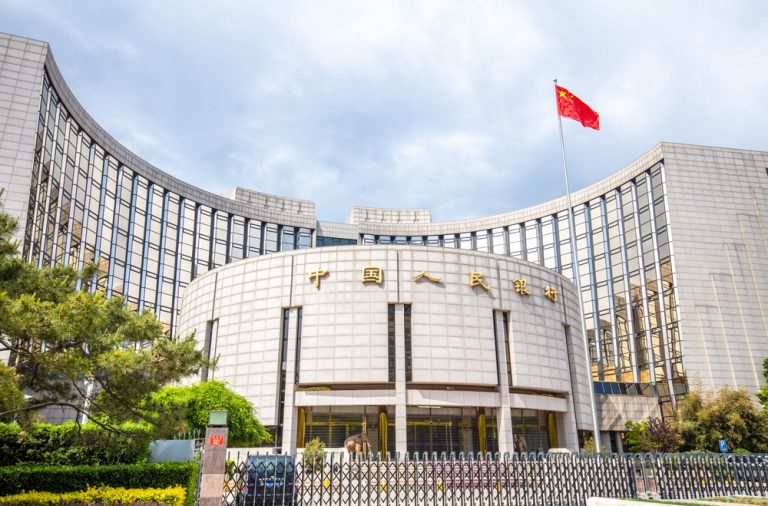
China’s central bank, the People’s Bank of China (PBOC), announced on Wednesday that it would maintain its key benchmark lending rates. The 1-year loan prime rate (LPR) remains at 3.1%, and the 5-year LPR stays at 3.6%.

Market Predictions and Policy Considerations

The decision to hold rates steady was anticipated by market analysts, with a Reuters poll showing expectations for no change in the LPR this month.

“There is no immediate need to adjust the LPR,” noted Bruce Pang, chief economist and head of research for Greater China at JLL. He emphasized that Chinese policymakers are still assessing the impact of recent economic stimulus measures.

Constraints on Lower Lending Rates

Record-low net interest margins at Chinese commercial banks have hindered their ability to support further rate cuts. Pang suggested that while another policy rate reduction in 2023 is unlikely, there remains potential for cuts in 2025.

The 1-year LPR primarily impacts corporate and household loans, while the 5-year LPR serves as a benchmark for mortgage rates.

Recent Stimulus and Economic Data

China’s rate decision follows last month’s 25 basis point cuts to both the 1-year and 5-year LPRs. October’s economic data highlighted lackluster momentum despite recent stimulus efforts:

  • Industrial production and fixed asset investment growth were slower than expected.
  • The decline in real estate investment steepened.
  • Retail sales exceeded expectations, growing by 4.8% year-on-year, suggesting early benefits from the stimulus measures.

New Fiscal Package and Economic Challenges

In early November, the Ministry of Finance announced a 10 trillion yuan ($1.4 trillion) fiscal package to address local government debt and signaled potential economic support in 2024.

Despite these measures, concerns linger about economic growth, driven by:

  • A prolonged property crisis.
  • Weak consumer and business sentiment.
  • Uncertainty surrounding Donald Trump’s election victory and potential tariffs on Chinese exports.

Growth and Market Outlook

Economic forecasts from major financial institutions suggest slower growth ahead:

  • Morgan Stanley projects GDP growth of around 4% annually for the next two years and has downgraded Chinese equities to “slight underweight,” citing deflation risks and trade tensions.
  • Goldman Sachs estimates China’s GDP growth could slow to 4.5% in 2025, down from 4.9% in 2024.

Despite this, Goldman maintained an “overweight” stance on Chinese equities, predicting a 13% upside for the CSI 300 index in 2024.

Policy Room Remains

PBOC Governor Pan Gongsheng indicated that there is still room for policy rate cuts before year-end. However, analysts remain skeptical about whether the Chinese government will implement enough fiscal stimulus to significantly boost consumption and housing.

As Beijing continues to evaluate the effects of its current measures, the focus remains on navigating challenges while stabilizing economic growth.

U.S. Allies Warn of Russian Escalation Amid Suspected Cable Sabotage

U.S. allies in Europe are raising alarms over what they describe as Russia’s “escalating hybrid activities” targeting NATO and EU countries. This warning comes after two undersea data cables were severed in the Baltic Sea, creating fresh concerns over regional security.

Suspected Sabotage in the Baltic Sea

The cables, which linked Finland to Germany and Sweden to Lithuania, were cut in incidents described as deliberate. German Defense Minister Boris Pistorius expressed serious doubts about the possibility of accidental damage, stating, “No one believes that these cables were cut accidentally. We also have to assume, without knowing it yet, that it is sabotage.”

Russian Response and Ongoing Tensions

In a related development, Moscow accused Ukrainian forces of launching six U.S.-made missiles into Russian territory on Tuesday, adding fuel to the already tense geopolitical climate. Poland has warned that continued acts of sabotage could lead to the closure of remaining Russian consulates in the country, according to Polish Foreign Minister Radoslaw Sikorski.

United European Front

The foreign ministers of France, Germany, Italy, Poland, Spain, and the United Kingdom issued a joint statement emphasizing the scale of the threats posed by Moscow’s “hybrid activities.” While the statement did not explicitly blame Russia for the cable damage, it highlighted the unprecedented variety and scale of these activities and their significant security implications.

The joint declaration called for unity among European and transatlantic allies, emphasizing, “European countries must play a still greater role in assuring our own security, acting alongside our transatlantic and global partners.”

Investigations Underway

The Finnish data service provider Cinia reported that damage to the C-Lion1 cable, which runs nearly 750 miles between Helsinki and Rostock, was detected on Monday. This cable, commissioned in 2016, is Finland’s only direct data connection to central Europe, underscoring its strategic importance.

Swedish authorities are conducting an investigation, as one of the incidents occurred in Swedish waters. Finland and Germany issued a joint statement stressing the importance of protecting critical infrastructure, stating, “The fact that such an incident immediately raises suspicions of intentional damage speaks volumes about the volatility of our times.”

Security Implications

With these events unfolding against the backdrop of Russia’s ongoing war in Ukraine, the focus on safeguarding Europe’s critical infrastructure has intensified. The situation highlights the urgent need for collective security measures to counter potential threats and hybrid warfare tactics from malicious actors.

Nvidia’s Q3 Earnings Report – Wall Street Awaits AI Giant’s Latest Performance

Nvidia (NVDA) is set to release its Q3 earnings after the market closes next Wednesday, giving investors a fresh insight into the company’s dominance in the AI sector and its ongoing growth trajectory.

Stellar Stock Performance in 2024

Nvidia, the world’s largest publicly traded company by market capitalization, has seen its stock surge 189% year-to-date as of Friday. This performance outpaces all of its semiconductor competitors. In comparison, AMD (AMD) shares are down nearly 8% year-to-date, while Intel (INTC) has faced significant struggles, with its stock plummeting 51%.

Earnings Expectations

Analysts estimate Nvidia will report Q3 earnings per share (EPS) of $0.74 on revenue of $33.2 billion. This represents an impressive 83% increase year-over-year from Q3 last year, when EPS was $0.40 on revenue of $22.1 billion. The company’s Data Center segment, its largest revenue driver, is projected to bring in $29 billion, marking a 100% increase from $14.5 billion in Q3 2023. Gaming revenue is anticipated to reach $3 billion, a 7% rise from the $2.8 billion reported a year prior. Gross margins are expected to hit 75%.

Q4 Guidance and Investor Reactions

Investors are keenly watching not only for a potential earnings beat but also Nvidia’s guidance for Q4. Analysts currently expect Nvidia to forecast $37 billion in revenue for the next quarter. Despite strong Q2 results that exceeded forecasts, Nvidia’s stock fell 6% immediately after, suggesting that investors may be wary of previous sky-high expectations or were taking profits.

Blackwell Chip Line and CEO Insights

Investors will seek any updates from CEO Jensen Huang about Nvidia’s next-generation Blackwell AI chips. In the company’s August earnings call, Huang mentioned that production for Blackwell would ramp up in Q4, with several billions of dollars in expected revenue. He highlighted that demand for Blackwell was already surpassing supply, a trend he anticipates will continue. Additionally, Nvidia’s previous-generation Hopper chips are expected to remain in demand moving forward.

Challenges Ahead: Potential Tariffs and Costs

Nvidia’s future could face hurdles as President-elect Trump has proposed broad tariffs on products from various countries. He has also hinted at tariffs on chips manufactured in Taiwan as an alternative to the CHIPS Act aimed at boosting US-based semiconductor production. Given that Nvidia relies heavily on TSMC in Taiwan for chip manufacturing, tariffs could impact pricing strategies and margins, potentially leading to higher prices for customers. Investors will be keen for any commentary from Huang regarding how Nvidia plans to navigate these potential policy changes.

Robotics Investment Surges with $400M for Physical Intelligence

The robotics sector continues to captivate investors, highlighted by Physical Intelligence’s recent $400 million funding round, valuing the company at $2 billion. This massive investment underscores a growing trend toward developing adaptable robots capable of more than just simple tasks. Notably, many of these high-profile funding rounds share a common investor: Jeff Bezos.

Robotics Funding Trends


Robotics startups have seen a strong venture funding year, with $6.4 billion raised in 2024 so far. This pace suggests the sector will surpass last year’s total of $6.9 billion, approaching an estimated $7.5 billion by year’s end, according to Crunchbase data. While these figures are still far from the record-breaking $14.7 billion of 2021, they indicate a healthy and investor-attractive sector.

Money for More Flexible Robots


One key distinction between this year and last is the number of funding rounds. In 2024, there have been only 473 rounds compared to 671 in 2023. However, the substantial size of this year’s largest rounds has boosted total funding. Physical Intelligence’s $400 million round and Figure’s $675 million round earlier in the year were significantly larger than 2023’s top robotics round, a $330 million Series F for Zipline.

Physical Intelligence plans to leverage its new capital to enhance robot functionality and develop versatile software platforms that can be applied to various models. Figure, based in Sunnyvale, California, is working on AI-powered robots aimed at performing hazardous jobs and mitigating labor shortages. Its $675 million raise at a $2 billion valuation in February marked another major milestone.

AI-Powered Versatility in Robotics


The current landscape of robotics startups highlights a significant trend: the use of AI to expand robots’ capabilities beyond traditional tasks like warehouse work. In July, Skild AI, a Pittsburgh-based company developing flexible robot brain models for various tasks, secured a $300 million Series A, valuing it at $1.5 billion.

Another notable player is Collaborative Robotics, based in Santa Clara, California, which raised $100 million in April for its Series B round. The startup’s “cobots,” or collaborative robots, are designed to work alongside humans in industries such as manufacturing, healthcare, and retail, showcasing how versatile AI integration is reshaping the field.

A Big-Name Investor: Jeff Bezos


A significant driver behind some of the largest investments in robotics is Jeff Bezos. Through individual investments or his venture capital firm, Bezos Expeditions, the Amazon founder has been a key supporter of this technological evolution. Bezos co-led Physical Intelligence’s recent funding round and participated in Figure’s substantial raise. Bezos Expeditions was also a co-lead in Skild AI’s funding.

Bezos’ investment history in robotics isn’t new. He previously backed Vicarious, an AI startup focused on developing general intelligence for robots, which was acquired by Intrinsic in 2022. Additionally, Bezos Expeditions has funded Swiss-Mile, a Swiss AI-driven robotics company, and Rethink Robotics, based in Boston.


Physical Intelligence’s $400 million raise is more than a single win; it’s a sign of the evolving robotics industry, emphasizing versatility and AI integration. With venture funding on track to exceed last year’s total, and influential investors like Jeff Bezos backing these developments, the sector is poised for continued growth. The robotics landscape is changing rapidly, promising smarter, more capable solutions for diverse industries.

US Stocks Climb as Investors Mull Over Inflation Data and Fed’s Next Move

U.S. stocks rebounded in afternoon trading on Wednesday as investors digested new consumer inflation data. The Dow Jones Industrial Average (^DJI) advanced by about 0.4%, reversing a recent slump. The S&P 500 (^GSPC) and tech-driven Nasdaq Composite (^IXIC) also made gains, rising approximately 0.3% and 0.2%, respectively.

Bitcoin (BTC-USD) showed continued momentum, climbing roughly 5% to trade above $92,000, signaling resilience in digital assets amid economic shifts.

Inflation Data Aligns with Expectations

The Consumer Price Index (CPI) report for October showed inflation rising at an annual rate of 2.6%, with a monthly increase of 0.2%. Both figures were in line with Wall Street forecasts. Core inflation, which excludes volatile food and energy prices, rose by 3.3% year-over-year and 0.3% month-over-month, also meeting predictions.

This data came after a market rally sparked by post-election optimism slowed down as investors reassessed the impact of President-elect Donald Trump’s proposed economic policies. With inflation concerns resurfacing, Treasury yields pushed higher, pointing to increased borrowing costs.

Fed’s December Rate Cut Still Likely

Despite the uptick in inflation, the Federal Reserve is expected to stay on course for another rate cut in December. Minneapolis Fed President Neel Kashkari emphasized that inflation data will be closely monitored by the central bank in the coming weeks. Speaking at Yahoo Finance’s Invest conference, Kashkari said, “Any surprise to the upside might give us pause,” underscoring the Fed’s cautious approach.

Market data supports this outlook, with the CME FedWatch tool indicating that 80% of traders are anticipating a rate cut in December. The Fed has already reduced its key interest rate by 0.75 percentage points this year as part of its policy easing measures.

Bitcoin Surges Amid Market Shifts

Bitcoin continued its upward trajectory, jumping approximately 5% and trading above $92,000. This significant increase showcases how the digital currency space remains active and appealing to investors looking for alternatives amid traditional market volatility and economic policy shifts.

Market Sentiment and Future Considerations

The CPI report and the possibility of additional rate cuts have added complexity to market sentiment. Investors are now balancing optimism about economic growth with caution over inflationary risks. Trump’s proposed policies, which include tax cuts and increased government spending, could potentially drive economic growth but may also fuel inflation further.

Minneapolis Fed President Kashkari’s comments highlighted the delicate balance the Fed must maintain. “The inflation data is pivotal,” he noted, suggesting that any unexpected rise in inflation could influence the central bank’s strategy moving forward.

As U.S. stocks regain some ground, inflation data and the Federal Reserve’s potential rate cuts will remain central to investor focus in the coming weeks. The expectation of a December rate cut appears strong, but any shifts in inflation metrics or policy announcements from the incoming administration could sway markets and economic forecasts.

Asian Stocks Drop as U.S. Bond Yields Surge Amid Inflation Concerns

Asian stocks took a hit on Wednesday as U.S. bond yields soared to their highest levels since late July, unsettling investors ahead of key inflation data that could determine the pace of the Federal Reserve’s interest rate policies. The two-year Treasury yield surged to 4.367% on Tuesday, pushing the U.S. dollar to its strongest point against the yen in over three months.

The spike in yields comes as the U.S. market reopened following the Veterans Day holiday, reigniting investor concerns over potential fiscal changes under President-elect Donald Trump. His proposed policies, including lower taxes and higher tariffs, are expected to widen the fiscal deficit, increase government borrowing, and fuel inflation. This has led to a volatile market environment where stocks and bonds are clashing.

“Trump Trade” and Market Sentiment

The recent surge in bond yields reflects what analysts are calling the “Trump trade.” Kyle Rodda, senior financial markets analyst at Capital.com, noted, “It all continues to be a part of the Trump trade, which, at its core, is about deeper deficit spending.” Rodda highlighted the tension between equities and rising bond yields: “Higher risk-free rates strangle valuations.”

The initial optimism in U.S. stock markets post-election has cooled, with the S&P 500 futures pointing about 0.1% lower following a 0.3% dip overnight.

Asian Market Performance

The effects of rising U.S. yields extended across Asian markets. Hong Kong’s Hang Seng index slid 0.9%, with the mainland Chinese property subindex falling 1.3%. Chinese blue-chip stocks remained mostly flat. Meanwhile, Japan’s Nikkei and South Korea’s Kospi fell by 1.1% and 1.2%, respectively. Australia’s benchmark ASX 200 also dropped 1.1%, weighed down by declining commodity shares.

In commodities, copper prices fell 2% to a two-month low on the London Metal Exchange as concerns over Trump’s tariff policies and weaker Chinese demand dampened sentiment. Brent crude futures edged up slightly by 0.2% to $72 per barrel, while U.S. WTI crude remained at $68.26 after hitting its lowest levels since late October. Gold managed a modest 0.4% recovery to $2,607 per ounce after dropping to a nearly two-month low in the previous session.

Currency Movements and Potential Japanese Intervention

The U.S. dollar’s strength against the yen caught attention, hitting 154.94 yen for the first time since late July before settling at 154.56 yen. This exchange rate approached the 155-yen-per-dollar level that could prompt action from Japanese authorities. Atsushi Mimura, Japan’s finance ministry currency chief, remarked last week that officials were “ready to take appropriate actions if necessary when excess moves are seen.”

The U.S. dollar index, which measures the greenback against a basket of major currencies, stood at 105.92, close to its strongest level since May 1. Meanwhile, the euro weakened, reaching $1.0595 overnight, its lowest in a year, before slightly rebounding to $1.0625.

Inflation Data and Fed Rate Expectations

The upcoming U.S. consumer price index (CPI) report is critical, as it will inform the Fed’s policy direction. Economists expect a 0.3% monthly rise in the core CPI, and a hotter reading could reduce the likelihood of a Fed rate cut in December. Currently, CME Group’s FedWatch Tool shows a 60% probability for a quarter-point rate cut at the Fed’s December 18 meeting, down from 77% a week earlier.

Europe’s Outlook Amid Trade Concerns

The European economy is also under pressure due to Trump’s stance on trade. He previously warned that the EU would “pay a big price” for insufficient U.S. export purchases, raising fears of new tariffs. This adds to the challenges Europe faces, further exacerbated by weaker global demand and stagnant growth.

Commodities and Energy Sector

OPEC’s recent downgrade of its global oil demand forecast highlighted ongoing weakness in China and other regions, keeping oil prices subdued. Brent crude’s slight rise and WTI’s marginal increase did little to lift the sector’s overall outlook. The strength of the U.S. dollar continued to pressure commodities, making them more expensive for holders of other currencies.

The sharp rise in U.S. bond yields and Trump’s fiscal policies have created a volatile environment for global markets, with Asian stocks leading the decline amid growing inflation concerns. As investors await key U.S. inflation data, the balance between bond and equity markets will remain delicate. The potential for intervention by Japanese authorities and the uncertainty surrounding U.S.-European trade relations add further layers of complexity to the economic landscape.

Singles’ Day 2024: Consumer Caution Dampens China’s Biggest Shopping Event

Once a pinnacle of consumer enthusiasm and spending in China, the Singles’ Day shopping festival has faced a notable decline in appeal this year. Launched by Alibaba in 2009 and known for its massive discounts and marketing campaigns, Singles’ Day—also called “Double 11”—has grown to encompass other major e-commerce platforms like JD.com and Pinduoduo. Traditionally seen as a barometer of Chinese consumer sentiment, this year’s festival highlighted a shift in shopper behavior as economic conditions remained challenging.

A Cooling Domestic Market

China’s domestic economic struggles, driven by a real estate downturn and deflationary pressures, have had a profound impact on consumer spending habits. Shoppers who once eagerly anticipated the annual shopping event are now holding back. This reluctance to splurge is echoed in the words of Wang Haihua, a fitness center owner in Beijing: “I have only spent a few hundred yuan on daily necessities. They’re all tricks and we’ve seen through it over the years.” Wang’s skepticism reflects the sentiment of many consumers who feel promotions are often inflated by pre-sale price hikes that create an illusion of discounts.

Zhang Jiewei, who runs a barber shop in Xi’an, shared similar experiences. “I used to buy a lot two or three years ago…but after the pandemic, I stopped because of lower income,” he said, adding that he chose not to participate in this year’s sales.

E-Commerce Platforms Look Abroad

With the slowing domestic market, major e-commerce companies have begun shifting their focus to overseas consumers. To attract international buyers, platforms like Alibaba introduced promotions such as global free shipping, which has proven effective in boosting sales. According to Alibaba, around 70,000 merchants experienced doubled sales thanks to these incentives. Markets in Singapore and Hong Kong saw new customers double as well, showcasing the impact of this pivot to foreign markets.

Expert Opinions on Consumer Trends

Experts like Shaun Rein, managing director of China Market Research Group, noted the limited impact of recent stimulus measures on consumer confidence. “People are not interested in spending and are cutting back on big-ticket items,” Rein said. He pointed out that constant year-round discounts have diminished the significance of Singles’ Day deals, leading to low growth expectations.

Jacob Cooke, CEO of WPIC Marketing + Technologies, highlighted that while there is a downturn in luxury spending, certain categories still performed well. “There’s a clear shift in consumer priorities towards experiences, hobbies, and health,” Cooke said, noting strong sales in mother-baby products, personal care, toys, and sports equipment. Despite economic challenges, some consumers continue to show a preference for premium brands, supported by platform subsidies and loyalty programs like Alibaba’s 88VIP.

Merchants Face Costly Challenges

For many merchants, participating in Singles’ Day promotions no longer guarantees profitability. Zhao Gao, who owns a garment factory in Zhejiang province, expressed frustration with the high advertising costs and complex platform rules. “The platforms have so many rules for promotions and customers have become more skeptical,” Zhao said, noting that breaking even has become the norm rather than the exception.

Du Baonian, who runs a mutton processing business in Inner Mongolia, has also seen a decline in sales, down 15% compared to previous years. While he still participates in Singles’ Day campaigns, he acknowledges that the costs often outweigh the returns. “We are seeing shrinking revenue, but advertisement on the platform can help us maintain our leading sales position,” Du said, hinting at plans to broaden his advertising strategy to include more platforms in pursuit of wider reach.

Declining Growth and Changing Strategies

In past years, e-commerce platforms boasted double-digit growth figures for Singles’ Day, but this trend has dwindled. Platforms like JD.com and Alibaba stopped releasing total sales figures after 2022, signaling a slowdown in the festival’s growth. Data from Syntun, a market research firm, estimated last year’s gross merchandise volume (GMV) across major e-commerce sites grew by just 2% to 1.14 trillion yuan ($156.4 billion), a stark contrast to pre-pandemic double-digit growth rates.

This year’s Singles’ Day showcased a shift in both consumer behavior and e-commerce strategy. With domestic spending tight and trust in promotions waning, businesses have turned their focus outward, seeking growth in overseas markets. Although some categories, such as sports and personal care, continue to attract buyers, overall sales are sluggish, reflecting the economic challenges that consumers and businesses alike must navigate. The once-celebrated shopping bonanza may still hold significance, but it has become a more nuanced indicator of market sentiment in a changing economic landscape.

CDC Faces Challenges Amid H5N1 Bird Flu Outbreak in U.S.

Earlier this year, as the H5N1 bird flu began spreading across U.S. farms and ranches, experts voiced concerns about the lag in blood testing of exposed workers. This delay, they warned, could lead to underestimating the virus’s potential human transmission. Recent findings from the CDC suggest these fears were warranted, revealing undetected cases among dairy farm workers and sparking urgency for improved safety measures.

Missed Cases and Asymptomatic Spread

A recent CDC study highlighted that a significant percentage of H5N1 cases went unnoticed among farm workers. In Michigan and Colorado, blood tests of 115 dairy workers showed eight had antibodies signaling recent infection—half of whom reported no symptoms. This suggests more cases could be slipping under the radar, intensifying calls for increased testing and stronger PPE protocols.

Amesh Adalja, senior scholar at Johns Hopkins University, said the findings affirm suspicions of underreporting and called for more extensive serological testing on farms. “This generally confirms what we knew: there are more people getting infected than the official tally,” he noted, stressing the need to understand the virus’s true impact.

CDC’s Recommendations and PPE Challenges

The CDC now recommends that workers exposed to H5N1 undergo testing, even without symptoms, and urges the use of antivirals like Tamiflu for high-risk exposures. Enhanced PPE guidance prioritizes high-risk activities, such as milking and poultry culling, where contamination risks are highest. However, compliance is an issue. In Colorado, farm workers cited discomfort from wearing PPE in humid conditions as a deterrent.

Richard Webby, an infectious disease expert at St. Jude Children’s Research Hospital, emphasized the importance of clear communication about the risks and benefits of PPE. “Even if it’s not worn constantly, some protection is better than none,” he said.

Concerns Over Human-to-Human Transmission

Although CDC Deputy Director Nirav Shah said current data does not indicate person-to-person transmission, the virus’s potential for asymptomatic spread raises concerns. The U.K. has already raised its risk level, and human H5N1 cases have been reported in California and Washington. A total of 46 human cases in the U.S. have been confirmed, all showing mild symptoms, but experts worry that the virus could evolve.

The bird flu has historically had a high mortality rate, with Europe recording a 52% death rate since 2002. Although the current U.S. strain may be less severe in humans, experts like Adalja stress the need for aggressive measures. “Even if this can’t cause a pandemic, we should treat it as a trial run,” he warned.

Ongoing Challenges and Next Steps

PPE distribution has started in states like California, but enforcement is limited, and many workers are reluctant to wear gear in hot conditions. This has left health agencies struggling to convey the importance of PPE, with the hope that better communication can improve compliance.

Despite early dismissals of the virus’s severity—Agriculture Secretary Thomas Vilsack was once reported to have said, “It’s just going to burn itself out”—the reality has been more complex. Now, officials are racing to bolster prevention, testing, and treatment as the virus spreads to 446 dairy herds in 15 states and has impacted over 100 million birds.

The CDC’s call for better testing, treatment, and PPE education comes as health authorities acknowledge that early missteps have contributed to the current crisis. Experts stress that public transparency and aggressive prevention strategies are key to mitigating potential outbreaks and preparing for future pandemics.

“The clock is ticking louder,” Adalja concluded.

US Stocks Soar as Trump Wins 2024 Presidential Election

The U.S. stock market surged to unprecedented levels on Wednesday following Donald Trump’s victory over Kamala Harris in the 2024 presidential election. A key call in Wisconsin secured Trump’s return to the White House as the 47th president, triggering a market rally.

Market Reaction and Record Gains

The Dow Jones Industrial Average (^DJI) jumped by over 1,400 points—an impressive 3.2%—setting an intraday record. The S&P 500 (^GSPC) rose approximately 2.3%, surpassing the 5,900 mark, while the Nasdaq Composite (^IXIC) climbed about 2.7%, also reaching new highs. This surge reflected investor optimism and confidence in a pro-business Trump administration.

Sector Winners: Financials and Small-Caps

The election outcome spurred a significant rally in financial stocks, particularly benefiting regional banks. The S&P Regional Banking ETF (KRE) jumped by more than 11%. Additionally, the Russell 2000 (^RUT), a small-cap index that includes regional financial institutions, soared by over 5%, reflecting investor expectations for favorable business conditions under the Trump administration.

Tesla and Tech Stocks

Shares of Tesla (TSLA) surged more than 14%. The company’s CEO, Elon Musk, a vocal supporter and major donor to Trump’s campaign, has been influential in shaping technology and energy policy discussions. The gains in Tesla underscored investor sentiment that the Trump administration might adopt more industry-friendly stances benefiting tech and clean energy sectors.

Federal Reserve Meeting and Rate Expectations

In related economic news, the Federal Reserve Open Market Committee began its two-day policy meeting on Wednesday. The CME FedWatch Tool indicated a 99% probability of a 25 basis point rate cut, signaling potential monetary easing that could further stimulate economic growth.

As the market embraces Trump’s pro-business outlook, experts anticipate that sectors such as financials, small caps, and tech could continue to see strong performance in the coming weeks. The political and economic landscape will be closely watched as the new administration’s policies unfold.