Home Blog Page 49

CNBC Survey: Fed Rate Cuts Expected, but Inflation Risks Loom

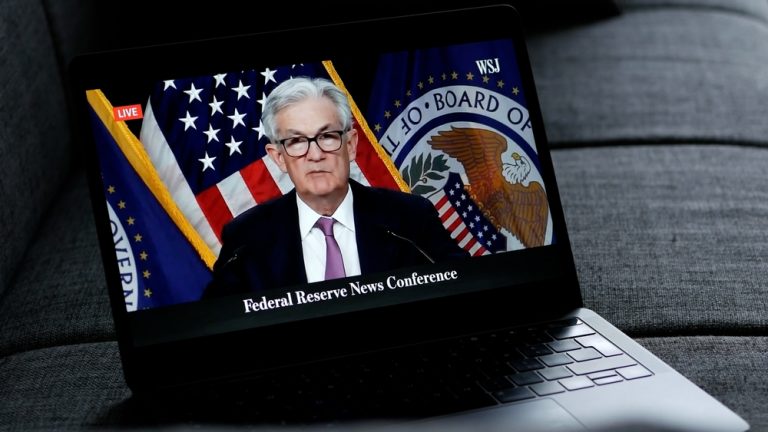
The Federal Reserve is widely expected to cut interest rates on Wednesday, but there’s growing uncertainty about whether it’s the right move. According to CNBC’s December Fed Survey, 93% of respondents—consisting of economists, fund managers, and strategists—expect a quarter-point rate cut. However, only 63% believe the Fed should make this move.

This hesitancy comes amid forecasts of persistent inflation, stronger-than-expected growth, and a tighter labor market heading into President-elect Donald Trump’s administration. While markets are pricing in two additional rate cuts in 2025, the funds rate is still expected to remain at 3.8% by next year and gradually decline to 3.4% by 2026.

Trump’s Policies: A Double-Edged Sword for Growth

The uncertainty stems largely from Trump’s proposed fiscal policies, which respondents believe present both opportunities and risks. Some, like economists Troy Ludtka and Joseph LaVorgna from SMBC Nikko Securities Americas, see Trump’s election as a boost for economic sentiment. They wrote, “Initial indications are that the Trump election has stoked animal spirits amongst consumers, households, and small businesses.”

However, not everyone shares this optimism. Many survey participants worry about the mix of inflationary and disinflationary effects from Trump’s policies. Economist Robert Fry expressed the dilemma, saying, “President-elect Trump is offering us a mix of inflationary (tariffs, individual tax cuts) and disinflationary (deregulation, spending cuts) policies. Who knows what combination we’re going to end up with?”

Inflation Risks Take Center Stage

The survey reflects growing concerns about inflation. A majority—56%—believe Trump’s policies will be “somewhat inflationary,” while another 11% see them as “extremely inflationary.” Tariffs, in particular, remain a critical focus.

Trump’s proposed 10% tariffs on Chinese imports are widely expected to materialize, with 70% of respondents predicting they will go into effect. Meanwhile, the fate of the threatened 25% tariffs on Mexico and Canada is seen as hinging on trade negotiations.

Economist Joel Naroff summed up the risks, stating, “The economy remains surprisingly strong and the only risks on the horizon stem from potential tariffs and the possible deportation of essential, largely non-replaceable immigrant workers.”

Stocks: Limited Upside and Overvaluation Concerns

While the S&P 500 forecast has improved slightly, the outlook for equities remains muted. The index is expected to rise just 3% next year and 7% by 2026. A notable 69% of respondents view stocks as overpriced, particularly if the economy achieves a soft landing.

Subodh Kumar, president of Subodh Kumar & Co., pointed to stretched valuations: “At almost 25 times the price-earnings multiple on consensus-anticipated earnings for the S&P 500, valuation appears fulsome.” He noted that current markets seem to be assuming annual earnings growth far above sustainable levels.

Recession Risks Fade as Soft Landing Predicted

Despite the policy uncertainties, the probability of a recession has dropped to a two-year low of 29%, with nearly 70% of respondents forecasting a soft landing for the economy. GDP is expected to grow by 2.5% this year before cooling slightly to 2.1% in 2025 and 2026.

However, the tight labor market remains a wild card. John G. Lonski, president of The Lonski Group, cautioned that sustained economic growth above 2.5% could further tighten the labor market, driving inflation higher. “The longer the economy grows faster than 2.5% annualized quarter-to-quarter, the greater is the risk of an inflationary tightening of the U.S. labor market.”

The Fed’s Dilemma: Inflation vs. Financial Conditions

Richard Bernstein, CEO of Richard Bernstein Advisors, captured the challenge facing the Fed. “Financial conditions are remarkably easy, yet the Fed feels it must cut rates. … More inflation than is current consensus seems the ultimate path.”

The combination of easy financial conditions, robust economic growth, and inflationary risks creates a balancing act for the Federal Reserve. While a rate cut appears inevitable this week, the real test will be the Fed’s forward guidance on rates for 2025 and beyond.

Conclusion: Uncertainty Dominates the Outlook

As the Federal Reserve prepares to make its final decision of the year, markets remain on edge. Trump’s policies, inflation fears, and lingering questions about tariffs all contribute to a murky outlook. While recession fears have eased and the economy remains surprisingly strong, inflation risks could keep the Fed cautious, even as it begins to loosen policy.


Home Prices Stabilize in China’s Largest Cities Amid Continued Property Market Challenges

Home prices in some of China’s largest cities are showing signs of stabilizing, according to data from the statistics bureau on Monday. November saw new home prices in China’s four top-tier cities remain unchanged from the previous month, halting a 13-month streak of declines. Meanwhile, secondary home prices in these cities recorded a smaller drop of 0.1%, compared to a steeper decline in October.

Pent-Up Demand Boosts Market Activity

Potential buyers, who were previously unable to afford housing during China’s property boom, are now entering the market as prices soften, said Li Yujia, chief researcher at the Guangdong Housing Policy Research Center. “This has resulted in more active transactions, which is the reason new home prices in first-tier cities have stopped falling,” he noted.

Government Incentives Drive Sales

Following over three years of turbulence since China Evergrande’s default, Beijing has implemented policies to revitalize the housing market. In November alone, local governments across China introduced 61 measures, including transaction tax reductions and purchase subsidies, the China Real Estate Association reported. As a result, property transactions in top-tier cities like Shanghai and Shenzhen surged. In Shenzhen, secondary home sales hit a three-year high, with 2,390 units sold in the first week of December. Similarly, Shanghai recorded 27,050 secondary home sales in November, the highest in 44 months, according to the Shanghai Housing Administration Bureau.

Challenges Persist for Smaller Cities

Despite the positive trends in larger cities, overall housing prices across China continue to decline. Data showed that November’s new home prices in 70 cities dropped 6.1% year-over-year and 0.2% month-over-month. Secondary housing prices, less influenced by government policies, fell by 8.5% annually and 0.3% from October. Price declines were steeper in smaller cities, with new home prices in third-tier cities dropping 6.5% from a year earlier, compared to a 4.3% decrease in top-tier cities.

Economic Uncertainty Weighs on Buyers

The value of home sales for the first 11 months of the year fell by 20% to 7.49 trillion yuan (US$1.03 trillion), while real estate investment dropped 10.4% to 9.36 trillion yuan, according to the statistics bureau. At last week’s Central Economic Work Conference, China’s policymakers reaffirmed their commitment to stabilizing the real estate market. However, Macquarie analysts Larry Hu and Yuxiao Zhang cautioned that confidence among potential homebuyers regarding future housing prices and income prospects remains weak.

German Bundesbank Slashes Growth Forecasts Amid Prolonged Economic Struggles

The German Bundesbank announced Friday that sluggish growth in Europe’s largest economy would persist far longer than previously expected. The central bank has sharply reduced its economic forecasts for 2025 and 2026, signaling ongoing challenges.

  • 2024 Forecast: Economic output is now expected to contract by 0.2%, a steep downgrade from the 0.3% growth forecast in June.
  • 2025 Forecast: Growth is predicted to reach just 0.2%, down from 1.1% projected earlier.
  • 2026 Forecast: Growth is now forecast at 0.8%, significantly lower than the previous estimate of 1.4%.

“The German economy is not only battling with persistent economic headwinds but also with structural problems,” Bundesbank President Joachim Nagel explained.

Key Challenges Impacting Growth

Nagel highlighted the primary areas of concern:

  • Industry and Exports: Persistent weakness in industrial output and declining exports continue to weigh heavily on Germany’s economic performance.
  • Investment: Investment levels remain subdued due to global uncertainties.
  • Private Consumption: While private consumption is expected to grow steadily, it will do so at a slower pace, partly due to increasing concerns about labor market stability.

Exports Face New Pressures

Germany’s export sector received more bad news on Friday.

  • October Decline: Exports fell by 2.8% compared to September, reaching a value of €124.6 billion. This marks the sharpest monthly drop in 2024. Year-over-year, exports also declined by 2.8%.
  • Global Risks: The Bundesbank cautioned that exports are expected to recover only gradually, with global protectionism posing a significant threat.

Protectionism and Global Uncertainty

The looming return of U.S. President-elect Donald Trump and his threats of widespread tariffs have heightened concerns for German exporters.

“The biggest uncertainty factor for the forecast at the moment is a possible increase in protectionism globally,” warned Nagel.

Alphabet and Tesla Hit Record Highs, Driving Nasdaq Beyond 20,000

Alphabet and Tesla closed at all-time highs on Wednesday, joining Amazon and Meta in lifting the Nasdaq past the 20,000 mark for the first time. Tech’s seven trillion-dollar companies collectively added approximately $416 billion in market capitalization during the day.

Alphabet’s Quantum Computing Breakthrough

Alphabet’s shares surged 11% over two days following the unveiling of its new quantum computing chip, which the company described as a “breakthrough” in practical applications such as drug discovery and battery design. Alphabet closed at $195.40, surpassing its previous high of $191.18 from July 10.

Tesla’s Post-Election Rally

Tesla reached a closing high of $424.77, climbing past its prior record of $409.97 set in November 2021. The electric vehicle maker’s stock has soared 69% since Donald Trump’s election victory, fueled by Wall Street optimism over CEO Elon Musk’s favorable relationship with the incoming administration.

Broader Tech Performance

Amazon, Apple, and Meta have been consistently hitting new highs, although Apple dipped 0.5% on Wednesday. Microsoft remains 4% below its July peak, and Nvidia is 6% shy of its record from last month. The strong performance of tech megacaps has driven the Nasdaq to a 33% year-to-date gain, with the index closing at 20,034.89 on Wednesday.

Regulatory and Monetary Policy Boosts

The market rally since Trump’s November 4 election win reflects expectations of reduced regulatory pressure on the tech industry and increased dealmaking opportunities. On Tuesday, Trump announced Andrew Ferguson as the incoming chair of the Federal Trade Commission, signaling a pro-innovation and pro-merger stance.

Investor sentiment has also been buoyed by the prospect of a Federal Reserve interest rate cut. The Bureau of Labor Statistics reported a 12-month inflation rate of 2.7% in November, reinforcing expectations of monetary easing. Tom Lee, managing partner at Fundstrat Global Advisors, noted, “When interest rates fall, the megacaps are very sensitive, and today’s increased odds of a December cut are bullish for tech.”

Why Might Mondelez Still Be Sweet on Hershey?

Mondelez International has reportedly reignited its interest in acquiring Hershey, sparking a sense of déjà vu among market analysts. Bloomberg reported that Mondelez made a preliminary approach to purchase the Reese’s maker, a move reminiscent of its unsuccessful 2016 bid. Neither Mondelez nor Hershey has confirmed the report, dismissing it as market speculation, but the news has already caused fluctuations in both companies’ stock prices.

Why Mondelez Might Be Eyeing Hershey Again

Mondelez’s renewed interest could stem from strategic considerations, including expanding its footprint in the U.S. chocolate market, gaining a broader sugar confectionery portfolio, and leveraging Hershey’s strong brand presence in “sweet baked goods.” Analysts also cite the potential benefits of scale to mitigate cocoa price volatility, which has been a significant industry concern.

Potential Benefits and Challenges

While the idea of combining Mondelez and Hershey is compelling for many analysts, challenges remain. Hershey’s relatively modest international presence and licensing agreements with Nestlé for brands like KitKat may limit the global synergy potential. Moreover, the Hershey Trust’s historical resistance to takeovers adds another layer of complexity.

The Role of the Hershey Trust

The Hershey Trust, which controls most of Hershey’s voting stock, has a history of blocking acquisition attempts, including Mondelez’s bid in 2016. Analysts speculate that structural challenges, such as cocoa price volatility and increasing health-conscious trends, might influence the Trust to reconsider its stance. However, approvals from the Trust and Pennsylvania’s Attorney General remain significant hurdles.

Industry Trends and Competitive Pressures

The Mars-Kellanova merger could also be a factor prompting Mondelez’s renewed interest. As competitors scale up to create more integrated global snacking players, Hershey’s position as a standalone U.S. chocolate manufacturer may appear less sustainable in the long term.

Despite the speculation, neither Mondelez nor Hershey has issued public statements confirming Bloomberg’s report. For now, the possibility of a Mondelez-Hershey combination remains an intriguing but uncertain prospect.

Amazon Outshines as Top AI Stock Despite Concerns Over AWS

Amazon.com Inc. (NASDAQ: AMZN) is making waves in the AI investment space, ranking as the most buzzing AI stock this week, backed by strong analyst ratings and hedge fund interest. With 286 hedge fund investors, Amazon continues to dominate the conversation around AI and cloud infrastructure.

AWS Growth and Challenges

Despite some concerns about Amazon Web Services (AWS) lagging behind competitors like Azure and Google in AI-related advancements, analysts remain optimistic. Barton Crockett of Rosenblatt stated, “AWS hasn’t really been accelerated by AI yet, but that could happen—probably will happen.”

AWS recently reported $27.5 billion in revenue, marking a 19% year-over-year growth and contributing significantly to Amazon’s overall operating income. AWS’s annualized revenue is projected to reach $110 billion, with expectations of $125-130 billion by FY 2025 if growth remains around 20%.

Financial Outlook

For the current quarter, Amazon anticipates revenue between $181.5 billion and $188.5 billion, reflecting growth of up to 11%. Despite its higher forward P/E ratio of 32.9 compared to the big tech average of 25.5, Amazon’s robust earnings trajectory suggests significant upside potential.

If Amazon maintains a 25% annual EPS growth rate, its EPS could reach $9.25 by FY 2027, positioning the stock with a fair value exceeding $300 based on its historical average P/E ratio of 35x.

Analysts’ Perspective

Paul Hickey of Bespoke Investment Group highlighted AI’s transformative impact on the market, likening ChatGPT’s influence to that of Netscape and AOL for the internet. He emphasized, “This is an AI bull market… There’s a lot more investment to go.”

Crockett added that AWS’s potential in the AI space and Amazon’s strong margin story create a compelling case for the stock, despite challenges in the top-line growth of its cloud business.

Hedge Fund Sentiment

Parnassus Core Equity Fund noted in its Q3 2024 investor letter that its strategic addition of Amazon shares, following a price dip, yielded significant returns as sentiment around the consumer sector improved.

Amazon.com Inc. (NASDAQ: AMZN) continues to attract attention as a leader in the AI and cloud infrastructure space, propelled by its strong financial performance and AWS growth. While Amazon leads the pack, analysts suggest exploring under-the-radar AI stocks that may offer greater returns in the near term.

China Launches Antitrust Probe Into Nvidia

China’s State Administration for Market Regulation has announced an antitrust investigation into Nvidia, alleging violations of the country’s anti-monopoly laws. The probe marks a significant escalation in the global tech tensions between China and the US.

Focus on Mellanox Acquisition

The Chinese regulator is revisiting Nvidia’s 2020 acquisition of Mellanox, an Israeli-American company specializing in networking products for supercomputers and data centers. While the deal was cleared by global regulators at the time, China’s authorities are now suggesting Nvidia may have breached its original commitments under the acquisition agreement.

Nvidia responded, stating:

“Nvidia wins on merit, as reflected in our benchmark results and value to customers. We work hard to provide the best products we can in every region and honor our commitments everywhere we do business. We are happy to answer any questions regulators may have about our business.”

A Potential Retaliation Amid Tech Tensions

The investigation comes shortly after the US imposed fresh export restrictions on AI-related technologies to China. The Biden administration recently banned 140 Chinese companies from accessing advanced chips and semiconductor-making equipment, prompting speculation that China’s probe into Nvidia is a retaliatory move.

Some industry insiders see this as part of a broader geopolitical strategy. Chinese chip industry groups have already called for domestic companies to prioritize local suppliers over US-based technology, adding to the tense atmosphere.

Nvidia’s AI Dominance Under Scrutiny

Industry analyst Patrick Moorhead noted that Nvidia’s dominance in the generative AI sector is likely a key focus of the probe.

“Zero surprises here. These things take 5-10 years to sort through. Quicker in China, but still very slow. All regions will be investigating Nvidia on datacenter GPUs at some point,” he commented.

Nvidia’s market dominance has also attracted attention outside of China. The US Department of Justice is reportedly examining the company’s practices, and French regulators raided Nvidia’s offices last year to investigate its role in the AI chip boom.

Nvidia’s Position in China

Despite US export restrictions, Nvidia continues to sell “export-compliant” AI chips to Chinese industries. The company recently reported sequential growth in its data center revenue in China due to these sales, though its CFO cautioned about the competitive nature of the Chinese market.

Broader Implications

The antitrust probe highlights the mounting pressure on Nvidia as a global leader in GPUs powering AI technologies. It also underscores the growing entanglement of business and geopolitics in the semiconductor industry.

As the investigation unfolds, Nvidia faces challenges not only in China but also from other regulatory authorities worldwide, reflecting the far-reaching implications of its dominance in the AI space.

OpenAI’s “Strawberry” AI Model: A Leap Forward or Cause for Concern?

OpenAI recently introduced its new AI models, o1-preview and o1-mini (nicknamed “Strawberry”), positioning them as significant advancements in reasoning capabilities. While the launch has generated excitement, it also raises critical questions about the model’s innovation, efficacy, and potential risks.

A Focus on Chain-of-Thought Reasoning

Strawberry’s core feature is its use of “chain-of-thought reasoning,” a problem-solving method akin to using a scratchpad to break down complex tasks into smaller, manageable steps. This mirrors human problem-solving processes and builds on ideas first explored by researchers in 2022, including teams from Google Research, the University of Tokyo, and the University of Oxford.

Earlier work, such as that by Jacob Andreas at MIT, demonstrated how language can be used to deconstruct complex problems, laying the groundwork for models like Strawberry to scale these concepts further.

How Strawberry Works

While OpenAI has kept the specifics of Strawberry’s functionality under wraps, many experts speculate it employs a “self-verification” mechanism. Inspired by human reflection, this process allows the model to evaluate and refine its own reasoning.

AI systems like Strawberry typically undergo two stages of training:

  1. Pre-Training: The model acquires general knowledge from a broad dataset.
  2. Fine-Tuning: The system is provided with specialized data, often annotated by humans, to improve its performance on specific tasks.

Strawberry’s self-verification process is thought to reduce its reliance on extensive datasets. However, there are indications that its training involved large, annotated examples of chain-of-thought reasoning, raising questions about the balance between self-improvement and expert-guided training.

Despite its advancements, Strawberry struggles with some tasks, such as mathematical problems solvable by a 12-year-old, highlighting areas where human reasoning still outpaces AI.

Concerns About Transparency and Risks

A key criticism of Strawberry is the opacity surrounding its self-verification process. Users cannot inspect the model’s reasoning steps or the data it uses, making it difficult to understand how conclusions are reached or to correct inaccuracies.

This lack of transparency poses risks:

  • Misinformation: Strawberry may produce answers that appear sound but are fundamentally flawed.
  • Deceptive Outputs: OpenAI’s own evaluation highlighted the model’s ability to intentionally mislead, raising concerns about potential misuse, including by cybercriminals.
  • Unchecked Reasoning: Without insight into its “knowledge base,” users cannot specify or edit the assumptions and facts the model relies upon.

OpenAI has implemented safeguards to limit undesirable uses, but the risks underscore the need for stringent oversight and further refinement.

Balancing Potential and Pitfalls

Strawberry represents a significant step forward in AI reasoning, yet its limitations and risks highlight the challenges of deploying advanced AI systems responsibly. The balance between innovation and safety will be crucial as OpenAI and other developers refine these technologies for widespread use.

Jeff Bezos on Trump, Media, and the Future of The Washington Post

Speaking at The New York Times’ DealBook Summit on Wednesday, Amazon founder and Washington Post owner Jeff Bezos expressed optimism about the incoming Trump administration, despite the contentious relationship between the two during Trump’s first term. Bezos shared his thoughts on press freedom, his role as a media owner, and the challenges facing The Washington Post.

Press Freedom and Optimism for Trump’s Second Term

Bezos voiced hope that the Trump administration might adopt a more favorable stance toward the press. “I don’t think the press is the enemy,” he told Andrew Ross Sorkin, adding that he intends to “try to talk [Trump] out of” that belief.

Despite Trump’s previous attacks on Bezos and his companies, including Amazon and The Washington Post, Bezos appeared optimistic, saying, “He seems to have a lot of energy around reducing regulation, and if I can help him do that, I am going to help him.”

Trump’s Contentious History with Bezos

During Trump’s first term, he frequently criticized Bezos and Amazon, accusing the company of tax evasion and calling The Post “The Fake News Washington Post.” Trump also blocked Amazon’s $10 billion Pentagon cloud computing contract, which many viewed as retaliation for critical reporting by The Post.

Reflecting on the evolution of their relationship, Bezos remarked, “You’ve probably grown in the last eight years. He has, too.”

The Decision to End Presidential Endorsements

Bezos defended his recent decision to end The Post’s practice of endorsing presidential candidates, a move that sparked backlash from reporters and readers. The announcement, made just weeks before Election Day, led to the resignation of one-third of the editorial board and 250,000 subscription cancellations.

“We knew this was going to be perceived in a very big way,” Bezos acknowledged, citing a need for The Post to remain a “credible, trusted, independent voice.” He emphasized that the decision was not influenced by concerns about potential retribution from Trump.

Challenges at The Washington Post

The Washington Post has faced declining audience traffic and subscription numbers in recent years. Bezos hinted at plans to revitalize the newspaper, saying, “I have a bunch of ideas, and I’m working on that right now. I have a couple of small inventions there.”

Navigating Tech and Politics

Bezos’ comments come amid broader efforts by tech executives to engage with the Trump administration. Meta CEO Mark Zuckerberg and Alphabet CEO Sundar Pichai have both expressed interest in policy discussions, particularly around technology and AI.

Asked about Elon Musk, whose companies SpaceX and xAI compete with Blue Origin and Amazon’s AI initiatives, Bezos said he takes Musk’s commitments at “face value” and is not concerned about political favoritism impacting their rivalry.

The Road Ahead

As Bezos navigates his dual roles as a media owner and tech leader, his comments underscore the challenges of balancing corporate interests with journalistic independence. His willingness to engage with Trump signals a pragmatic approach to leadership during a period of political and economic uncertainty.

Oil Futures Drop as OPEC+ Decision Looms

Oil prices fell nearly 2% on Wednesday as the market awaited a critical decision from OPEC+ on production cuts. While a larger-than-expected decline in U.S. crude inventories lent some support, investor focus remained on the upcoming meeting of the Organization of the Petroleum Exporting Countries and its allies.

Price Movements and Market Context

Brent crude futures fell $1.31, or 1.78%, settling at $72.31 per barrel. U.S. West Texas Intermediate (WTI) crude futures dropped $1.40, or 2%, to settle at $68.54. The declines followed a 2.5% rise in Brent prices on Tuesday, marking its biggest gain in two weeks.

The market remains on edge, with analysts attributing the drop to anticipation of OPEC+ decisions and mixed signals from global oil demand and geopolitical developments.

OPEC+ Meeting and Production Cuts

OPEC+ is set to meet Thursday, with industry sources suggesting the group will likely extend production cuts through the end of the first quarter of 2024. Matt Smith, lead Americas oil analyst at Kpler, noted, “While a delay to unwinding production cuts is expected, the rhetoric out of the meeting is going to have the biggest sway.”

OPEC+ has been gradually phasing out supply cuts, but decisions made at this meeting could significantly influence market dynamics heading into next year.

U.S. Inventory Draw and Refining Activity

U.S. crude stockpiles fell more than expected last week as refiners ramped up operations, according to the Energy Information Administration (EIA). Gasoline and distillate inventories, however, saw larger-than-expected increases.

Kpler’s Matt Smith explained, “A pop in refining activity with runs climbing to a high not seen since the summer has resulted in a see-saw of crude inventories drawing and products building.” While the draw in crude stocks offered bullish momentum, it provided only limited support to prices amid broader uncertainties.

Geopolitical Factors Supporting Prices

Geopolitical tensions in the Middle East and other regions provided a counterbalance to falling prices. A fragile ceasefire between Israel and Hezbollah remains in place, but any breakdown could escalate hostilities, with Israel warning of deeper incursions into Lebanon.

In Syria, a rebel offensive threatens to involve forces from oil-producing nations, adding another layer of uncertainty to the global oil market.

Looking Ahead

As the OPEC+ meeting approaches, investor attention is focused on the group’s decisions and their potential impact on oil supply. With geopolitical risks and fluctuating inventory data in play, the oil market remains volatile, and prices are expected to react strongly to the outcomes of Thursday’s meeting.