Home Blog Page 41

China Halts Boeing Orders Amid U.S.-China Trade Tensions

China’s Move Against Boeing Amid Rising Tariffs

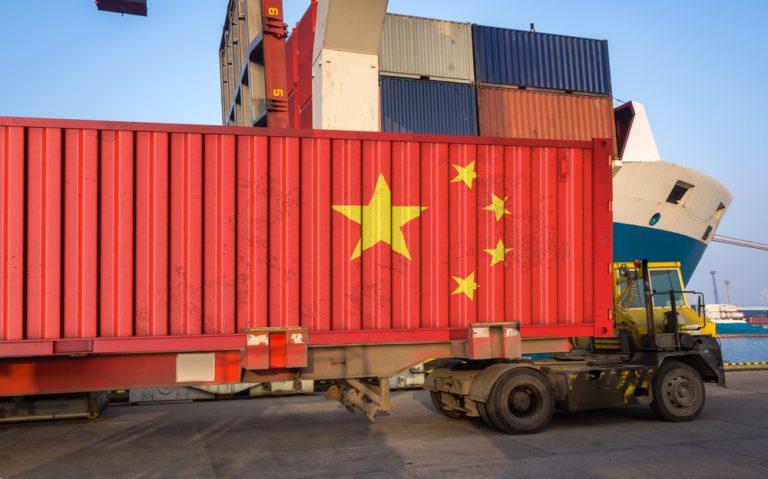
China has reportedly ordered its airlines to stop purchasing aircraft from Boeing, a significant escalation in the ongoing trade war with the U.S. The decision comes after the U.S. imposed tariffs of up to 145% on Chinese imports, leading to retaliatory actions by Beijing, including a 125% tariff on U.S. products. This ban on Boeing deliveries could severely impact the American aircraft manufacturer, which relies heavily on international orders.

Impact on Boeing and U.S. Trade Relations

Boeing, one of the largest U.S. exporters, has seen its stocks drop by as much as 4.6% following the news. The company is facing significant challenges as it navigates this latest phase of the trade war, compounded by previous setbacks, including safety issues with its 737 jets and a seven-week strike that disrupted production. Despite these challenges, Boeing CEO Kelly Ortberg has consistently opposed tariffs, emphasizing the importance of free trade for U.S. jobs and the company’s international business.

China’s Aircraft Market and Boeing’s Competition

The relationship between Boeing and China had shown signs of warming in recent years, with Boeing aiming to increase its market share in China, projecting a fleet of 9,740 aircraft by 2043. However, this latest move to halt Boeing orders comes as China looks to strengthen its ties with Airbus, Boeing’s primary competitor, and as China develops its own commercial aircraft with the C919 jet from COMAC. While Boeing faces challenges, analysts believe it could reallocate its aircraft to other markets such as India, mitigating some of the losses.

What’s Next for Boeing?

Despite the current setback, analysts suggest that China’s ban on Boeing may be short-lived due to the economic realities and limitations faced by both China and its competitors. Boeing’s strong international presence means it is likely to find new buyers for its aircraft, while the uncertainty surrounding the U.S.-China trade conflict may lead to a recalibration of policies that could benefit the manufacturer in the long term.
Starbucks Faces Union Backlash Over New Dress Code

New Dress Code for Baristas Sparks Union Discontent

Starbucks has introduced a new dress code for its employees, effective May 12, that is causing unrest among its union workers. The updated uniform requires baristas to wear a solid black shirt—either a crewneck, collared, or button-up shirt—and bottoms in khaki, black, or blue denim. Previously, employees had more flexibility with their attire, being allowed to wear tops of any color and bottoms in several shades, including black, gray, navy, and khaki.

Company’s Statement on the Dress Code Change

Starbucks explained that the new dress code aims to create a “more consistent coffeehouse experience” and provide clearer guidance to employees. This, according to the company, will allow baristas to focus more on their work of “crafting great beverages and fostering connections with customers.” The company is also offering employees two company-branded shirts as part of the new uniform requirements.

Union’s Opposition and Focus on Other Issues

However, Starbucks Workers United, the union representing many baristas, strongly opposes the dress code change. They argue that the company is prioritizing a limiting dress code over more pressing issues such as fair wages, guaranteed hours, and staffing. Jasmine Leli, a barista and union bargaining delegate, criticized Starbucks for “forcing baristas to pay for new clothes when we’re struggling as it is on Starbucks wages.” The union has demanded that the new dress code not be implemented at union-represented stores until bargaining over contracts is concluded.

Starbucks Responds to Union Concerns

In response, a Starbucks spokesperson pointed out that the company has held over nine bargaining sessions and three mediation sessions since last year, reaching agreements on various topics. The company reiterated its commitment to good faith bargaining and emphasized that it aims to create frameworks for single store contracts for unionized partners.

Impact on Starbucks’ Financial Performance

Amid these tensions, Starbucks also reported a 4% decline in U.S. comparable store sales for the first quarter of 2025, reflecting some of the challenges the company is facing. The company’s decision to streamline its menu by eliminating 13 drinks, including the Iced Matcha Lemonade and White Chocolate Mocha Frappuccino, has also drawn attention. In exchange, Starbucks introduced three new drinks: Iced Lavender Cream Oatmilk Matcha, Iced Cherry Chai, and Iced Lavender Oatmilk Latte, alongside new food offerings such as Jalapeno Chicken Pockets and Spicy Falafel Pockets at select locations.

US Businesses Struggle with Uncertainty Over Tariffs

Impact of Tariffs on Small Business Owners

Dallas-based small business owner Allen Walton is among many entrepreneurs feeling the impact of President Trump’s shifting tariff policies. Walton’s company, SpyGuy, sells surveillance cameras and other electronic gadgets primarily manufactured in China. Due to the recent 145% tariff on Chinese imports, Walton finds himself uncertain about whether to replenish his stock, despite strong demand for his products. His story is a reflection of a broader trend seen across the U.S., where small businesses are grappling with unpredictable tariffs that disrupt their ability to plan effectively for the future.

Challenges of Manufacturing in China vs. the U.S.

As many business owners point out, shifting production away from China is not a simple solution. Kyle Chan, a researcher at Princeton University, argues that tariffs alone won’t be enough to convince businesses to relocate their supply chains. The expertise, cost-efficiency, and infrastructure that China offers are unmatched by most other countries. Walton himself highlights the fact that the U.S. government is willing to pay a premium for locally made goods, but creating a domestic manufacturing base capable of meeting such demand is complex and costly.

The Myth of Cheap Prices and Quality from China

While many people assume that Chinese-made products are of lower quality due to cheaper labor costs, experts argue that this is a misconception. As Eli Friedman from Cornell University explains, the quality of Chinese manufacturing has improved significantly over the years, partly due to long-term specialization in industries. This specialized expertise, combined with China’s massive industrial base, allows for more customization and precision in manufacturing than many other countries can offer. This means businesses like Walton’s are able to access high-quality goods at prices that are competitive in the global market.

The Global Supply Chain and Its Challenges

The globalized nature of supply chains has also played a critical role in why businesses rely on China for manufacturing. Many products go through multiple countries before reaching their final form. For instance, lithium used in batteries might be mined in Chile, refined in China, and then packaged in Japan or South Korea before reaching the U.S. Trying to move all of these supply chain processes to the U.S. would involve overcoming significant challenges, as Hugh Grant-Chapman from the Center for Strategic and International Studies points out. The U.S. would have to compete at every stage of production, not just the final product.

Uncertainty Amid Changing Tariff Policies

The ever-changing nature of Trump’s tariff policies has led many U.S. business owners to pause or cancel orders, fearing that the next shift in tariffs could undermine their efforts to remain competitive. Walton, along with others in the industry, has found it difficult to plan for the future with such uncertainty. Some businesses are even resorting to layoffs to prepare for the possibility of prolonged economic instability.

The Larger Economic Impact

The uncertainty surrounding tariffs has larger implications for the U.S. economy. According to Charlotte Palermino, cofounder of the skincare brand Dieux, businesses are being forced to choose between their employees and their customers. The ongoing tariff conflict is making it difficult for companies to maintain a balance between the two, and this struggle is detrimental to the broader economy, as it forces businesses to cut costs at the expense of their workforce or customer satisfaction.

Prada Acquires Versace for $1.38 Billion

Details of the Acquisition

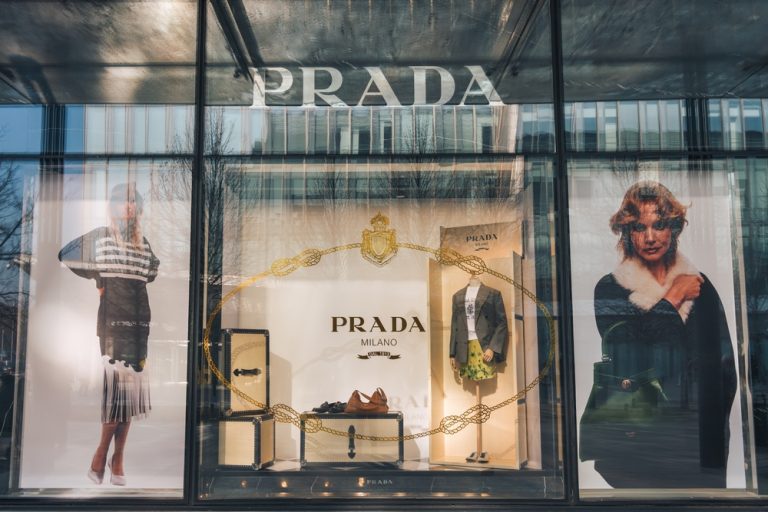
Prada has struck a deal worth $1.38 billion to acquire smaller rival Versace from Capri Holdings. This move unites two prominent names in Italian fashion and aims to boost Prada’s revenue potential. While Versace has faced losses in recent quarters, Prada has managed to defy a slowdown in luxury demand.

Strategic Expansion

The acquisition is seen as part of Prada’s strategy to expand its footprint in the luxury industry. Prada, known for its minimalist style, aims to attract new customers with Versace’s bold, baroque-style prints. “There are no overlaps in terms of creativity, in terms of customers,” said Lorenzo Bertelli, Prada’s marketing director.

Strengthening Italy’s Luxury Industry

Prada’s acquisition strengthens Italy’s presence in the luxury sector, traditionally dominated by French conglomerates like Louis Vuitton owner LVMH. Prada Chairman Patrizio Bertelli expressed confidence in Versace’s future, saying, “We will provide Versace with a strong platform, reinforced by years of ongoing investments and rooted in longstanding relationships.”

Geopolitical Risks and Market Volatility

Despite the uncertainty surrounding U.S. tariffs and market volatility, both Prada and Capri Holdings proceeded with the deal. Capri had to divest Versace to focus on its Michael Kors brand, while Prada sees the acquisition as a long-term growth strategy. The deal is expected to expand Prada’s revenue base rather than deliver immediate cost savings.

Management Changes and Future Outlook

The acquisition follows the announcement that Donatella Versace is stepping down as the brand’s chief creative officer. Donatella expressed her support for the new era at Versace, stating, “Gianni and I have always had a huge admiration for Miuccia, Patrizio, and their family.” The deal is expected to reshape Versace’s future under Prada’s leadership.

Higher Tariffs on China Could Drive Up Prices for Americans

Financial experts are warning that increased tariffs on China could result in higher prices for U.S. consumers, as a wide range of products imported from China would see significant price hikes.

Impact on Popular Consumer Goods

Many key products imported from China, such as mobile phones, computers, clothing, and toys, are expected to rise in price if the current tariff rate on Chinese goods remains. For example, the Apple iPhone 16 Pro Max 256GB, which currently retails at $1199, could see an increase of $800 (67%) if subjected to the 125% tariff, according to analysts from investment bank UBS. Most iPhones, like many tech gadgets, are assembled in China.

The Playstation 5, which is priced at $499.99, could jump by as much as $600, reaching a price of $1,099, based on estimates from the Center for American Progress (CAP). Other items such as a child’s car seat are projected to increase by $61, from $59 to $120, as CAP forecasts.

Everyday Items and Small Business Struggles

Even everyday products will be affected. The Footwear Distributors and Retailers of America estimate that the price of a pair of boots made in China could rise by $38, increasing the average price from $77 to $115.

Small businesses are also feeling the impact. Michael Becher, chief operating officer of Fab Dog, a company that manufactures dog toys in China, expressed concern over the escalating tariffs. “This is putting the American dream at risk,” Becher said. The duty on dog toys, which was 4.3% just a month ago, has now surged to 129.3%, putting an immense strain on his business.

Uncertainty Remains Amid Pause on Tariffs

Despite a 90-day pause on reciprocal tariffs announced by President Trump on Wednesday, the U.S. is still moving forward with raising tariffs to 125% after China announced its retaliatory tariffs. Trump has emphasized that “a deal is going to be made with China” and that all countries will be subject to fair trade agreements.

Wall Street saw a rally following the announcement of the pause, but business owners, farm owners, and workers at U.S. ports are still uncertain about the long-term effects. “China represents more than 40% of the business at the Port of Los Angeles,” said Gene Seroka, executive director of the Port of Los Angeles. “The flow of cargo coming to the Port of Los Angeles will certainly be impacted,” he added.

China Escalates Trade War with New 50% Tariff on U.S. Goods

Trade War Intensifies: China Hits U.S. with 50% Tariff Increase

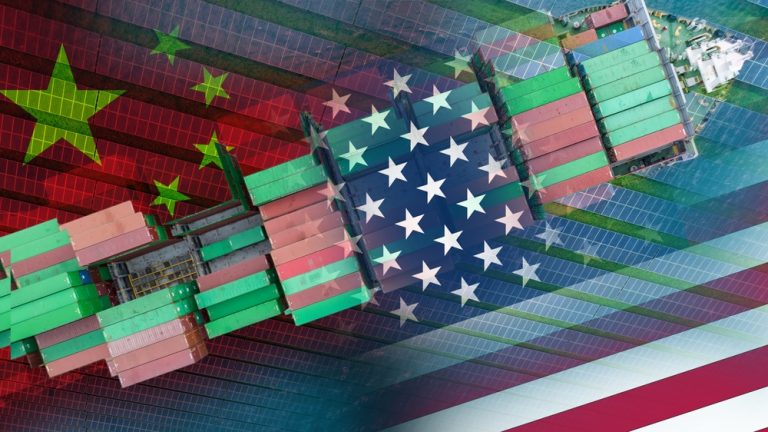
In a dramatic turn of events, China imposed an additional 50% tariff on imports from the U.S. on Wednesday, raising its levies on American goods to a staggering 84%. This move follows President Donald Trump’s decision to impose 104% tariffs on Chinese imports earlier this week, marking the latest escalation in the ongoing trade war between the world’s two largest economies.

China Responds to Trump’s Tariffs

The Chinese government referred to Trump’s new tariff increase as a “mistake upon another mistake,” urging the U.S. to resolve trade differences through “equal dialogue based on mutual respect.” While China’s 84% tariff may seem extreme, experts suggest that its effect will be somewhat limited, as China imports only $160 billion in U.S. goods annually, compared to the more than $400 billion in goods it exports to the U.S.

Potential Chinese Countermeasures

U.S. Agricultural Products and Poultry

One likely retaliation from China could involve significantly increasing tariffs on U.S. agricultural products or even halting imports entirely. “There’s a very high chance that China will stop agricultural imports from the U.S. altogether,” said Tianchen Xu, an economist at the Economist Intelligence Unit. China has already restricted U.S. poultry imports, and soybeans, a critical agricultural export, have been at the center of past trade disputes. This could target Trump’s rural base, whose support relies on the agriculture industry.

Hollywood Movies

China could also target the U.S. entertainment industry, which relies heavily on the Chinese market. Hollywood films have already seen a decline in popularity in China, with no U.S. films appearing in the top 10 highest-grossing movies in 2023. If tensions continue, China could choose to ban Hollywood films from its theaters altogether, further straining the trade relationship.

U.S. Services and Intellectual Property

The U.S. maintains a trade surplus with China in the services sector, particularly in finance, consulting, and law. China could respond by excluding U.S. companies from government procurement processes or restricting their cooperation with Chinese firms. Additionally, China may take action to protect its own intellectual property, potentially targeting U.S. companies operating in China.

Fentanyl Cooperation

Another area of potential retaliation could involve China halting its cooperation with the U.S. on combating the international flow of fentanyl precursor chemicals. Although the U.S. and China have made progress in curbing this issue, China could suspend efforts, which would escalate tensions further.

Conclusion

The escalating trade war between the U.S. and China shows no signs of resolution, with both sides implementing aggressive tariffs and retaliatory measures. As markets react to the instability, businesses and consumers alike will feel the consequences of this ongoing economic conflict.

JPMorgan CEO Dimon Warns Trump’s Tariffs Could Harm Economy

JPMorgan CEO Jamie Dimon has issued a blunt warning about President Donald Trump’s tariff policy: It threatens to raise prices, drive the global economy into a downturn, and weaken America’s standing in the world.

“The recent tariffs will likely increase inflation and are causing many to consider a greater probability of a recession,” Dimon warned in his annual letter to shareholders. “Whether or not the menu of tariffs causes a recession remains in question, but it will slow down growth.”

Dimon, one of the world’s most influential business leaders, said America’s “extraordinary standing” in the world was built on the strength of its economy, military, and morals. However, he expressed concern that tariffs and Trump’s “America First” foreign policy could undermine the United States’ special position in the world.

“America First is fine, as long as it doesn’t end up being America alone,” Dimon said. “If the Western world’s military and economic alliances were to fragment, America itself would inevitably weaken over time.”

Dimon also pointed out that these forces are inextricably linked. “It is extremely important to recognize that security and economics are interconnected – ‘economic’ warfare has caused military warfare in the past,” he wrote.

In past letters, Dimon has warned about geopolitical factors, such as the wars in Ukraine and the Middle East, which he said threatened to send powerful shockwaves throughout the global economy. But rarely has Dimon been so blunt about a single US economic policy.

Dimon has been largely silent about Trump’s tariff policy since he told CNBC in January that, if the president’s tariffs helped boost US manufacturing while causing a little bit of inflation, then people should “get over it.”

In his letter on Monday, Dimon acknowledged that “damaging trade practices,” especially from China, have hurt workers. But the tariffs Trump has announced are far more severe and widespread than most expected. Dimon is sounding a very different tone now: Brace yourselves.

Despite a recent plunge in markets, stocks could tumble much farther still, Dimon argued. The US stock market is set to open close to bear market territory after hitting a record high less than seven weeks ago, on February 19. It could be the second-fastest peak-to-bear market shift in history (the fastest occurred during the 2020 pandemic).

“Even with the recent decline in market values, prices remain relatively high,” Dimon said. “These significant and somewhat unprecedented forces cause us to remain very cautious.”

The JPMorgan CEO, like other business leaders, argued that up until recently, the US economy looked to be in solid shape. “Despite the unsettling landscape, the US economy, at least until recently, continued to be resilient, with consumers still spending (though with some recent weakening) and businesses still healthy,” Dimon said.

But Dimon struck a cautious tone about what’s next, noting the geopolitical and financial challenges facing the United States and the world. “We face the most perilous and complicated geopolitical and economic environment since World War II,” he said.

Asia-Pacific Markets Tumble as Trade War Fears Escalate

Asia-Pacific Faces Massive Losses Amid Trade War Fears

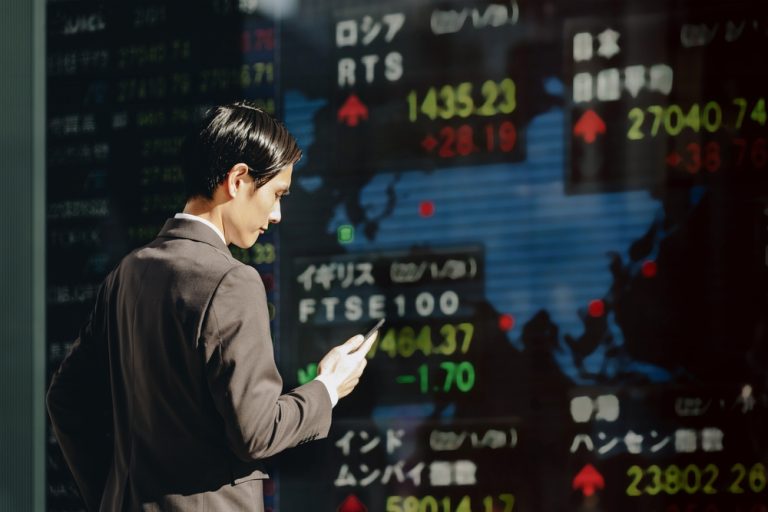
Markets across the Asia-Pacific region continued their sharp decline on Monday, driven by heightened concerns over a global trade war sparked by U.S. President Donald Trump’s recent tariffs. The Hang Seng Index in Hong Kong saw a staggering 13.22% drop, while the Hang Seng Tech index plunged 17.16%. Mainland China’s CSI 300 also experienced a massive decline, falling 7.05%, marking its largest one-day drop since last October. The market sell-off reflects growing fears that the ongoing trade tensions between the U.S. and China could escalate further, impacting global economic stability.

China Retaliates with Tariffs and Economic Impact

China’s retaliatory tariffs on U.S. goods have added fuel to the fire, with the country responding swiftly to Trump’s trade measures. Qi Wang, chief investment officer for wealth management at UOB Kay Hian, told CNBC that Chinese markets are taking a hit from these retaliatory actions, and he expects short-term market reactions to continue. As global markets react to the situation, Wang is closely monitoring potential responses from the European Union, which has indicated it is preparing countermeasures. The ongoing trade war has triggered uncertainty, with global markets particularly concerned about the broader economic consequences of the tariffs.

Global Market Impact: A Broad Sell-Off

Across the region, markets are feeling the effects of the escalating trade war. Japan’s Nikkei 225 dropped 7.83%, hitting an 18-month low, while the broader Topix index fell 7.79%. In South Korea, the Kospi index dropped 5.57%, and Australia’s S&P/ASX 200 fell 4.23%, entering correction territory. India’s Nifty 50 also experienced significant losses, dropping 4.08%, while the broader BSE Sensex fell by 3.91%. As global markets brace for further fallout, investors are concerned about the long-term economic impact of these trade tensions.

Economic Consequences: Tariffs Push Up Prices and Slow Growth

According to British asset manager Schroders, Trump’s tariffs are estimated to increase the U.S.’s effective tariff rate by 17.6 percentage points, raising the cost of imports and leading to a 2% increase in U.S. prices. The firm estimates that the tariffs could slow U.S. economic growth by 0.9%. The economic impact is being felt most acutely in Asia, with China and Vietnam expected to suffer losses exceeding 0.5% of GDP, while the European Union and Japan could see a hit of 0.3% to 0.4% of GDP. As global markets struggle to adjust to these changes, the trade war continues to dampen investor sentiment.

U.S. Futures Fall as Trade War Fears Deepen

U.S. futures also dropped sharply as investors’ hopes of successful negotiations between the Trump administration and other countries were dashed. Trump’s top economic officials dismissed concerns about inflation and recession, insisting that tariffs would persist regardless of market reactions. U.S. stocks suffered significant losses last Friday, with the Dow Jones Industrial Average dropping 2,231.07 points, or 5.5%, marking its largest decline since June 2020 during the COVID-19 pandemic. The S&P 500 fell 5.97%, and the Nasdaq Composite, which is heavily tied to tech companies with significant exposure to China, dropped 5.8%, entering bear market territory.

Conclusion: The Global Economy Faces Uncertainty

The escalating trade war between the U.S. and China has created widespread uncertainty in global markets, with Asia-Pacific stocks bearing the brunt of the sell-off. While the immediate impact of Trump’s tariffs is evident, the long-term consequences for global growth, inflation, and trade relations remain uncertain. As both the U.S. and China continue to engage in a tit-for-tat tariff battle, the future of international trade and economic cooperation hangs in the balance, leaving investors and policymakers closely watching the developments.

Trump Extends TikTok Deadline Amid Ongoing Negotiations

Extension Gives ByteDance More Time to Secure Deal

President Donald Trump announced on Friday that he has extended the deadline for China-based ByteDance to sell the U.S. operations of TikTok or face a potential ban in the country. This marks the second time Trump has granted an extension, with the new deadline pushing the decision to mid-June. In a post on his Truth Social platform, Trump explained that the deal “requires more work to ensure all necessary approvals are signed,” allowing TikTok to continue operating for an additional 75 days.

Tariffs and Trade Tensions Shape TikTok Deal

Trump’s post also referenced the broader trade dynamics with China, highlighting the impact of reciprocal tariffs, which he described as “necessary for fair and balanced trade between China and the U.S.A.” The U.S. government and ByteDance remain in discussions over the sale, but ByteDance has made it clear that any agreement will be subject to approval under Chinese law. The company also emphasized that key matters still need to be resolved, indicating that the deal is far from final.

ByteDance Faces Tight Deadlines

Before the extension, ByteDance was under pressure to complete a “qualified divestiture” of TikTok’s U.S. operations by April 5, following a national security law signed by former President Joe Biden in April 2024. ByteDance’s initial deadline to sell TikTok was set for January 19, but Trump’s executive order gave the company an additional 75 days to finalize the deal. Despite the looming penalties for internet service providers and app store owners like Apple and Google, Trump’s order instructed the attorney general to avoid enforcement, keeping TikTok operational in the U.S.

Potential Buyers Emerge for TikTok’s U.S. Assets

As the deadline for the deal extension approaches, several parties have expressed interest in acquiring TikTok’s U.S. operations. Companies such as Oracle and AppLovin have shown interest, and Amazon made a last-minute bid to purchase the app. Additionally, a group of investors, including Andreessen Horowitz, Blackstone, and other private equity firms, are considering a deal to take control of roughly half of TikTok’s U.S. business, with current investors like General Atlantic and KKR maintaining significant stakes. Billionaire Frank McCourt’s Project Liberty consortium, backed by Reddit co-founder Alexis Ohanian, has also signaled interest in the acquisition.

Chinese Approval Remains Crucial

Despite the various bids, the deal still requires approval from the Chinese government, adding another layer of complexity to the negotiations. Trump’s announcement came just after he signed a new “reciprocal tariff” policy at the White House, which imposed a 34% tariff rate on Chinese goods, bringing the total tariff rate on China to 54% when combined with the existing 20% tariffs. Trump has suggested that reducing tariffs could help facilitate the TikTok deal, and he has indicated that another extension may be granted if a final agreement is not reached by the new deadline.

National Security Concerns Drive TikTok Deal

Trump has repeatedly emphasized the national security implications of the TikTok issue, claiming that tariffs play a critical role in protecting U.S. interests. “This proves that Tariffs are the most powerful economic tool, and very important to our national security!” Trump said, expressing a desire to keep TikTok operating in the U.S. without disruption. While the situation remains fluid, the extension buys ByteDance more time to navigate the complexities of the deal, which includes both U.S. and Chinese approval.

A High-Stakes Deal for TikTok’s Future

The extension of the TikTok deadline underscores the ongoing complexity of the negotiations between ByteDance, the U.S. government, and China. As multiple parties express interest in acquiring TikTok’s U.S. operations, the clock is ticking on a deal that could reshape the app’s future in the U.S. and have lasting implications for U.S.-China relations. With tariffs continuing to play a pivotal role in the negotiations, the outcome of this high-stakes deal remains uncertain, and further extensions may be on the horizon if the parties fail to reach a final agreement.

U.S. Dollar Drops to Six-Month Lows Amid Tariff Concerns

Market Reaction to Trump’s Tariff Announcement

The U.S. dollar plunged to six-month lows on Thursday, weakening against major currencies like the euro, the yen, and the Swiss franc. Investors have been reacting to President Donald Trump’s far-reaching tariffs, with fears that the aggressive trade measures will undermine global trade and economic growth. The uncertainty surrounding the tariffs has driven investors to seek safer assets, such as bonds and gold, fearing that a full-blown trade dispute could spark a global economic slowdown and stoke inflationary pressures.

Tariff Shockwaves Impact Global Markets

Trump’s decision to impose a baseline 10% tariff on all imports to the United States, along with higher duties on some of the country’s largest trading partners, took markets by surprise. The tariffs triggered a massive sell-off in global stocks, leading investors to flee into safer currencies and assets. Adam Button, chief currency analyst at ForexLive, explained, “What the FX market is telling you, (is) that U.S. growth is going to suffer, and that U.S.-built systems are falling apart in global trade.” This pessimistic outlook has put downward pressure on the U.S. dollar, which had been one of the most crowded trades in the world at the start of the year.

Weak Economic Data Adds to Concerns

Despite the dollar’s sharp decline, there was little market reaction to weaker-than-expected data from the Institute for Supply Management (ISM), which showed that the U.S. services sector had slowed to a nine-month low in March. This slowdown, attributed in part to uncertainty caused by the tariffs, added to mounting concerns about a potential economic downturn. Alongside disappointing consumer and business surveys, as well as worrying inflation and consumer spending data, fears of stagflation—slow economic growth combined with high inflation—are growing.

U.S. Labor Market Shows Stability Amid Tariff Fallout

On a more positive note, the number of Americans filing for new unemployment benefits fell last week, signaling continued stability in the labor market. However, the labor market’s resilience will likely be tested as the full impact of the tariffs becomes clearer. With markets now anxiously awaiting Friday’s non-farm payrolls report, there is growing anticipation about how the labor market will hold up and what this could mean for the Federal Reserve’s interest-rate policy moving forward.

Fed Watch: Powell’s Speech Looms Large

Investors are also closely watching Federal Reserve Chairman Jerome Powell’s speech on Friday, as his comments could significantly influence market sentiment. As inflation concerns persist, some market participants worry that Powell could adopt a more hawkish stance than expected. “They have all been saying, ‘we have less confidence that inflation is coming down,’” said Button. If Powell signals a reluctance to cut interest rates, it could lead to further market volatility and exacerbate concerns about economic growth.

Currency Market Moves: Euro, Yen, and Swiss Franc Gain

In the wake of the tariff announcement, the euro surged to a six-month high, gaining 1.74% to reach $1.1037, marking its largest intraday advance since November 2022. The yen and Swiss franc, both considered safe-haven currencies, also strengthened against the dollar. The greenback fell 1.95% against the yen, reaching 146.445 yen, and sank 2.35% against the Swiss franc, dropping to 0.8608 franc. Both currencies were at their strongest against the U.S. dollar in six months, as investors flocked to safer assets amid growing trade and economic uncertainties.

Conclusion: A Fragile Economic Outlook

As markets continue to digest the fallout from Trump’s tariff announcement, the outlook for the U.S. economy remains increasingly uncertain. While the labor market shows resilience, concerns over the broader economic impact of the tariffs—coupled with rising inflation fears—have sparked significant volatility in global markets. With central bank actions, particularly from the Federal Reserve, likely to play a key role in shaping the future of the dollar and broader economic conditions, the coming days will be crucial in determining whether the U.S. economy can weather the storm.