Home Blog Page 34

U.S. to End $7,500 EV Tax Credit by September 30

New bill phases out major incentives, reshaping EV market outlook

Congress has passed legislation that will officially end the $7,500 tax credit for new electric vehicles (EVs) and the $4,000 credit for used EVs, with both programs set to expire on September 30. The move marks a major shift in U.S. electric vehicle policy and is expected to accelerate near-term purchases before a significant sales drop-off.

The decision comes as part of sweeping tax and budget reforms that also ease penalties for automakers failing to meet fuel economy targets, signaling a softened regulatory stance on emissions. While U.S. carmakers are set to benefit from relaxed compliance costs, the end of EV tax credits could curb momentum in the transition to clean transportation.

“This bill forfeits America’s role in that future to China,” said the Electrification Coalition, an EV advocacy group. The group warned the policy shift undermines the U.S. EV sector just as global demand accelerates.

Originally introduced in 2008, the EV credit was expanded in 2022 to include leased vehicles and lifted the cap per manufacturer. Its sudden repeal is expected to cause a surge in EV demand in the short term, followed by a sharp slowdown. Barclays analyst Dan Levy projected a “pre-buy” phenomenon, as consumers rush to lock in savings before the credit disappears.

A Harvard study estimated that eliminating the tax credits would reduce U.S. EV adoption by 6% by 2030, while saving $169 billion in federal expenditures over ten years.

Congress also dropped a proposed $250 annual EV road-use fee and a mandate for the U.S. Postal Service to divest its EV fleet. The bill’s passage reflects a broader pivot in transportation policy, favoring flexibility for traditional automakers even as global rivals invest heavily in electrification.

U.S. Jobs Report Looks Strong, but Cracks Are Emerging

Hiring beats expectations, yet deeper data shows signs of stress

The U.S. labor market delivered a surprising 147,000 new jobs in June and saw the unemployment rate dip to 4.1%, defying forecasts of a slowdown. But despite the strong headline figures, deeper indicators suggest rising fragility beneath the surface, as businesses grapple with economic uncertainty stemming from President Trump’s unpredictable tariff policies.

June’s job gains came in above expectations and slightly higher than May’s revised figure of 144,000. Labor Department revisions added another 16,000 jobs to April and May totals. Wages also grew by 3.7% year-over-year, nearing the Federal Reserve’s preferred inflation-aligned pace. Key areas of growth included healthcare (+39,000), state (+47,000), and local government (+33,000) employment.

Private sector hiring slows, labor force shrinks

While public hiring surged, private employers added just 74,000 jobs—the lowest in eight months. Many of the public-sector gains, particularly in education, may be artificially inflated by seasonal timing. Meanwhile, the U.S. labor force shrank for a second straight month, down by 130,000 after a 625,000 drop in May.

Economists note that heightened deportation efforts and immigration crackdowns may be accelerating the exit of foreign-born workers from the labor force. This shrinking labor pool, though helping suppress the jobless rate, also signals long-term risks to labor market flexibility and productivity.

Discouraged workers on the rise

Despite low unemployment, job seekers still face challenges. The number of discouraged workers—those who’ve stopped looking because they believe no jobs are available—rose sharply by 256,000 in June, reaching 637,000.

For jobseekers like Derek Wing, laid off from a Seattle-area government job, the process can feel uncertain. “It was terrifying,” he said. “I had a couple of experiences where I would apply and feel like it just disappeared.” Wing eventually landed a new role at Gesa Credit Union, but acknowledged the search was daunting even with strong credentials.

Fed likely to hold interest rates steady

June’s better-than-expected jobs report has cooled bets on a near-term interest rate cut by the Federal Reserve. With wage growth moderate and inflation still manageable, the Fed is expected to wait before making another policy move, especially as it monitors the long-term effects of tariffs.

Markets now assign less than a 7% chance of a rate cut this month, down from 24% the day before the report, according to CME data. Treasury yields rose sharply on the news, reflecting revised expectations for Fed policy.

Tariff turbulence clouds job market outlook

While hiring continues, uncertainty around Trump’s tariff regime is pressuring businesses to scale back investment and hiring plans. Economists warn that the erratic rollout of trade policies has made it difficult for firms to plan ahead.

Sarah House of Wells Fargo predicts that monthly job creation may soon dip below 100,000 as companies pause on expansion decisions. “There’s still a lot of policy uncertainty,” she said, underscoring concerns about the durability of the current labor market strength.

Denny’s, Waffle House Drop Egg Surcharges as Prices Fall

Chains end fees after bird flu-driven spike in egg costs subsides

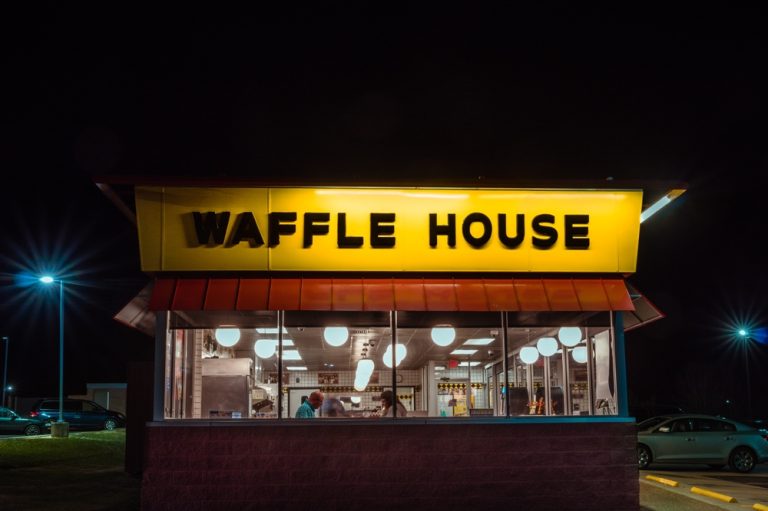
Denny’s and Waffle House have officially removed the egg surcharges they introduced earlier this year, following a sharp decline in U.S. egg prices. Denny’s ended its surcharge on May 21, while Waffle House dropped its 50-cent per egg surcharge on June 2, the companies confirmed this week.

Both restaurant chains added the temporary fees in February, when egg prices soared due to widespread bird flu outbreaks. At their peak in March, average retail egg prices hit a record $6.23 per dozen, according to the U.S. Bureau of Labor Statistics.

Waffle House applied the surcharge across all 1,900 of its locations, while Denny’s implemented variable charges depending on region. The price hikes followed the loss of over 174 million poultry and wild birds since the highly contagious virus began spreading in early 2022. Infected flocks were culled to prevent further transmission, significantly reducing egg supplies from industrial farms.

Egg prices cool with easing flu threat and increased imports

Egg prices have been on a downward trend since April as bird flu cases declined and seasonal demand tapered off post-Easter. By May, the average retail egg price had dropped to $4.55 per dozen, the lowest since December. Government officials credit increased imports and aggressive containment measures for the decline.

U.S. Agriculture Secretary Brooke Rollins noted that more than 26 million dozen eggs have been imported this year from countries including Brazil, Mexico, Turkey, Honduras, and South Korea. Additionally, three new foreign facilities were approved to supply shell eggs to the U.S. market. Rollins also highlighted that nearly 1,000 biosecurity assessments have been conducted on domestic farms, with financial support provided to implement upgrades.

Future uncertainty for egg producers as fall migration nears

Despite the current price relief, concerns remain for later this year. Experts warn that fall bird migrations could trigger another wave of avian flu infections, which could again impact supply and push prices higher.

“The fall could be potentially challenging for producers,” Rollins said, citing the ongoing risk posed by migratory wild birds.

For now, diners can expect egg-based meals at Denny’s and Waffle House to return to normal pricing—at least until the next supply shock emerges.

Musk vs. Trump Feud Threatens Tesla and SpaceX Deals

Government contracts and market confidence hang in the balance

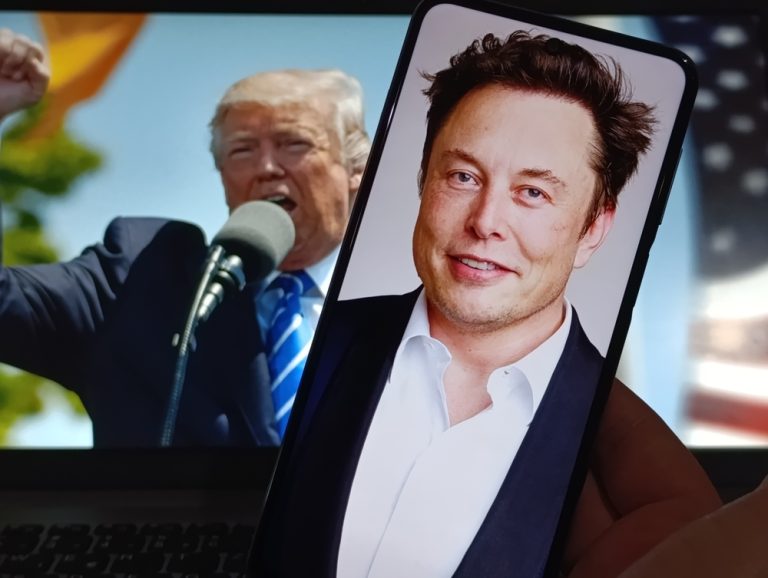
Elon Musk and President Donald Trump are back at odds, reigniting a high-stakes dispute that now threatens to drag Musk’s companies — especially Tesla and SpaceX — into political crossfire. The renewed tension follows Musk’s public criticism of Trump’s newly passed tax and spending bill, which adds $3.3 trillion to the federal deficit.

The feud has already shaken investor confidence. Tesla shares fell more than 4% Tuesday, continuing a volatile year that has seen the stock drop around 20% despite a recent spring rally. Musk acknowledged that the policies of his now-defunct Department of Government Efficiency may have sparked “some blowback” affecting Tesla’s consumer demand.

SpaceX’s government dependency under scrutiny

Tesla may grab headlines, but SpaceX’s $350 billion valuation is far more exposed to federal funding. The company has received upwards of $38 billion in U.S. government contracts, according to data from the Washington Post, with a record $6.3 billion awarded in 2024 alone. That includes major roles in the Artemis lunar mission and satellite launches for the Department of Defense.

Though SpaceX is privately held and insulated from stock market swings, its long-term success is directly tied to continued political goodwill. Musk’s fiery exchange with Trump last month — which included a threat by the president to cancel subsidies and contracts — triggered alarm in defense and aerospace circles.

Musk momentarily threatened to halt operations of the Dragon spacecraft, a key NASA transport vehicle, before reversing course. The public spat spooked stakeholders on both sides, with analysts noting that while SpaceX is essential to U.S. strategy in space, its dependence on federal dollars is undeniable.

Musk’s political ambitions and rising tensions

Complicating matters further, Musk has begun exploring the formation of his own political party focused on tackling national debt. While ineligible to run for office himself, the billionaire has suggested he may fund candidates aligned with his fiscal vision — a move that would intensify scrutiny around his business entanglements.

His support for a failed Wisconsin Supreme Court candidate earlier this year already prompted a reduction in political spending. Analysts believe the current flare-up with Trump may cool soon, given their mutual reliance: Trump needs Musk’s support for American innovation, and Musk needs access to federal contracts and infrastructure.

Markets and Musk’s net worth feel the heat

According to Bloomberg Government, Tesla and SpaceX have collectively secured $22.5 billion in federal unclassified contracts since 2000, the majority of which went to SpaceX. Musk’s personal net worth has taken a hit in recent weeks, slipping from nearly $500 billion post-election to $400 billion, though he remains the world’s richest individual.

As tensions rise, investors are weighing whether the clash between two of America’s most influential figures is a temporary scuffle — or the start of a deeper political and financial rift with implications for national space policy, military readiness, and electric vehicle innovation.

Moderna Flu Vaccine Beats Competitor in Final Trial

Stronger immune response clears path for combo Covid-flu shot

Moderna announced Monday that its experimental mRNA-based flu vaccine outperformed an existing standard shot in a pivotal late-stage trial. The results bring the company a step closer to launching its stand-alone flu jab and a combined influenza-Covid vaccine, potentially reshaping the future of immunization.

The new data showed Moderna’s vaccine, mRNA-1010, was 26.6% more effective than a standard flu vaccine across a study of over 40,000 adults aged 50 and older. Among seniors aged 65 and up, the shot proved 27.4% more effective. Moderna said the benefits were consistent across various demographics, including those with underlying risk factors and prior flu vaccine history.

Moderna eyes resubmission and FDA approval

Moderna voluntarily withdrew its previous application for the combination shot in May, intending to resubmit it with stronger efficacy data following talks with the FDA. With these new results in hand, the company now plans to refile both the combo vaccine and the stand-alone flu shot later this year. Approvals could come in 2025, according to Moderna’s head of R&D, Stephen Hoge.

The breakthrough is especially timely, as the FDA faces a major restructuring under Health and Human Services Secretary Robert F. Kennedy Jr., a controversial figure due to his long-standing criticism of vaccines. Hoge said Moderna is working closely with regulators to navigate the shifting environment and ensure compliance with all requirements.

Strategic edge over rivals in multibillion-dollar market

Moderna appears to be ahead of competitors Pfizer and Novavax in the race to launch a dual-use vaccine. The combination jab, which simplifies the vaccination process by merging flu and Covid protection, could significantly reduce healthcare burdens and boost vaccination rates, Hoge said. Though the company has not issued specific financial forecasts, Moderna sees Covid, flu, and RSV as multibillion-dollar opportunities.

The mRNA-1010 vaccine targets major flu strains, including A/H1N1, A/H3N2, and B/Victoria. Safety results from the phase three trial align with previous data, reinforcing confidence in the product’s profile. CEO Stephane Bancel called the findings a “significant milestone” and noted that the severity of the past flu season highlights the urgent need for more effective vaccines.

Regulatory hurdles and political headwinds

Despite the scientific success, Moderna has faced regulatory and political challenges. The Trump administration recently canceled a major government contract for Moderna’s avian flu vaccine, adding uncertainty to the company’s broader immunization pipeline. Shares were down over 30% year-to-date prior to Monday’s announcement, though they rose nearly 3% in premarket trading following the news.

Moderna’s results arrive as the CDC reports that the 2024–2025 flu season saw over 600,000 hospitalizations, the highest in 15 years. The company hopes its next-generation mRNA approach can help reverse this trend while reinforcing its position at the forefront of vaccine innovation.

Luckin Coffee Enters U.S. Market Amid Starbucks Struggles

China’s coffee giant opens first New York stores

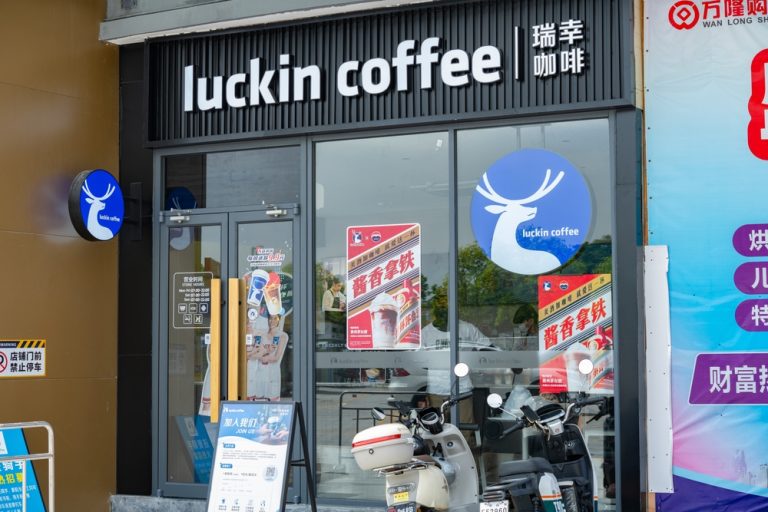
Luckin Coffee, China’s largest coffee chain, has opened its first U.S. locations in New York, signaling a new front in the competition with Starbucks. The expansion comes as Starbucks works to stabilize its global operations and regain lost momentum in key markets.

Founded in 2017, Luckin now operates over 22,000 stores in China, surpassing Starbucks in total locations. The brand’s success is built on a streamlined model featuring smaller stores focused on fast service, cashless payments, and takeout options, a strategy that has resonated with younger, price-sensitive consumers.

Unlike Starbucks’ traditional coffeehouses designed for customers to linger, Luckin’s minimalist approach reduces operating costs and enables competitive pricing. The chain’s menu includes standard coffee selections alongside unique offerings like pineapple and raspberry iced coffees and fruit-based “Refreshers” blended with coconut milk and cold foam.

Challenges ahead for Luckin in the U.S.

Luckin’s entry into the U.S. comes with risks. The company’s 2019 Nasdaq IPO ended in controversy after it admitted to inflating its earnings, leading to its delisting. Despite those setbacks, Luckin has since rebuilt its reputation and expanded aggressively in China.

Whether the company can translate its cost-focused success to the U.S. remains uncertain. American consumers are familiar with Starbucks’ extensive café experience, which emphasizes personalized service and in-store ambiance. Luckin’s faster, more transactional model may appeal to a different type of customer but could face challenges in building brand loyalty.

Starbucks faces pressure during transition

Luckin’s U.S. arrival intensifies the pressure on Starbucks as it navigates a complex turnaround. In recent years, Starbucks has grappled with internal challenges, including store inefficiencies and criticism from activist investors. The company recently hired Brian Niccol, former CEO of Chipotle Mexican Grill, to lead its recovery efforts.

Niccol has introduced several changes aimed at simplifying operations and improving customer experience. Initiatives include a 30% menu reduction, new store processes, and personalized touches like baristas writing messages on cups. Starbucks has also appointed a new CFO to strengthen its leadership team.

As Luckin sets its sights on the U.S. coffee market, the competition with Starbucks may extend beyond China’s borders, adding another layer of complexity to the global coffee landscape.

May Inflation Stays Mild, Boosts Rate Cut Hopes

Core PCE rises to 2.7% as spending and income decline

U.S. inflation remained subdued in May, with the personal consumption expenditures (PCE) price index—the Federal Reserve’s preferred gauge—rising just 0.1% for the month and 2.3% year over year, according to the Commerce Department on Friday.

Core PCE, which excludes food and energy, increased 0.2% for the month and 2.7% annually. While slightly above forecasts, the data keeps inflation below early 2024 levels and far from the highs seen during 2022. Economists had expected core readings of 0.1% monthly and 2.6% annually.

Weak income and spending hint at economic slowdown

The report also revealed signs of softening economic momentum. Personal income unexpectedly declined by 0.4%, while consumer spending fell 0.1%, compared to forecasts for 0.3% and 0.1% gains respectively. These figures add to growing concerns about the broader health of the economy as it absorbs ongoing tariff shocks.

“This morning’s news was consistent with other reports showing the economy gradually losing momentum in the second quarter,” said Gary Schlossberg, market strategist at Wells Fargo Investment Institute. He added that the report “keeps hopes alive” for a July rate cut, though he believes it’s still premature.

Trump pressure vs. Fed caution

President Donald Trump has renewed pressure on the Fed to lower interest rates, arguing that inflation is under control and a rate cut is needed to counteract the economic drag of tariffs. Fed Chair Jerome Powell, however, has maintained a cautious stance, calling for more evidence that inflation pressures remain muted before taking action.

Powell has recently faced public criticism from Trump, who called the Fed chief “stupid” and hinted at replacing him soon. Despite political tension, Fed officials remain divided, with some expressing openness to easing policy if inflation continues to soften.

Breakdown of inflation components

Food prices rose 0.2% in May, while energy prices fell 1%, led by a 2.2% drop in gasoline. Shelter costs increased 0.3%, continuing to exert steady pressure on core inflation. Over the past year, services inflation has risen 3.4%, while goods prices are up just 0.1%.

Markets reacted calmly to the report. U.S. stock futures moved higher, while Treasury yields edged up, suggesting investors view the data as supportive of a soft-landing scenario with potential rate cuts later this year.

Nike Stock Jumps as Sales Improve and Tariffs Hit

Sneaker giant forecasts mid-single digit sales drop, cuts China reliance

Nike shares soared 15.2% on Friday after the company projected that profit and revenue declines will moderate in the current quarter, offering investors renewed optimism despite lingering tariff and supply chain headwinds.

On Thursday, Nike said it expects a mid-single-digit sales drop in the current quarter, an improvement from the 12% year-over-year revenue decline posted for its fiscal fourth quarter ended May 31. Gross margins fell 440 basis points in the quarter and are forecast to decline another 350 to 425 basis points in the current period.

The rebound in investor sentiment narrowed Nike’s year-to-date losses to under 5%, a stark recovery from its 30% drop earlier this year. CFO Matthew Friend told investors that newly imposed U.S. tariffs represent a “meaningful cost headwind,” with estimated gross incremental costs of $1 billion and a 100 basis point drag on gross margins.

Shifting away from China and raising prices

In response to mounting tariff pressure, Nike announced plans to reduce its manufacturing dependence on China. Currently, 16% of Nike’s shoes sold in the U.S. come from Chinese suppliers. That figure is expected to fall to the high single-digit range by fiscal year-end. To offset higher input costs, Nike will implement “surgical” price increases in the U.S. beginning this fall.

Nike has been diversifying its production footprint since Trump’s first term. In 2024, 16% of its footwear and 18% of apparel came from China, down from 29% and 26%, respectively, in 2016. However, China continues to weigh heavily on results. Sales in the region dropped 20% last quarter, with footwear and apparel each posting double-digit declines.

Quarterly results beat forecasts but lag prior year

For the fiscal fourth quarter, Nike reported revenue of $11.1 billion, surpassing Wall Street’s $10.72 billion forecast. Adjusted earnings per share came in at $0.14, slightly ahead of estimates but far below the $1.01 reported a year earlier. Same-store sales at Nike-owned outlets rose 2%, better than the 2.6% decline analysts had projected.

“While our financial results are in line with our expectations, they are not where we want them to be,” CEO Elliott Hill said in the earnings release. “Moving forward, we expect our business to improve as a result of the progress we’re making.”

Facing tough competition, Nike banks on innovation and DTC reset

Alongside macro pressures like tariffs and slowing consumer demand, Nike is battling rising competition from athletic brands On and Hoka. It’s also recalibrating its wholesale strategy, reviving relationships with partners like Dick’s Sporting Goods and Macy’s after years of prioritizing direct-to-consumer sales.

To regain momentum, Nike is banking on innovation. Key upcoming product launches include the Vomero 18, Jordan Retros, A’One, and a long-awaited collaboration with Kim Kardashian. The company hopes these efforts will reenergize demand and support a broader turnaround in the quarters ahead.

Elon Musk Fires Tesla VP Amid Sales Declines and Political Backlash

Omead Afshar dismissed as pressure mounts on Tesla’s operations and reputation

Tesla CEO Elon Musk has fired Omead Afshar, the company’s vice president of manufacturing and operations, following months of slumping sales in major markets and ongoing reputational challenges. The move, confirmed by CNBC, reflects deeper turbulence within Tesla’s leadership ranks amid intensifying competition and public scrutiny.

Afshar, who reported directly to Musk, oversaw a powerful team that included Tesla’s regional sales heads for North America, EMEA, and key figures in public policy. His dismissal was first reported by Forbes, while Bloomberg had noted Afshar’s quiet departure earlier this week.

Leadership shake-up amid operational and reputational setbacks

The termination follows growing pressure on Tesla’s executive team. Internal sources confirmed that Afshar had been involved in a 2022 internal investigation regarding unusual procurement of construction materials—allegedly for a top-secret Musk project involving specialty glass. Despite the probe, Afshar returned to Tesla from a stint at SpaceX and was eventually promoted to VP of operations.

This latest shake-up comes on the heels of the departure of Milan Kovac, who previously led Tesla’s Optimus humanoid robotics project. While Kovac cited personal reasons, the dual exits point to deeper instability within Tesla’s senior leadership.

Sales dip, stock slump, and a shifting EV landscape

Tesla’s stock is down 19% year-to-date, underperforming both the Nasdaq and its tech megacap peers. According to the European Automobile Manufacturers Association (ACEA), Tesla’s car sales in Europe dropped for the fifth consecutive month in May. Industry analysts cite a growing shift toward more affordable Chinese electric vehicles as a key factor eroding Tesla’s market share.

Meanwhile, Tesla’s much-hyped Robotaxi service quietly launched a pilot in Austin, Texas. Afshar had recently praised Musk for the milestone, still listing himself as a Tesla executive on X (formerly Twitter). However, the sentiment was not enough to secure his position.

Political backlash and brand erosion

Tesla’s commercial challenges are compounded by mounting political controversy surrounding its CEO. Musk has come under fire for his increasingly polarizing public stances, including a $300 million campaign backing President Trump’s reelection and public endorsements of Germany’s far-right AfD party. These moves have alienated a portion of Tesla’s customer base, particularly in liberal-leaning markets and among environmentally conscious buyers.

Nestlé to Eliminate Synthetic Food Colors by Mid-2026

U.S. food industry accelerates shift to cleaner labels amid new health regulations

Nestlé USA announced Wednesday that it will eliminate all synthetic food colors from its U.S. food and beverage portfolio by mid-2026, joining a wave of major food companies responding to mounting health concerns and regulatory pressure.

The company, known for brands like DiGiorno and Hot Pockets, said the transition will be completed within 12 months. Nestlé noted that over 90% of its product categories already exclude synthetic dyes, making the final phase of reformulation achievable within the announced timeline.

Push for reform follows health policy shift

The move comes in response to new guidelines spearheaded by U.S. Health Secretary Robert F. Kennedy Jr., who announced plans to phase synthetic dyes out of the national food supply. The policy targets rising rates of ADHD, obesity, and diabetes, citing links between artificial additives and adverse health effects.

“This is about aligning with evolving consumer expectations and improving the overall nutritional profile of our products,” a Nestlé USA spokesperson said.

Industry-wide pivot toward clean ingredients

Nestlé’s announcement aligns with similar commitments across the U.S. packaged food industry:

  • Conagra Brands will eliminate synthetic colors from all U.S. frozen products by year-end and phase them out of K-12 school offerings by the 2026-2027 school year.
  • General Mills plans to remove artificial dyes from its entire U.S. retail portfolio, including cereals and school meals, by summer 2026.
  • Kraft Heinz has pledged to stop launching new products containing artificial colors and to reformulate existing ones by the end of 2027.
  • W.K. Kellogg and Tyson Foods are also actively reformulating and launching synthetic-dye-free product lines.

The industry shift reflects growing consumer preference for simpler ingredient lists and aligns with broader clean-label trends.

Outlook for school nutrition and retail reformulation

The removal of synthetic dyes is especially significant for the K-12 sector, where public scrutiny has intensified. With multiple companies pledging school-specific changes, health advocates see the movement as a critical step toward improving childhood nutrition.