Home Blog Page 40

European Banks Stay Resilient Despite Rising Trade War Risks

Big European lenders are sticking to ambitious performance targets following strong first-quarter profits, but they are increasingly concerned about the impact of global trade tensions, particularly the U.S. tariffs imposed by President Donald Trump. While banks continue to post upbeat headline numbers, executives are eyeing potential threats to future earnings growth.

Challenges Amid Global Trade Tensions

U.S. tariffs, which are the highest in a century, have led some economists to raise the odds of a global recession. According to a Reuters analysis, about 40 companies worldwide have either pulled or lowered their forward guidance in the first two weeks of the first-quarter earnings season. Despite these challenges, many European banks have maintained their shareholder payout plans and profitability objectives for the time being. However, concerns are rising over customers becoming more cautious, and the return of provisions for bad loans is becoming apparent.

Douglas Grant, CEO of Manx Financial Group, stated that while it’s too early for banks to change their strategies, the rise in bad loans serves as a warning sign. He noted that slowing GDP growth, rising wage costs, and geopolitical instability are causing small businesses to scale back investment and preserve cash, which could affect bank profits in the future.

Mixed Results Amid Uncertainty

While European banks have posted record profits in recent years, the economic outlook is increasingly uncertain. After a dip in early April, investor sentiment has improved, and shares in many banks have surged back towards multi-year highs. For instance, Deutsche Bank reported a 39% rise in first-quarter profit, boosted by strong bond and currency trading revenue. However, the results also included a hit from a large single-loan writedown and provisions for potential tariff impacts on clients.

Barclays also saw higher investment banking income, driven by intense financial market activity, and UBS reported a 32% increase in trading revenue. However, some banks, including HSBC, warned of lower loan demand and erosion in credit quality due to the broader fallout from tariffs.

Uncertainty About Future Demand

Despite surpassing analysts’ expectations, several banks are struggling to gauge future demand for risk. UBS Chief Financial Officer Todd Tuckner noted that although some activity occurred in response to market changes in April, growing uncertainty is being priced into the market. UBS CEO Sergio Ermotti acknowledged that the economic outlook was “particularly unpredictable,” with corporate dealmaking on hold, though not canceled entirely.

Barclays’ CEO C.S. Venkatakrishnan expressed caution, emphasizing the need for active risk management. He added, “We have long-established programmes to transfer and hedge risk, and we will continue to do so as warranted by this environment.”

Resilient Domestic Lending as a Buffer

To weather the storm, some banks are focusing on resilient domestic consumer lending businesses. Spain’s Santander reported a 24% profit increase in its retail business, while its corporate and investment banking division grew by 13%. In France, Societe Generale benefited from strong performance in retail banking and equities trading. BNP Paribas also indicated it was preparing to capitalize on opportunities arising from a slowdown, particularly in mergers and acquisitions (M&A), restructuring activities, and Europe’s push for increased defense spending.
Fear and Uncertainty Loom as Tariffs Threaten U.S. Economy

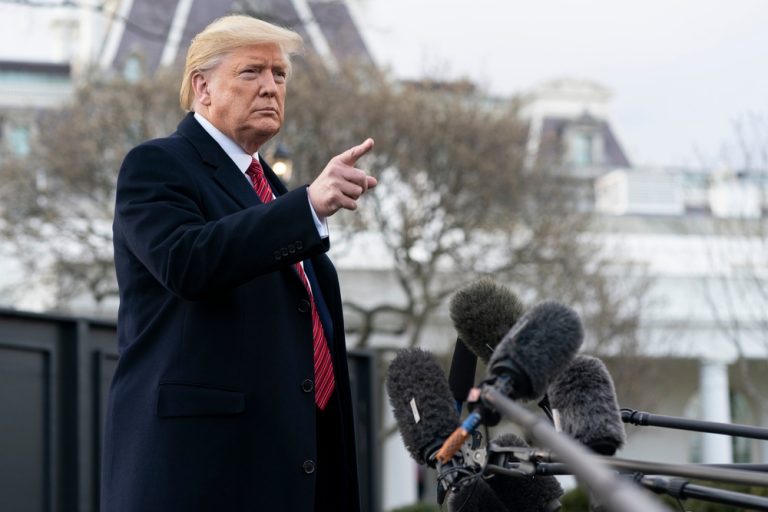
A powerful force is taking hold of the U.S. economy: fear. A recent CNN/SSRS poll revealed that two-thirds (66%) of Americans are pessimistic or fearful about the economy, a sentiment driven by uncertainty surrounding President Donald Trump’s trade policies and tariffs. With a growing sense of dread in the first 100 days of his second presidency, consumer confidence has dropped to levels not seen since the global financial crisis, raising concerns about the future of U.S. economic growth.

The Impact of Tariffs on Economic Confidence

The overwhelming majority of Americans—69%—now view a recession as at least somewhat likely in the next year, with 32% believing it’s very likely. This shift in sentiment could have serious consequences for the economy, as fear of a recession often leads to reduced consumer spending. As people tighten their belts, businesses follow suit, cutting back on hiring and investment, which in turn leads to even further economic contraction. This negative feedback loop poses a risk of a self-fulfilling prophecy where fear leads to a real downturn.

The Trump administration’s tariff policies, particularly the trade war with China, are contributing to this sense of uncertainty. The decision to raise tariffs on Chinese imports, along with other protectionist measures, has rattled both consumers and businesses. David Kotok, co-founder of Cumberland Advisors, noted that the chaos surrounding these policies has already begun to disrupt the economy, signaling the start of a downturn.

Consumer Spending: The Key to Economic Resilience

Despite the bleak outlook, consumer spending remains a crucial factor in the U.S. economy’s ability to weather this storm. Historically, even during periods of pessimism, Americans have continued to spend, helping to sustain growth. In fact, despite the fears of recession, U.S. retail sales jumped in March, and car sales surged as consumers rushed to make purchases before the impact of tariffs fully materializes. This is a clear sign that, while consumer confidence may be low, it hasn’t completely curbed spending.

Still, the uncertainty surrounding tariffs remains a significant concern. As President Trump’s protectionist policies continue, the likelihood of a “stagflationary shock” increases. This scenario, where the economy slows while prices rise due to tariffs, could put further strain on businesses and consumers alike.

Business Leaders’ Growing Fears

Business leaders are increasingly worried about the economic consequences of tariffs. Many are already seeing signs of strain, particularly in industries that rely on imports. A recent survey found that a significant number of small and mid-sized toy companies are delaying orders due to tariff uncertainty. Furthermore, nearly half of these companies report that they may go out of business within weeks if the trade environment doesn’t improve.

In the airline industry, CEOs are already speaking out about the impact of reduced consumer confidence. Southwest Airlines CEO Bob Jordan noted that the drop in domestic leisure travel outside of the pandemic represents a recession for the industry, even if it’s not officially labeled as such. Similarly, analysts like JPMorgan’s David Kelly and investment economist Torsten Slok have expressed concerns that a shallow recession could be on the horizon unless there is a sharp reversal of current tariff policies.

Policy Whiplash and Economic Uncertainty

The shifting nature of U.S. trade policy has created an environment of “policy whiplash,” where changes in direction seem to occur rapidly and unpredictably. Even if the Trump administration decides to ease the trade war, there’s little confidence that such decisions will be sustained. Jared Bernstein, a top economist for President Joe Biden, warned that while the current economic indicators don’t conclusively point to a recession, the risks are high, particularly due to the stagflationary impact of tariffs.

Ultimately, while it’s still uncertain whether the U.S. will slide into a full-blown recession, the combination of low consumer confidence, trade war disruptions, and fears of rising prices due to tariffs creates a volatile economic landscape. For now, the U.S. economy stands on a razor-thin edge, with many hoping that consumer spending and strong labor market conditions can carry the economy through the storm.

Trump’s Economic Gamble: Higher Prices and Rising Fear

Trump’s Economic Vision: A Throwback to the 19th Century

In his first 100 days back in office, Donald Trump has pushed an economic agenda that has left many Americans worried about the future. Promising to make America affordable again, Trump’s policies have resulted in rising prices, market uncertainty, and widespread concerns over a looming recession. Despite the chaos, Trump remains adamant that his economic overhaul will benefit the country in the long run. However, his gamble risks much more than just financial instability—it could alter America’s global economic standing.

Trump’s Economic Vision: A Throwback to the 19th Century

Trump has long advocated for a return to a mythical golden age of America’s economic power, attempting to revive policies from the late 19th century. His use of tariffs, which he calls “beautiful,” is intended to reshape global trade to favor the U.S. and bring manufacturing jobs back home. “We’re going to be wealthy as a country because they’ve taken so much of our wealth away from us,” Trump declared in April 2024, emphasizing his belief in using tariffs to exert U.S. economic might.

Yet, many experts argue that these policies, while aimed at strengthening the U.S., could do more harm than good. Higher prices, potential shortages, and market instability are already starting to make an impact, as evidenced by the stock market’s sharp decline and rising consumer sentiment fears. As consumers and businesses face the fallout, Trump’s vision of economic independence seems more distant than ever.

Economic Fallout: Higher Prices and Uncertainty

Trump’s decision to impose tariffs has sparked significant disruptions. Trillions of dollars have been wiped off stock markets, airlines are cutting flights, and top firms are revising their forecasts downward. “We’re going to be wealthy as a country because they’ve taken so much of our wealth away from us,” Trump reiterated, yet experts are predicting that these tariffs will raise prices even further, possibly worsening inflation and triggering a recession.

The uncertainty surrounding these policies is one of the biggest challenges. With tariffs constantly imposed, paused, and adjusted, businesses have little stability in which to plan. The stock market and the broader economy have responded with hesitation, and consumer confidence has plummeted to its fourth-lowest level since 1952. If Trump’s gamble fails, the consequences could be disastrous for American families.

The America First Agenda: Alienating Allies

Trump’s “America First” agenda, which emphasizes aggressive negotiation tactics, has already strained relationships with key global allies. His trade policies, including high tariffs and a unilateral approach to negotiations, have alienated countries that once stood by the U.S. He has frequently undermined international cooperation in favor of bilateral, often confrontational, deals. As one critic put it, “Trump’s belief that the United States should use its strength in one-on-one negotiations to coerce smaller nations into policies that benefit America and no one else” may backfire, especially if it isolates the U.S. from potential global partners.

Can Trump’s Tariffs Revive American Manufacturing?

Trump’s long-standing belief that the U.S. can thrive by forcing foreign markets to open up to American products is central to his tariff strategy. In his view, American manufacturing can be revived by bringing back factories and jobs to regions hit hard by globalization. However, experts warn that the tariff approach is more likely to hurt consumers than help workers, with higher prices for goods and potential job losses in industries that rely on global supply chains.

His administration is banking on the idea that trade deals with countries like Japan, South Korea, and the European Union will eventually materialize, but the process of negotiating and ratifying such agreements is often long and complicated. Even if deals do come through, it is uncertain whether they will result in the economic windfall Trump has promised.

The Toll on American Consumers

Despite his promises, Trump’s policies are already burdening American consumers. His administration has claimed that tariffs will benefit the U.S. economy, but in reality, many Americans are facing higher prices across the board. If tariffs rise to levels as high as 20%, 30%, or even 50%, as Trump suggested, the impact on consumer prices will be massive. While Trump insists that tax cuts will offset these increases, progress on tax reform has been slow, and the relief promised to voters remains elusive.

Moreover, Trump’s insistence on controlling prices—suggesting that the government should set the price of goods—raises concerns about economic instability. A policy like this could lead to widespread confusion and disrupt the market’s natural pricing mechanisms, further eroding consumer confidence.

What’s Next for Trump’s Economic Gamble?

As Trump’s first 100 days come to a close, the question remains whether his economic gamble will pay off or push the U.S. toward a deeper crisis. If his tariff strategy succeeds in creating favorable trade conditions for the U.S., Trump may defy the expectations of many economists. But if his approach tips the economy into recession, the damage could be irreparable.

In the coming months, it will be crucial to watch how Trump navigates his trade negotiations and whether his promised breakthroughs materialize. For now, though, the signs point toward higher prices, more uncertainty, and a mounting political struggle as Trump faces growing discontent among American voters.

Novo Nordisk Wins Legal Battle Against Compounding Pharmacies

In a major legal victory for Novo Nordisk, a Texas federal judge ruled to restrict compounding pharmacies from producing and selling cheaper, unapproved versions of the pharmaceutical giant’s blockbuster drugs, Wegovy and Ozempic. This ruling comes after a legal challenge initiated by a compounding trade group regarding the FDA’s decision that the active ingredient in these drugs, semaglutide, is no longer in shortage in the U.S.

Legal Ruling on Semaglutide Shortage

The ruling came late Thursday when U.S. District Judge Mark Pittman denied the request from the Outsourcing Facilities Association (OFA) for a preliminary injunction. This decision prevents compounding pharmacies from continuing to make copies of semaglutide while a legal challenge over the drug shortage is ongoing. The judge’s decision upholds the FDA’s previous stance that the shortage of semaglutide has ended, allowing the agency to now enforce stricter regulations on compounded versions of the drug.

Impact of the Ruling on Compounding Pharmacies

Patients flocked to compounded versions of Ozempic and Wegovy during the shortages of these drugs over the past two years, particularly those who faced high drug prices or lacked insurance coverage. These compounded drugs, which are essentially custom-made copies prescribed to meet specific patient needs, have been marketed by telehealth companies such as Hims & Hers. However, both drugmakers and health experts have voiced concerns over these unapproved drugs, as the FDA does not officially approve compounded medications.

FDA to Crack Down on 503A and 503B Pharmacies

The judge’s decision also clears the way for the FDA to take immediate action against 503A pharmacies (which make compounded drugs for individual prescriptions) and 503B pharmacies (which manufacture drugs in bulk). The FDA can now begin targeting these pharmacies for non-compliance, with actions that could include product seizures and warning letters, particularly from May 22 onward.

Ongoing Legal Challenges and Industry Impact

Prior to this ruling, Novo Nordisk scored another victory when a different Texas judge permanently prohibited MediOak Pharmacy, a 503A pharmacy, from marketing or selling compounded semaglutide. Novo Nordisk has filed over 100 lawsuits against compounding pharmacies across 32 states in a push to protect consumers from unregulated semaglutide products.

The ruling against compounding pharmacies also mirrors legal battles fought by Eli Lilly over its diabetes and weight loss drugs, Mounjaro and Zepbound. The FDA declared the shortage of tirzepatide, the active ingredient in these drugs, to be over in 2023. As a result, a compounding trade group has filed a lawsuit against the FDA, though a federal judge in March denied the group’s request for an injunction against the FDA’s enforcement.

Outlook

As both Novo Nordisk and Eli Lilly continue their legal efforts to prevent the sale of compounded versions of their drugs, the court rulings mark a significant step toward protecting the integrity of their treatments. These companies are working to ensure that patients only have access to FDA-approved medications, aiming to safeguard patient safety and maintain the value of their branded products.

California’s Economy: 4th Largest in the World

California’s economy has officially reached a new milestone, becoming the fourth-largest in the world, Governor Gavin Newsom announced on Wednesday. With a nominal gross domestic product (GDP) of $4.1 trillion, the state now ranks behind only the United States, China, and Germany, according to data from the International Monetary Fund (IMF) and the U.S. Bureau of Economic Analysis (BEA). Japan, at $4.02 trillion, ranks fifth.

California Leading the Way

Governor Newsom proudly declared, “California isn’t just keeping pace with the world – we’re setting the pace.” He attributed the state’s thriving economy to investments in people, a focus on sustainability, and a culture of innovation. These factors have helped California maintain its position as a global economic powerhouse.

Challenges to Growth: Tariffs and Trump

Despite the positive economic data, Newsom also took aim at President Donald Trump’s “reckless” tariffs, which he believes threaten California’s progress. He emphasized that California’s economic strength powers the nation, and must be protected against such disruptions.

In response, White House spokesperson Kush Desai criticized California’s policies, claiming the state’s economic challenges stem from intellectual property theft by foreign countries, poor disaster management leading to wildfires, and crime affecting communities. Desai added that under the Trump administration, California could reach new heights if state leadership aligns with federal efforts.

State-by-State Economic Rankings

California’s $4.1 trillion GDP is more than $1 trillion ahead of the second-largest U.S. economy, Texas, which has a GDP of $2.7 trillion. Here’s a look at the rankings of other U.S. states based on preliminary 2024 data:

  • California: $4.1 trillion
  • Texas: $2.7 trillion
  • New York: $2.3 trillion
  • Florida: $1.7 trillion
  • Illinois: $1.1 trillion
  • Pennsylvania: $1.02 trillion
  • Ohio: $928 billion
  • Georgia: $883 billion
  • Washington: $855 billion
  • New Jersey: $847 billion
  • North Carolina: $839 billion
  • Massachusetts: $781 billion
  • Virginia: $764 billion
  • Michigan: $707 billion
  • Colorado: $553 billion
  • Arizona: $552 billion
  • Tennessee: $550 billion
  • Maryland: $543 billion
  • Indiana: $527 billion
  • Minnesota: $501 billion
  • Wisconsin: $451.3 billion
  • Missouri: $451.2 billion
  • Connecticut: $366 billion
  • South Carolina: $350 billion
  • Oregon: $331 billion
  • Louisiana: $328 billion
  • Alabama: $321 billion
  • Utah: $301 billion
  • Kentucky: $293 billion
  • Oklahoma: $266 billion
  • Nevada: $261 billion
  • Iowa: $257 billion
  • Kansas: $235 billion
  • Arkansas: $189 billion
  • District of Columbia: $186 billion
  • Nebraska: $185 billion
  • Mississippi: $157 billion
  • New Mexico: $141 billion
  • Idaho: $128 billion
  • New Hampshire: $121 billion
  • Hawaii: $116 billion
  • West Virginia: $108 billion
  • Delaware: $103 billion
  • Maine: $99 billion
  • Rhode Island: $82 billion
  • Montana: $76 billion
  • North Dakota: $75.4 billion
  • South Dakota: $75.2 billion
  • Alaska: $70 billion
  • Wyoming: $53 billion
  • Vermont: $46 billion

Retailers Prepare for Tariff Impact: A Meeting with Trump

On Monday, President Donald Trump held a crucial meeting with major U.S. retailers to discuss the growing concerns surrounding tariffs that are expected to raise prices on everyday consumer goods. The meeting, which included executives from Walmart, Home Depot, Lowe’s, and Target, focused on the ongoing trade tensions and the impact of the recently imposed tariffs on imports, particularly from China.

Walmart, Target, and other large retailers rely heavily on products imported from China, and the tariffs imposed by the Trump administration have put added strain on these companies. The discussion highlighted the ripple effects these tariffs could have on both businesses and consumers already struggling with inflationary pressures.

Retailers Voice Concerns Over Cost Increases

Walmart’s CEO, Doug McMillon, attended the meeting, marking a significant moment as it was his first direct conversation with President Trump regarding the tariffs. Walmart’s spokesperson described the meeting as “productive,” but no specific details were shared regarding the discussions. The company had previously stated that McMillon had not personally discussed tariffs with the president until now. Other retailers, like Home Depot and Target, also characterized the meeting as “constructive,” with both companies expressing a desire to find a path forward in light of the tariffs.

As tariffs increase the cost of goods, analysts are concerned that these major retailers may struggle with rising profit margins. With over half of Walmart and Target’s products coming from China, and similar imports from Home Depot and Lowe’s, these retailers could face substantial challenges in keeping prices competitive.

Market Reactions to Tariff Fears

In recent weeks, Trump’s erratic tariff policies have caused significant fluctuations in the stock market, with a major sell-off on Monday. As concerns over the economic effects of the tariffs grow, companies like Walmart are feeling the pressure. Despite Walmart’s share prices rising by just 2% in 2025, competitors such as Target have experienced steeper losses, with its stock down by 32% so far this year. These developments underline the growing unease within the retail sector as it navigates both trade uncertainties and inflationary pressures.

Strategic Shifts and Adjustments

In response to the tariff situation, these retailers are adjusting their business strategies. The challenges posed by increasing import costs and supply chain disruptions have forced companies to reconsider their pricing models and sourcing strategies. The discussions with President Trump, although productive, highlighted the uncertainty that still surrounds the future of trade policies, especially with China.

The Future of U.S. Retail Amid Tariff Uncertainty

While the temporary pause on some of the tariffs has offered retailers a brief respite, the ongoing tensions with China and potential for further escalation continue to weigh heavily on the retail industry. Companies are carefully monitoring the situation, knowing that the next steps in the trade war could have far-reaching consequences on both their operations and consumer prices.

As U.S. retailers brace for the economic impact, they are increasingly relying on their agility and resilience to navigate through the uncertainty. The next few months will be crucial in determining how the tariffs will shape the retail landscape and consumer spending moving forward.

Walgreens Settles Opioid Lawsuit for $350 Million with DOJ

Walgreens has reached a $350 million settlement with the U.S. Department of Justice (DOJ) following accusations that the pharmacy chain illegally filled millions of opioid and controlled substance prescriptions over the past decade. The settlement is a significant step in addressing the pharmacy’s role in the opioid crisis.

Settlement Details and Terms

As part of the settlement, Walgreens will pay at least $300 million to the government and could owe an additional $50 million if the company is sold, merged, or transferred before 2032. The settlement was reached after the DOJ filed a complaint in January, accusing Walgreens of filling millions of illegal prescriptions between August 2012 and March 2023, including prescriptions for excessive opioids and those filled significantly earlier than allowed.

Government Allegations and Walgreens’ Defense

The DOJ alleges that Walgreens knowingly filled prescriptions despite clear signs they were likely invalid, and the company allegedly pressured pharmacists to do so quickly. Walgreens compliance officials are accused of ignoring evidence that the stores were filling unlawful prescriptions and failing to provide pharmacists with important information about the opioid prescribers. Additionally, Walgreens reportedly sought payment for these invalid prescriptions through Medicare and other federal healthcare programs, violating the False Claims Act.

However, Walgreens has denied any wrongdoing, with spokesperson Fraser Engerman stating, “We strongly disagree with the government’s legal theory and admit no liability.” He added that the resolution would allow the company to close opioid-related litigation and focus on its turnaround strategy. The DOJ has agreed to dismiss its complaint in light of the settlement.

Pharmacy Industry Under Scrutiny

This settlement is part of a broader effort to hold pharmacies accountable for their role in the opioid crisis. In recent years, other major pharmacies like CVS have also faced similar lawsuits. In 2022, Walgreens and CVS collectively agreed to pay more than $10 billion in a multi-state settlement over opioid-related lawsuits.

Walgreens has also entered into an agreement with the Drug Enforcement Administration (DEA) to improve its compliance in dispensing controlled substances. This includes enhancing training for pharmacists, ensuring prescriptions are valid, and blocking illegitimate prescriptions from problematic prescribers.

Addressing the Opioid Crisis

“In the midst of the opioid crisis that has plagued our nation, we rely on pharmacies to prevent, not facilitate, the unlawful distribution of these potentially harmful substances,” said Norbert E. Vint, Deputy Inspector General of the U.S. Office of Personnel Management.

The settlement resolves four whistleblower cases filed by former Walgreens employees and adds to the growing list of settlements addressing the opioid epidemic, which has seen more than $50 billion in settlements over the past eight years aimed at combatting the crisis.

Buffett’s Silence on Trump’s Tariffs: The Right Move

Recently, a video surfaced on President Trump’s Truth Social account claiming that Warren Buffett, the renowned investor, praised Trump’s economic policies as “the best he’d seen in 50 years.” This bold statement sparked attention, especially considering Buffett’s typically reserved stance on political matters. However, as you might expect, the endorsement never happened. In fact, Buffett’s company, Berkshire Hathaway, swiftly issued a statement dismissing the claims as entirely false.

Buffett Responds to Misinformation

The confusion began when social media platforms like Twitter, Facebook, and TikTok spread reports that Buffett had publicly lauded Trump’s economic moves. Berkshire Hathaway was quick to respond, clarifying that “all such reports are false.” In an interview with CNBC’s Becky Quick, Buffett made it clear that he wouldn’t comment on the current state of the economy or tariffs until Berkshire’s Annual Meeting in Omaha on May 3. This decision left many wondering if Buffett would ever take a public stance on the ongoing trade wars and President Trump’s tariff policies.

The Importance of Silence in a Chaotic Market

While Buffett’s stance has left many in suspense, it’s clear that he is carefully navigating a chaotic and volatile environment. The stock and bond markets have been rocked by the trade war, with confusion spreading across the broader economy. Buffett, known as the “Oracle of Omaha,” has learned the importance of saying nothing until there’s something meaningful to say. In a time of rapid policy changes, rushing to make statements can often add to the confusion. Buffett’s silence is his way of distancing himself from an ever-shifting situation.

The Strategic Value of Guarding One’s Words

Despite not taking a position on the tariffs, Buffett did respond to the fabricated quote, showing that when your words hold weight, it’s important to protect your reputation. In this case, Buffett simply set the record straight without engaging further in political discourse. He didn’t elaborate on his opinion of Trump’s policies, nor did he confirm or deny whether they were beneficial for the economy. The key here is that Buffett didn’t feel the need to get caught up in the whirlwind of opinion and controversy. Instead, he reminded everyone that he was not making any statements on the matter, maintaining his focus on his primary responsibility to Berkshire’s shareholders.

Lessons from Buffett’s Approach

Buffett’s response to the misinformation offers two valuable lessons. The first is clear: on contentious topics, silence is often more powerful than speaking out without clarity. It’s wise to hold off on commenting until there’s real insight to offer, especially when the facts are still changing rapidly. The second lesson is about the importance of guarding one’s reputation. When misinformation spreads, it’s crucial to correct the record, but only as necessary. Going beyond this could risk becoming entangled in political debates, something Buffett clearly seeks to avoid.

Ultimately, Buffett’s approach illustrates the power of restraint. While many may have expected a grand statement on Trump’s tariffs, Buffett’s decision to remain silent, except to set the record straight, is a masterclass in reputation management. It’s not about avoiding controversy—it’s about knowing when speaking up is both necessary and beneficial.

Trump Administration Targets DeepSeek & Nvidia’s AI Chips

The Trump administration is considering severe penalties that could block China’s DeepSeek from purchasing U.S. technology, and possibly prevent Americans from accessing its services, according to a report from the New York Times on Wednesday. The U.S. government’s move comes in response to the launch of DeepSeek, China’s new low-cost AI model, which has sent shockwaves through the AI ecosystem. As the Chinese start-up gains traction, the U.S. is ramping up efforts to crack down on its operations and its reliance on technology from major companies like Nvidia.

The U.S. Cracks Down on Nvidia’s AI Chips

At the heart of the U.S. government’s concerns are Nvidia’s AI chips, which have become integral to DeepSeek’s operations. U.S. export controls have focused heavily on preventing the sale of the most advanced AI chips to China, and the latest actions target Nvidia’s H20 AI chip. This move marks the continuation of efforts to maintain America’s lead in the global AI race by restricting China’s access to cutting-edge semiconductor technology. Nvidia recently warned investors that these new restrictions could cost the company a staggering $5.5 billion in potential sales.

U.S. House Select Committee’s Inquiry Into Nvidia

The U.S. House Select Committee on China has escalated its scrutiny by sending a formal letter to Nvidia. In the letter, the committee demands answers about Nvidia’s chip sales to China and Southeast Asia, aiming to investigate how these chips ended up powering DeepSeek’s AI models. This inquiry comes amid concerns that the export of U.S. technology to China could be enabling the development of military capabilities, with AI chips playing a central role in this process.

The Ongoing U.S.-China Tech Tensions

For the past few years, the U.S. has restricted the sale of its most advanced chips to China, citing national security risks. The concerns are that these chips, especially in the hands of Chinese tech giants like DeepSeek, could be used to bolster China’s military technologies. The U.S. fears that China could use these technologies to gain an advantage in areas such as military AI, which has become an increasingly critical part of modern warfare. The latest move against DeepSeek and Nvidia is another example of the ongoing trade war and tech rivalry between the two superpowers.

Uncertainty Looms Over U.S. Tech Exports to China

As the Trump administration weighs its next steps, the future of U.S. tech exports to China hangs in the balance. Nvidia, in particular, faces an uncertain road ahead, as these restrictions could significantly impact its business with Chinese clients. While Nvidia has already been banned from exporting its most advanced chips to China since 2022, the new restrictions on the H20 chip signal a more aggressive stance from the U.S. government to curtail China’s access to vital AI technologies. Both DeepSeek and Nvidia have yet to respond publicly to these latest developments, leaving investors and industry watchers on edge about what comes next.

Retail Sales Surge as U.S. Faces Tariff Uncertainty

In a surprising turn, U.S. retail sales rose by 1.4% in March, marking the best performance in over two years. This strong growth came just ahead of President Donald Trump’s sweeping tariff announcements, providing a glimmer of optimism in an otherwise uncertain economic landscape. Despite concerns over a potential slowdown, these numbers show the resilience of the U.S. economy in the face of mounting challenges.

March Retail Sales Exceed Expectations

Retail sales for March surged 1.4%, matching economists’ forecasts and far outpacing February’s modest 0.2% increase. This jump represents the best monthly growth since January 2023, signaling strength in consumer spending. “The strong rebound in retail sales in March was buoyed by a surge in auto sales and a more general front-loading of consumer spending ahead of tariffs,” said Michael Pearce, deputy chief U.S. economist at Oxford Economics. The figures also revealed that sales in the control group, which excludes volatile categories and directly impacts GDP readings, increased by 0.4%. While slightly below the expected 0.6%, this still marked an overall positive sign for the economy.

Automotive and Other Sectors Drive Growth

A standout in March was the 5.3% rise in auto sales, helping to push overall retail numbers higher. Sales excluding autos and gas grew by 0.8%, above consensus estimates. Other categories also saw notable gains, such as building materials (+3.3%) and sporting goods (+2.4%), reinforcing the positive trend. These numbers paint a picture of a robust retail market, even as broader economic concerns loom over the horizon. However, as Oliver Allen, senior U.S. economist at Pantheon Macroeconomics, pointed out, sectors like food services saw a significant 1.8% rise, suggesting that discretionary spending was holding up well despite the looming tariff impacts.

Front-Loading of Consumer Spending Before Tariffs

The surge in retail sales, particularly in March, has been attributed to consumers accelerating their purchases in anticipation of the impending tariffs. The practice of “front-loading” consumer spending, where buyers rush to make purchases before price hikes take effect, is likely a driving factor behind the retail surge. Pearce added, “The strong rebound in retail sales in March was boosted by a surge in auto sales and a more general front-loading of consumer spending ahead of tariffs.” This surge in demand reflects a level of consumer concern over the tariff-induced price increases that may follow, with many rushing to lock in lower prices before the full impact hits.

The Tariff Effect on Inflation and Economic Growth

As the U.S. faces the highest level of tariffs in a century, economists are bracing for the economic consequences. The tariffs, which aim to revitalize U.S. manufacturing, are expected to lead to higher inflation and potentially slow down economic growth. “The Fed had accomplished what many had thought was impossible,” said James Egelhof, chief U.S. economist at BNP Paribas. “It had brought us to the brink of a soft landing. Now, the tariffs change everything.” The economic slowdown driven by tariffs could push the U.S. closer to a recession, with inflation already being impacted by the new duties on imports. While the Fed has managed to keep inflation under control, these new policies could undo much of the progress made in the past year.

Conclusion: Navigating Economic Uncertainty

March’s retail sales figures provide a hopeful signal for the U.S. economy, showing resilience amid growing concerns over tariffs and inflation. However, with the economic outlook clouded by President Trump’s trade policies, it remains to be seen how sustainable this growth will be in the coming months. As consumers rush to make purchases ahead of price increases, the long-term impact of tariffs on economic stability is still uncertain. What is clear is that the coming months will be critical in shaping the U.S. economy’s ability to navigate the complexities of tariff-induced uncertainty.