Home Blog Page 37

GM to Invest $4B in U.S. Manufacturing for EVs and Gas Vehicles

General Motors’ $4 Billion U.S. Manufacturing Investment

General Motors (GM) announced plans to invest $4 billion over the next two years to expand its domestic manufacturing capabilities. This strategic move aims to increase production of both gas and electric vehicles (EVs) at several plants across the United States. The investment will enable GM to assemble more than two million vehicles annually in the U.S., strengthening its position in the automotive market.

Key Investments and Production Plans

GM’s significant investment will expand several plants in Michigan, Kansas, and Tennessee, focusing on popular models:

  • Orion Assembly, Michigan: Starting in 2027, GM will produce gas-powered full-size SUVs and light-duty pickup trucks at the Orion plant, meeting strong demand. The Factory ZERO plant in Detroit will remain dedicated to EV models such as the Chevrolet Silverado EV and GMC HUMMER EV.
  • Fairfax Assembly, Kansas: Fairfax will support production of the gas-powered Chevrolet Equinox in 2027. It will also start building the 2027 Chevrolet Bolt EV by the end of 2025.
  • Spring Hill Manufacturing, Tennessee: Spring Hill will add the gas-powered Chevrolet Blazer in 2027 alongside the Cadillac LYRIQ and VISTIQ EVs, enhancing GM’s EV lineup.

Commitment to U.S. Manufacturing and Job Growth

Mary Barra, GM Chair and CEO, emphasized the company’s ongoing commitment to U.S. manufacturing, stating, “The future of transportation will be driven by American innovation and manufacturing expertise.” GM’s extensive U.S. manufacturing footprint spans 50 plants and parts facilities, supporting nearly one million jobs in the country.

GM’s Strong Market Position and EV Growth

GM has posted strong sales figures, with significant growth in both gas and electric vehicles. The company leads in full-size pickups and SUVs, marking its 51st consecutive year of leadership in full-size SUV sales. GM also became the #2 seller of EVs in the U.S. market in 2024, thanks to its wide portfolio of 13 EV models from Chevrolet, Cadillac, and GMC.

Capital Spending and Future Investment Outlook

GM’s capital spending guidance for 2025 remains between $10 billion and $11 billion, with projections of up to $12 billion annually through 2027. These investments reflect GM’s ongoing focus on key programs, efficiency, and increased U.S. manufacturing.


Impact of Immigration Shifts on U.S. Labor Market

Immigration Reductions and Labor Market Uncertainty

Seismic shifts in immigration are distorting the U.S. employment picture, making it harder for investors and policymakers to fully understand the current state of the labor market. With the Trump administration’s pledge to reduce immigration through both halting new arrivals and deporting those already present, the U.S. labor supply is expected to shrink.

Long-Term vs. Short-Term Impact of Reduced Immigration

The long-term effect of lower immigration is generally seen as negative. Fewer new workers are expected to lead to lower economic growth as they are needed to replace retirees, fill job vacancies, and support overall economic expansion. However, in the short term, a smaller labor pool results in a tighter job market, which could keep the unemployment rate low, albeit temporarily.

Recent Labor Market Trends

In May, employment figures showed a significant decrease of 696,000 jobs, marking the largest monthly drop since the pandemic’s early days. While nonfarm payrolls increased by 139,000, the unemployment rate held steady at 4.2%, which remains low historically, despite rising from two years ago.

The Impact on Job Growth and Policy

These trends point to a tight labor market, which typically leads to wage increases and potentially more hawkish policy actions from the Federal Reserve. However, this could be a misinterpretation, as a reduced labor supply and declining labor force participation could artificially lower the breakeven job growth rate, the number of jobs needed to maintain a steady unemployment rate.

Slowing Breakeven Employment Growth

According to economists at Morgan Stanley, the breakeven job growth figure fell from 210,000 jobs per month in 2024 to 170,000 so far in 2025, and is expected to decrease to 90,000 by year-end. This downward trend may accelerate if immigration restrictions continue under the Trump administration. Ryan Sweet from Oxford Economics estimates breakeven job growth could soon drop to 50,000 a month due to weaker labor supply.

Uncertainty and Fed Response

The potential for a low unemployment rate for the wrong reasons raises concerns. If the predictions hold, monthly job growth could continue to slow without a noticeable uptick in the unemployment rate, creating confusion for investors and policymakers alike. The Federal Reserve, led by Jerome Powell, has emphasized that the labor market remains solid, but the impact of reduced immigration may signal that the current employment figures are not entirely reflective of a healthy economy.

Net Immigration Projections and Economic Outlook

The Congressional Budget Office projected net immigration of 2 million people in 2025, a decline from the previous year. However, with a hardening stance on immigration, these projections may be too high. Morgan Stanley revised its forecast to just 800,000 for 2025. If these revised figures hold, the U.S. could face a tight labor market with much lower payroll gains, presenting challenges for the Fed in managing monetary policy effectively.

China’s Export Growth Slows Amid U.S. Tariffs and Deflation

Overview of China’s Economic Slowdown

In May, China experienced a slowdown in export growth, hitting a three-month low, as the impact of U.S. tariffs continued to affect shipments. Despite a decrease in tariffs in early April, China’s export growth slowed to 4.8% year-on-year, missing the expected 5.0%. This marked a significant decline from the 8.1% increase in April. U.S. exports saw a drastic plunge of 34.5%, underscoring the tension caused by trade tariffs between China and the U.S.

Impact of U.S. Tariffs on Exports and Imports

China’s exports to the U.S. have been heavily affected by tariffs, with a sharp decline in value since the tariff escalation. The overall slowdown in exports in May reflects the disruption caused by President Trump’s tariffs and other global economic factors. On the other hand, imports into China fell by 3.4%, a worsening from the previous month, signaling weakening domestic demand and continued economic fragility.

Rare Earths Exports and Deflationary Pressures

Despite the broader downturn, China’s rare earth exports surged in May, even as certain products faced export restrictions. However, deflationary pressures deepened, with the producer price index dropping 3.3%, marking the worst contraction in 22 months. Retail sales also slowed, indicating that domestic consumption remains sluggish, exacerbated by concerns over job insecurity and low new home prices.

China’s Measures to Mitigate Economic Slowdown

To combat the effects of the ongoing trade war and economic slowdown, China introduced monetary stimulus measures in May. These included rate cuts and a low-cost loan program aimed at supporting businesses and stimulating domestic demand. However, these measures have had a limited impact on the broader economy, as deflationary pressures persist, and exports remain under threat due to tariffs.

Outlook for China’s Economy

With the trade tensions between China and the U.S. showing no sign of easing, China faces significant challenges in stabilizing its economy. Analysts predict that the slowdown in export growth will likely reverse only partially, while the impact of tariffs could continue to dampen China’s economic recovery efforts. The country’s reliance on exports for growth, combined with sluggish domestic demand and deflation, poses a difficult road ahead.

Used Vehicle Prices Ease After April’s High

Used vehicle prices experienced a slight decline in May, following a strong surge in April, as consumers who had been wary of price hikes due to tariffs moved to purchase vehicles. According to Cox Automotive’s Manheim Used Vehicle Value Index, which tracks prices of used cars sold at U.S. wholesale auctions, prices dropped by 1.5% from April to May. Despite this decrease, the market remains 4% higher compared to the same period last year. April’s price levels were the highest since October 2023.

Impact of Tariffs and Market Dynamics

While President Donald Trump’s 25% tariffs on new imported vehicles and parts do not directly affect the used vehicle market, changes in new vehicle prices, production, and demand influence the used car sector. Jeremy Robb, senior director of economic and industry insights at Cox Automotive, noted that wholesale vehicle prices showed remarkable strength in April but softened in May, though prices are still significantly higher than last year. Retail prices, which typically follow wholesale trends, have not dropped as quickly, reflecting the overall strong demand and limited supply.

Strong Demand and Low Inventory

Despite the recent dip, the used vehicle market continues to show strong demand, largely due to low inventory levels. With only 2.2 million used vehicles available, the market remains tight compared to historical norms. The shortage in supply is attributed to factors such as the global pandemic and supply chain disruptions, leading consumers to hold on to their vehicles for longer periods. This trend has kept demand high, even as prices fluctuate.

Retail Sales and Future Outlook

Retail used vehicle sales in May were down 3% compared to April but still saw a 4% increase year-over-year. Cox Automotive previously reported that used vehicle prices have been stabilizing since the volatility of the past few years, with prices calming down in 2024. As the market continues to navigate low inventory and high demand, it is expected that used vehicle prices will remain elevated but more stable moving forward.

Nintendo Switch 2 Launches Faces Demand and Tariff Concerns

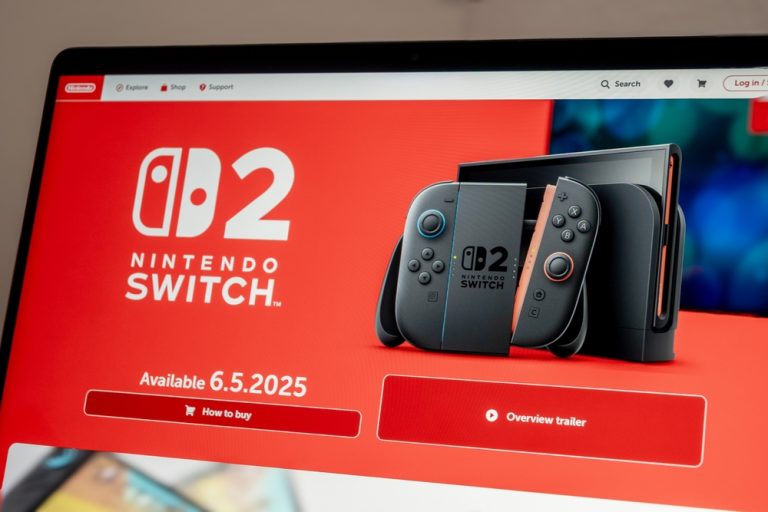
On Thursday, gamers lined up outside stores from Tokyo to New York City, hoping to secure the long-awaited Nintendo Switch 2. This new console, released globally, is an upgrade to its eight-year-old predecessor, aiming to revitalize Nintendo’s sales with improved features, including a focus on social and online gaming.

High Demand and Frustrations

After a chaotic pre-order process in April left many fans empty-handed, individuals flocked to stores in hopes of snagging one of the limited consoles available. In Manhattan’s Tribeca neighborhood, Edgar Huo was among those in line outside a Target store, stating, “I’m just rolling the dice here” as he hoped for extra inventory.

Meanwhile, in Japan, Nintendo used a competitive lottery system, receiving around 2.2 million applications, but some retailers also held their own lotteries for pre-orders. Koji Takahashi, who missed the official lottery, was selected in the second round of a retailer’s lottery. He arrived four hours early to secure his console and accessories.

Nintendo’s Efforts to Meet Demand

In an interview with CBS Morning Plus, Nintendo of America President Doug Bowser assured customers that the company was aware of the demand for the Switch 2 and that more units would be available throughout the summer and into the holiday season. “We have a steady supply of manufacturing that will be coming in,” Bowser said, aiming to meet customer demand through major events like Father’s Day and beyond.

Improved Features and New Pricing

The Switch 2 boasts several enhancements, including a larger, higher-resolution screen and improved processing power for smoother, more vivid graphics. A new “C” button on the controller introduces the “GameChat” feature, allowing players to communicate with friends and share their screen during gameplay. However, access to this feature requires a subscription to Nintendo’s online service, which includes a built-in microphone for in-game communication.

Despite these improvements, the Switch 2’s launch price of $449.99 in the U.S. is significantly higher than its predecessor’s $299 price. The price hike is attributed in part to tariffs imposed by U.S. President Donald Trump, which delayed U.S. pre-orders while Nintendo assessed the potential impact.

Target Sales and Future Plans

Nintendo has set an ambitious target, aiming to sell 15 million Switch 2 units during the fiscal year through March 2026. The company has also announced new editions of two popular “Legend of Zelda” games, along with upcoming titles such as Pokémon and Kirby games. These releases, along with new offerings from other publishers, are expected to further boost the Switch 2’s success.

In conclusion, while the Switch 2’s release has been met with high demand and excitement, the gaming industry faces an uncertain landscape due to trade-related challenges. Nintendo is working to ensure that its new console reaches as many fans as possible despite the external pressures.

Wells Fargo CEO Charlie Scharf Reflects on Bank’s Progress

Wells Fargo CEO Charlie Scharf recently shared his emotions after the bank was freed from a $1.95 trillion asset cap imposed by regulators. The lifting of this restriction marks a major milestone in the bank’s recovery from the 2016 fake-accounts scandal that led to years of penalties and public scrutiny.

Overcoming Challenges and Turning the Page

Scharf, who took the helm in 2019, called the asset cap’s removal a long-awaited victory that has positively impacted both the bank and its employees. “It’s been so long in the making, it’s impacted so many people so negatively,” Scharf said. The bank’s turnaround under his leadership is now complete, with the major regulatory burden finally lifted, allowing the bank to focus on growth.

Focus on Growth and Future Expansion

As Wells Fargo looks ahead, Scharf plans to prioritize growth in credit cards, investment banking, and wealth management, while continuing to invest in its commercial banking division. He confirmed that the bank would not pursue further expansion in mortgages after past scandals, signaling a pivot to more profitable sectors.

Capital Strategy: Buybacks and Dividends

Wells Fargo aims to raise its dividend, reflecting its growth ambitions, although the pace of share buybacks may slow as the company invests in its future. Scharf emphasized the importance of balancing shareholder returns with strategic investments in core business areas.

Organizational Culture Transformation

Since taking over, Scharf has overhauled Wells Fargo’s culture, focusing on accountability, meritocracy, and performance. The bank has cut more than 55,000 jobs, simplified management, and revamped risk controls. Scharf said the bank’s culture now emphasizes teamwork and fairness, marking a stark contrast to the prior “me” culture that led to past issues.

Looking Forward: Efficiency and Innovation

Scharf noted that Wells Fargo plans to add more bankers and relationship managers, particularly in the commercial bank, while investing in technology and improving efficiency. The CEO remains optimistic about the bank’s ability to grow and deliver value for shareholders while also enhancing its capabilities in key sectors.

Industry Recognition

The bank’s recovery and progress have been met with support from other banking leaders. Scharf received congratulatory messages from other CEOs, acknowledging the difficult work required to turn Wells Fargo around and reinforcing the importance of a strong U.S. banking system for overall industry health.

Nvidia Stock Surges: AI Growth and Trade Risks Ahead

Nvidia Corp. has seen its stock surge by more than 45% since its low in April, marking a major rebound worth $1 trillion in just two months. This rally has helped push Nvidia’s market value to $3.4 trillion, just shy of Microsoft, the world’s most valuable company. The growth comes as investor optimism shifts away from previous concerns about U.S. trade restrictions on advanced semiconductors and the company’s ability to meet the growing demand for AI infrastructure.

Investor Confidence Soars Post-Earnings Report

Last week’s earnings report addressed key investor concerns, particularly regarding U.S. restrictions on semiconductor sales to China. Nvidia’s ability to ramp up production of its newest Blackwell chips also reassured the market. “Those questions have been answered in the positive for Nvidia,” said Thomas Martin, senior portfolio manager at Globalt Investments. “It’s time to ramp back up your ownership,” he added, emphasizing the company’s promising future in the AI space.

Trade Tensions and U.S. Tariffs Still Loom

Despite its impressive growth, Nvidia still faces the ongoing risk of U.S. tariffs, as its chips are manufactured overseas and heavily dependent on trade relations, particularly with China. The company’s revenue from China accounted for 13% in the first quarter, and potential worsening of trade relations could impact Nvidia’s operations. However, partnerships with governments in the Middle East and a strong product pipeline could help mitigate some of these risks.

AI Spending Continues to Drive Demand

With AI infrastructure investment booming, Nvidia’s major clients, including Microsoft, Meta, Alphabet, and Amazon, remain committed to expanding their AI capabilities. These companies are projected to spend approximately $330 billion in capital expenditures by 2026, reinforcing the demand for Nvidia’s products. “We just haven’t seen any kind of slowdown in AI spending,” said Samuel Rines, a macro strategist at WisdomTree. “As long as capex keeps moving up, Nvidia’s growth trajectory looks strong,” he added.

Valuation and Market Position

Despite the recent surge in stock price, Nvidia remains undervalued compared to its peers. The company’s projected price-to-earnings ratio stands at 29, lower than the Nasdaq 100’s 26. Nvidia’s lower PEG ratio also highlights the potential for further price appreciation. Analysts are generally bullish on the stock, with most recommending a buy. The average price target is around $170, representing a 24% potential upside from the current price.

Growth Potential Amid Market Uncertainty

While Nvidia remains under-owned by market professionals compared to other Big Tech giants, the growing demand for computing infrastructure is expected to propel the stock even higher into 2026. As Angelo Zino, senior equity analyst at CFRA Research, noted, “There were a lot of investors that really got out of this market prematurely, and now they’re being forced back into it.”

AstraZeneca Eyes $80 Billion Goal with New Cancer Drugs

AstraZeneca (AZN) is aiming to meet its ambitious $80 billion target by 2030, with three promising cancer treatments unveiled in recent studies. The drugs focus on breast and gastric cancers and could help the pharmaceutical giant reach more than 82,000 patients annually across several global markets, including the U.S., U.K., and Canada, according to Dave Fredrickson, AstraZeneca’s Executive Vice President of Oncology.

Imfinzi’s Impact on Gastric Cancer

One of the key drivers of this ambition is the results of the Matterhorn study, testing AstraZeneca’s immuno-oncology drug Imfinzi in patients with gastric and gastroesophageal cancers. The treatment showed a 29% reduction in the risk of cancer recurrence following chemotherapy and surgery, a promising outcome for patients with a high recurrence rate. Fredrickson estimates that 40,000 patients in G7 countries could benefit from this advancement in cancer care.

Enhertu’s Potential in Breast Cancer

AstraZeneca is also betting on Enhertu, an antibody-drug conjugate (ADC) that targets cancer cells with more precision than traditional chemotherapy. In the Destiny Breast-09 study, Enhertu, when combined with Perjeta, outperformed standard treatments for advanced breast cancer. The results suggest that Enhertu could be used earlier in the treatment process, offering better outcomes for patients who haven’t yet received prior treatments. This development opens up a 32,000-patient market opportunity in the G7 countries.

Camizestrant Targets Mutations in Breast Cancer

The final promising treatment comes in the form of camizestrant, designed to tackle ESR1 mutations in patients with a certain type of breast cancer. A blood test is used to detect the mutation, allowing for earlier intervention and switching to camizestrant, which has demonstrated a 56% reduction in the risk of cancer progression. This strategy aims to “outsmart the cancer” and could benefit approximately 10,000 patients annually.

Expanding in Cancer Treatment

Fredrickson emphasized that AstraZeneca is at the forefront of multiple trends in cancer treatment, including the use of ADCs, immune system harnessing, and earlier interventions. These new modalities have the potential to drive significant advancements in oncology.

Stock Performance and Outlook

Despite the promising developments in their pipeline, AstraZeneca’s stock has recently underperformed its industry. The company’s Relative Strength Rating (RSR) has dropped to 34 from 76 three months ago, placing it in the bottom one-third of all stocks. The company is currently in a consolidation phase, with a buy point at $87.67, though it remains below its 200-day moving average.

New Covid Variant NB.1.8.1 Spreads Globally, Concerns Rise

A new COVID variant, NB.1.8.1, is gaining traction globally, including in the United States. The World Health Organization (WHO) announced that it is monitoring this variant after a rise in cases in regions like Europe, Southeast Asia, and the Americas. While it appears to be more transmissible than the currently dominant strain, LP.8.1, NB.1.8.1 does not show signs of evading vaccine protection or causing more severe illness.

NB.1.8.1’s Impact on the U.S. and Global Health

Despite the variant’s increasing prevalence, experts, including Andrew Pekosz, a virologist at Johns Hopkins University, suggest that it is unlikely to cause a major surge in COVID-19 cases in the U.S. at this time. The Centers for Disease Control and Prevention (CDC) has reported fewer than 20 cases of NB.1.8.1 in the U.S., meaning it has not yet reached the threshold to be considered a dominant strain. The variant is primarily a concern in China, where it has become the dominant strain of COVID-19.

Concerns Over Vaccine Effectiveness and Immunity

While NB.1.8.1 does not appear to be more effective at evading vaccines, experts warn that population immunity in the U.S. may have waned. Only about 25% of adults have received the latest COVID booster shot, and the lack of recent waves has left many individuals with reduced immunity. Dr. Thomas Russo from the University at Buffalo expressed concern that the combination of these factors may result in a slight uptick in cases, particularly during the summer months.

Vaccine Strategy and Booster Recommendations

The FDA is urging vaccine manufacturers to update COVID-19 vaccines this fall to target LP.8.1 and its cousins, including NB.1.8.1. The current vaccine should still provide protection against the new variant, but health officials recommend booster shots, especially for vulnerable groups like older adults and those with medical conditions. However, the FDA’s updated vaccine guidelines may limit access to certain groups, which has raised concerns among some healthcare professionals about the potential vulnerability of pregnant people and children under 5.

Symptoms and Behavior of NB.1.8.1

While the spread of NB.1.8.1 has raised alarms, it has not been linked to more severe health outcomes than previous variants. Symptoms remain consistent with other forms of COVID-19, and the WHO continues to monitor the situation. The CDC and other health organizations continue to emphasize the importance of vaccination to reduce the risks associated with the virus and its variants.

Global and Domestic Monitoring Efforts

Health officials in the U.S. and abroad are continuing to monitor the spread of NB.1.8.1. In the U.S., the CDC has noted its ongoing efforts to track emerging strains and inform vaccine updates. Experts predict that the virus could lead to a mild to moderate increase in cases in the coming months, but much remains uncertain as the virus evolves.

Google’s New Gemini AI Feature Summarizes Videos in Drive

Google is expanding its Gemini AI feature to provide greater insight into the videos stored in Google Drive. Previously available for documents and PDFs, Gemini now offers a way to summarize video content, allowing users to extract key information without having to watch the entire clip.

Gemini AI for Video Summaries

The new feature provides a chatbot-like interface where users can easily request summaries or ask for specific information from videos. For instance, Gemini can list action items mentioned during recorded meetings or highlight the most significant updates from an announcement video. This innovation is designed to save users time by eliminating the need for manual note-taking and video scrubbing.

How It Works

To use this feature, captions must be enabled for videos, and users can access it through either the overlay previewer in Google Drive or a new browser tab window. The Gemini video feature is currently available in English for Google Workspace and Google One AI Premium users, as well as those with the Gemini Business or Enterprise add-ons. It may take a few weeks for full rollout.

Video Engagement Data

Alongside the Gemini AI update, Google is introducing a feature that tracks engagement for Drive videos. The video player in Drive will now display how many times a video has been opened within the Analytics section of the Details panel, giving users insights into how their videos are performing and how much attention they are receiving.